
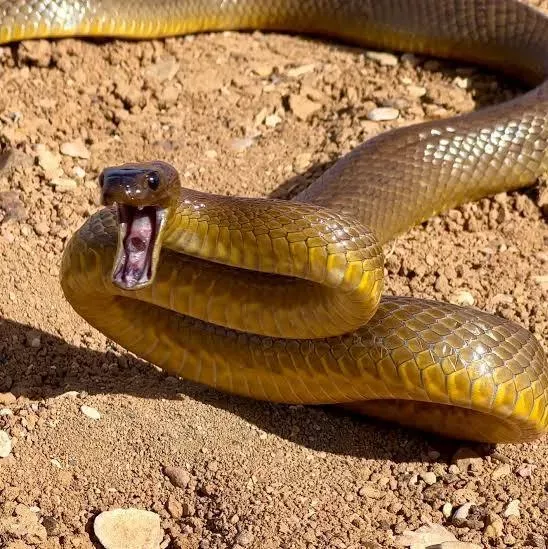
What is the most venomous snake in the world?
The inland taipan (Oxyuranus microlepidotus), also called the fierce snake or small-scaled snake, is the most venomous snake in the world by LD50 measurement. A single bite contains enough venom to kill approximately 100 adult humans or 250,000 mice. The inland taipan's LD50 value is 0.
The Deadliest Snake You Will Probably Never See
Somewhere in the cracked black clay of the Australian outback lives a snake whose venom is so toxic that a single bite contains enough poison to kill 100 adult humans. It has been called the fierce snake, the small-scaled snake, and the inland taipan. It is the most venomous land snake in the world, and almost nobody has ever seen one.
For all its deadly potential, the inland taipan has killed zero humans in modern history. Its story is one of the strangest in the animal kingdom - a weapon so extreme it evolved beyond any practical need, an animal so isolated it was lost to science for ninety years, and a species whose terrifying reputation is almost entirely theoretical.
The LD50 Rankings: How "Most Venomous" Is Measured
Ranking venom toxicity requires an objective measurement, and scientists use the LD50 - the lethal dose needed to kill 50 percent of a test population. Lower LD50 numbers mean more potent venom.
| Snake | LD50 (mg/kg) | Venom Yield per Bite |
|---|---|---|
| Inland taipan | 0.025 | 44 mg |
| Eastern brown snake | 0.053 | 4 mg |
| Coastal taipan | 0.106 | 120 mg |
| Black mamba | 0.32 | 100-120 mg |
| King cobra | 1.28 | 350-500 mg |
| Saw-scaled viper | 2.3 | 12 mg |
| Russell's viper | 0.75 | 250 mg |
The inland taipan's LD50 of 0.025 mg/kg (when tested on mice, the standard method) means that 25 micrograms per kilogram of body weight will kill half the test subjects. Extrapolating to an average 70 kg adult human, the lethal dose is approximately 1.75 mg. A single inland taipan bite delivers 44 mg of venom on average. The math is stark: one bite contains approximately 25 lethal human doses.
A maximum bite, recorded at 110 mg of venom, theoretically contains enough toxin to kill more than 60 adults.
What the Venom Does
Most snake venoms specialize in one type of damage. Vipers tend toward hemotoxic venom that destroys blood and tissue. Elapids (cobras, mambas, kraits) specialize in neurotoxins that paralyze the nervous system. The inland taipan does both, at a level of sophistication unmatched in the animal world.
A single taipan bite injects a cocktail of:
- Taipoxin. A neurotoxin that blocks the release of acetylcholine at neuromuscular junctions, paralyzing skeletal muscles including the diaphragm.
- Paradoxin. A related neurotoxin that enhances taipoxin's action.
- Procoagulants. Enzymes that trigger massive, uncontrolled blood clotting throughout the circulatory system, followed by consumptive coagulopathy (where all clotting factors are exhausted, leaving the victim unable to stop internal bleeding).
- Myotoxins. Peptides that destroy skeletal muscle tissue, causing rhabdomyolysis and potentially fatal kidney failure from the breakdown products.
- Nephrotoxins. Direct kidney poisons.
- Hyaluronidase. An enzyme that breaks down connective tissue, allowing the venom to spread rapidly from the bite site.
Within 45 seconds, a large rat is immobilized. Within minutes, unassisted death from a full envenomation in a human would follow paralysis, internal hemorrhage, and multi-organ failure. Without antivenom, the fatality rate would approach 100 percent.
Why Is It So Venomous?
This question puzzled biologists for decades. The inland taipan lives in a remote desert. It eats rodents. Why evolve venom dozens of times more potent than the second-most-venomous snake?
The answer emerged from careful study of the snake's ecology.
The inland taipan specializes in hunting native Australian rodents - specifically the long-haired rat (Rattus villosissimus) and the plague rat (Rattus fuscipes) during population booms. These rodents are aggressive, muscular, and well-armed with teeth that can crack snake skulls and claws that can tear a snake's eyes or jaws.
Most snakes that hunt rodents solve this problem by constriction (killing the prey without risk of retaliation) or by specializing in prey small enough to be swallowed without struggle. The inland taipan, a slender snake not built for powerful constriction, chose the opposite solution: kill the prey so fast that retaliation is impossible.
Field studies show the inland taipan delivers its bite in under one second, releases immediately, and waits for the prey to die. A venom that takes even ten or twenty seconds to immobilize a rat would allow time for the rat to bite back. The evolutionary arms race between snake and rodent favored faster, more potent venom for millions of years.
When the inland taipan finally evolved venom that kills a rat in 45 seconds, the arms race had produced a weapon so excessive that it could accidentally kill a thousand times its intended target. Humans are simply an unintended side effect.
Almost Nobody Has Ever Seen One
The inland taipan was formally described by science in 1879 by naturalist Frederick McCoy, based on a single specimen. For the next 90 years, not a single additional inland taipan was collected. Biologists began to doubt the species still existed. Some suggested McCoy's original specimen had been a juvenile coastal taipan mislabeled.
The species was rediscovered in 1972, when stockman Kenneth Warrell captured a specimen in Queensland. Since then, perhaps a few thousand inland taipans have ever been observed by humans, almost all by professional herpetologists conducting deliberate searches.
The reasons are geographical and behavioral.
Geography. The inland taipan lives in a tight band of central Australian semi-desert covering roughly 10,000 square kilometers. The range is one of the driest, least populated regions on Earth. No towns exist within its core habitat. Roads are few. Visitors are rare.
Behavior. The snake is cryptic and retiring. It shelters in deep soil cracks and rodent burrows during the heat of the day. It is active only at dawn and dusk, and then only for short periods. When encountered, it flees rather than attacking.
An ordinary Australian will never meet an inland taipan, and a researcher actively looking for one may spend weeks in the outback before spotting a single specimen.
Zero Human Deaths
Despite its unmatched toxicity, the inland taipan has never killed a human in the era of modern medicine.
Every recorded bite has occurred to professional herpetologists handling captive specimens, and every victim has survived. The common ingredients of survival are the same in each case: rapid antivenom administration, pressure-immobilization first aid, and hospital care with mechanical ventilation if needed.
The first known bite occurred in 1967, before antivenom specifically for inland taipan existed. Rescue workers used coastal taipan antivenom as an emergency substitute, and the victim survived. Modern Australian antivenom now explicitly covers inland taipan envenomation.
Because every known victim has been an experienced herpetologist, bites are usually reported within minutes, medical care is quickly mobilized, and outcomes are favorable. An untreated bite in a remote setting would be a different story - computational models suggest death would occur within 30 to 60 minutes of a full envenomation.
The Coastal Taipan: The Dangerous Cousin
The coastal taipan (Oxyuranus scutellatus) is the inland taipan's nearest relative and, in practical terms, far more dangerous to humans. While the coastal taipan's venom is less potent by LD50 measurement (0.106 mg/kg versus 0.025), it is larger, lives in more populated regions, delivers a much bigger venom dose (up to 400 mg per bite), and has a significantly more aggressive temperament.
Before antivenom was developed in 1955, the coastal taipan had a mortality rate approaching 100 percent. It has been responsible for dozens of confirmed human fatalities in Australia, Papua New Guinea, and Indonesia.
The inland taipan is technically the most venomous, but the coastal taipan is the one people actually need to worry about in daily life.
Conservation Status
The inland taipan is currently listed as Least Concern by the IUCN, though its population is believed to be small and highly dependent on boom-and-bust cycles of its prey. When long-haired rats experience population explosions during wet years, inland taipans breed rapidly and become locally abundant. When rodents crash during drought, the snakes retreat deep into soil cracks and their numbers fall sharply.
Climate change and habitat degradation are potential threats, but the remoteness of its range offers some protection. Unlike many Australian reptiles, the inland taipan does not face pressure from cats, foxes, or cane toads because those invasive species rarely reach its core habitat.
The Paradox of the Deadliest Snake
The inland taipan is the most venomous snake in the world and also among the least dangerous to humans. It carries a bite that could kill a hundred people and has never killed one. It hunts with a weapon so effective it has no practical need, and it hides in a desert so remote it was lost to science for ninety years.
It is a reminder that raw lethality is not the same as actual danger. The snakes that kill the most humans - saw-scaled vipers, common kraits, Russell's vipers - are vastly less venomous than the inland taipan, but they live near farms and villages where people encounter them constantly. Lethality plus proximity produces casualties. Lethality alone in a desert nobody visits produces folklore.
The inland taipan is one of evolution's most extreme experiments in venom chemistry, refined over millions of years to kill rats faster than rats can bite back. That it could kill a hundred humans with a single strike is, from the snake's perspective, simply a feature of its job.
Global Snake Venom LD50 Rankings
The "most venomous" title is measured by median lethal dose in laboratory mice. Our research team compiled LD50 values for the world's most toxic snake species from peer-reviewed pharmacology literature. Lower numbers indicate higher toxicity.
| Species | Scientific Name | Subcutaneous LD50 (mcg/kg) | Venom Yield per Bite (mg) |
|---|---|---|---|
| Inland taipan | Oxyuranus microlepis | 25 | 44 |
| Dubois's sea snake | Aipysurus duboisii | 44 | 0.5 |
| Eastern brown snake | Pseudonaja textilis | 53 | 4 |
| Yellow-bellied sea snake | Hydrophis platurus | 67 | 2 |
| Coastal taipan | Oxyuranus scutellatus | 106 | 120 |
| Beaked sea snake | Enhydrina schistosa | 110 | 8 |
| Mainland tiger snake | Notechis scutatus | 118 | 35 |
| Black mamba | Dendroaspis polylepis | 320 | 120 |
| Russell's viper | Daboia russelii | 750 | 150 |
| Saw-scaled viper | Echis carinatus | 1,010 | 18 |
Despite ranking tenth in toxicity by LD50, the saw-scaled viper (Echis carinatus) is responsible for more human deaths worldwide than any other snake species - an estimated 25,000 fatalities annually in India alone. The gap between toxicity and real-world impact is entirely driven by habitat overlap with rural human populations, not by venom potency.
Venom Biochemistry
A 2014 proteomics study led by Bryan Fry at the University of Queensland, published in the Journal of Proteomics, characterized the complete venom composition of the inland taipan. The venom contains three-finger toxins, phospholipase A2 enzymes, natriuretic peptides, and a unique set of prothrombin activators that cause catastrophic blood clotting throughout the victim's circulatory system within minutes [1].
"The inland taipan venom is not a single toxic compound but an integrated pharmacological attack targeting multiple physiological systems simultaneously. Prothrombin activators convert the prey's own blood into a solid clot within three minutes. Postsynaptic neurotoxins shut down respiratory muscles. Myotoxins cause rhabdomyolysis. The victim dies from some combination of stroke, respiratory arrest, and muscle dissolution that occurs too quickly for any single organ failure to matter." - Dr. Bryan Fry, University of Queensland [1]
The venom's unusual prothrombin-activator complement appears to have evolved specifically for rodent prey that are resistant to many other elapid venoms. Long-haired rats (Rattus villosissimus) are the primary prey of the inland taipan, and this species has evolved partial resistance to cobra-type neurotoxins - a resistance that the taipan's combination of coagulopathy and neurotoxicity overwhelms.
Antivenom and Treatment
Monovalent taipan antivenom has been produced by CSL Seqirus in Australia since 1955, originally for the coastal taipan (Oxyuranus scutellatus) but subsequently demonstrated to be effective against inland taipan envenomation as well. Polyvalent Australian elapid antivenom covers both species along with brown snakes, tiger snakes, and death adders, and is carried by hospitals throughout Australia.
Treatment requires immediate pressure-immobilization bandaging, rapid transport to a hospital, and administration of between 1 and 12 vials of antivenom depending on envenomation severity. All known human bite victims have survived with prompt treatment, though several have required intensive care support with mechanical ventilation for days following the bite.
References
- Herrera, M., Fernandez, J., Vargas, M., et al. (2012). Comparative proteomic analysis of the venom of the taipan snake, Oxyuranus scutellatus, from Papua New Guinea and Australia. Journal of Proteomics, 75(7), 2128-2140. DOI: 10.1016/j.jprot.2012.01.006
- Covacevich, J., & Wombey, J. (1976). Recognition of Parademansia microlepidota (McCoy) (Elapidae), a dangerous Australian snake. Proceedings of the Royal Society of Queensland, 87, 29-32.
- Broad, A. J., Sutherland, S. K., & Coulter, A. R. (1979). The lethality in mice of dangerous Australian and other snake venoms. Toxicon, 17(6), 661-664. DOI: 10.1016/0041-0101(79)90245-9
- Mirtschin, P. J., Dunstan, N., Hough, B., et al. (2006). Venom yields from Australian and some other species of snakes. Ecotoxicology, 15(6), 531-538. DOI: 10.1007/s10646-006-0089-x
Hunting Behavior and Prey Specialization
Inland taipans hunt almost exclusively on small mammals, particularly the long-haired rat (Rattus villosissimus), the plague rat (Rattus tunneyi), and the delicate mouse (Pseudomys delicatulus). Unlike most elapid snakes, which bite and release prey to let the venom take effect, inland taipans deliver multiple rapid strikes in quick succession, envenoming the prey several times within seconds to ensure death within the narrow time window before the rodent can retreat into its burrow.
A 2015 study by Timothy Jackson and colleagues at the University of Queensland documented that inland taipans adjust their strike pattern based on prey size. Against small mice, a single strike is typical. Against larger rats, the snakes deliver between three and six rapid strikes - a behavior termed "snap-strike release" that reflects the pressure of competing with prey that could inflict potentially serious bite wounds if not rapidly incapacitated.
The inland taipan's entire hunting life cycle is tied to boom-and-bust rodent population cycles in the Channel Country of central Australia. In wet years, when rodent populations explode, inland taipans breed prolifically and become locally abundant. In drought years, when rodents crash, the snakes retreat into deep soil cracks and may fast for many months, surviving on fat reserves accumulated during the previous abundance period.
The Rediscovery of the Species
The inland taipan was originally described by Frederick McCoy in 1879 based on a single specimen from Bulloo River in Queensland. The species then vanished from scientific knowledge for 90 years. Between 1879 and 1972, no additional specimens were collected or documented, leading some herpetologists to suggest that the species had gone extinct or was based on a misidentified specimen.
In 1972, Peter Mirtschin and other Australian herpetologists rediscovered living inland taipans in the remote Queensland-South Australia border region. Subsequent work confirmed the species's continued existence across approximately 10,000 square kilometers of central Australian semi-desert. The 90-year gap in the scientific record reflects both the extreme remoteness of the habitat and the cryptic behavior of the species, rather than any actual population interruption.
The rediscovery launched the modern research program on inland taipan venom, leading directly to the development of effective antivenom and to the recognition of the species as the most venomous snake ever tested.
Related Articles
- Most Venomous Snakes Ranked by LD50
- Snakes: The Most Feared and Misunderstood Reptiles
- Venomous Reptiles: How Venom Works and Why It Evolved
Frequently Asked Questions
What is the most venomous snake in the world?
The inland taipan (Oxyuranus microlepidotus), also called the fierce snake or small-scaled snake, is the most venomous snake in the world by LD50 measurement. A single bite contains enough venom to kill approximately 100 adult humans or 250,000 mice. The inland taipan’s LD50 value is 0.025 mg/kg when tested on mice - roughly 50 times more toxic than the king cobra and 10 times more toxic than the common brown snake.
The venom contains a complex mixture of neurotoxins, hemotoxins, myotoxins, and nephrotoxins that attacks the nervous system, blood, muscle tissue, and kidneys simultaneously.
How many people has the inland taipan killed?
Remarkably few. Despite being the most venomous land snake in the world, the inland taipan has caused zero confirmed human fatalities in the modern era. Most recorded bites have occurred to professional herpetologists handling captive specimens, and every victim has survived thanks to antivenom developed by the Australian Reptile Park and the Commonwealth Serum Laboratories (now Seqirus).
The snake’s low mortality count is due to its extreme remoteness - it inhabits the arid semi-desert regions of central Australia where few humans live - and its shy, retiring nature. An inland taipan will almost always flee rather than confront humans.
Where does the inland taipan live?
The inland taipan inhabits the black-soil floodplains of central Australia, primarily in the border region of Queensland, South Australia, and the Northern Territory. Its range covers roughly 10,000 square kilometers of harsh semi-desert. The snake shelters in deep soil cracks during the heat of the day, emerging at dawn and dusk to hunt native long-haired rats and plague rats. When rodent populations boom during wet years, the inland taipan thrives.
When rodents decline, so does the snake. The species was only formally described by science in 1879, and for most of the 20th century it was considered lost - no specimens were collected between 1882 and 1972, a gap of 90 years.
Why is the inland taipan's venom so toxic?
The inland taipan evolved its extreme venom because it specializes in killing large rodents that could injure the snake during the feeding process. Native Australian rats are aggressive, muscular, and well-armed with teeth and claws. A slow-acting venom would give the rodent time to bite back, breaking the snake’s teeth or damaging its head. The inland taipan’s venom immobilizes a large rat within 45 seconds, making the kill essentially risk-free.
The evolutionary pressure for faster-acting, more potent venom never relaxed because the snake’s prey remained dangerous even as the venom improved. Other species that eat softer prey (like insects or small lizards) never needed such extreme toxicity and did not evolve it.
How does the inland taipan bite compare to other famous snakes?
The inland taipan’s venom yield per bite is relatively small (average 44 mg, maximum 110 mg) compared to larger snakes, but its potency is unmatched. For comparison, a black mamba delivers approximately 100-120 mg per bite with an LD50 of 0.32 mg/kg - deadly, but 13 times less toxic. A king cobra delivers 350-500 mg per bite with LD50 of 1.28 mg/kg - large volume but 50 times less potent.
A saw-scaled viper (which kills more people globally than any other snake) delivers 12 mg per bite with LD50 of 2.3 mg/kg - 90 times less toxic. The inland taipan’s unique combination of neurotoxins, procoagulants, and myotoxins attacks multiple body systems simultaneously in a way no other snake venom does.