
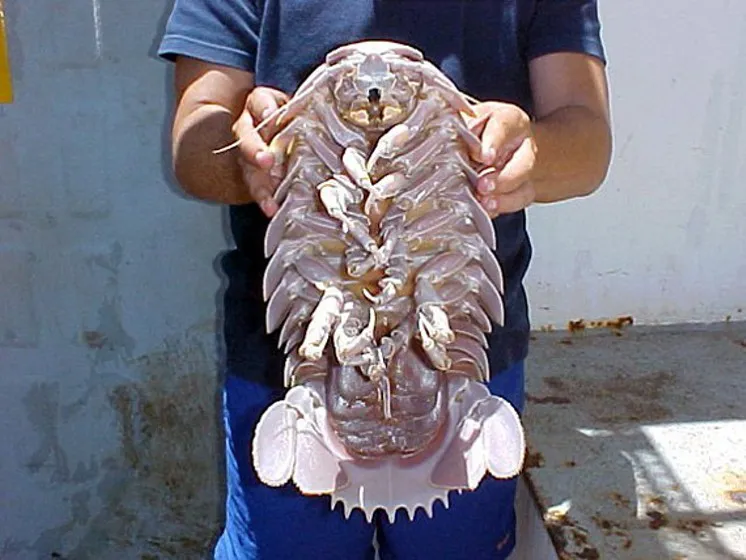
Quick Answer: The tongue-eating louse (Cymothoa exigua) is a parasitic isopod that invades the mouths of certain fish, destroys the host’s tongue, and then attaches itself in place of the lost organ. This unique marine parasite feeds on the fish’s blood and mucus, effectively becoming a functional replacement for the fish’s tongue. Cymothoa exigua is the only known parasite that functionally replaces a host organ in this way.
The tongue-eating louse stands out as one of the most bizarre and unsettling parasites in the animal kingdom. Found primarily in warm coastal waters, this crustacean targets a variety of fish species, especially snappers and related families. Its life cycle and parasitic strategy have fascinated marine biologists and horrified anglers alike.
The louse’s ability to physically replace a fish’s tongue is unique among known parasites, making it a frequent subject of scientific study and public curiosity.
Unlike most parasites, which feed externally or from within body cavities, Cymothoa exigua enters through the gills and specifically targets the tongue. Once inside, it severs the blood vessels of the tongue with its sharp, clawed legs. As the tongue atrophies and falls away, the louse attaches itself to the remaining stub, using its own body as a prosthetic tongue.
The fish continues to use the louse as it would its original tongue, manipulating food and swallowing, while the parasite feeds on blood and mucus.
The ecological role of the tongue-eating louse is complex. While it rarely kills its host outright, the parasite can affect feeding efficiency, growth, and overall health of the fish. Its presence in commercial fisheries has economic implications, and its peculiar biology has prompted further research into parasitism, host adaptation, and marine ecosystem dynamics.
The louse’s notoriety is matched by its scientific significance, as it challenges conventional ideas about parasite-host relationships.
Taxonomy and Biological Classification of Cymothoa exigua
Cymothoa exigua is a species of parasitic isopod belonging to the family Cymothoidae. Isopods are a diverse order of crustaceans, which also include terrestrial woodlice and aquatic pill bugs. The genus Cymothoa comprises several species, but C. exigua is the most famous due to its tongue-replacing behavior. The species was first described in the early 19th century and has since become a model organism for studying extreme parasitism.
The family Cymothoidae is characterized by dorsoventrally flattened bodies, robust claws, and a parasitic lifestyle. Members of this family are obligate parasites, meaning they must live on or in a host to complete their life cycle. Cymothoa exigua exhibits sexual dimorphism, with females typically larger than males. This size difference is common among parasitic isopods, as females require more resources for egg production.
The classification of C. exigua is as follows:
| Rank | Name |
|---|---|
| Kingdom | Animalia |
| Phylum | Arthropoda |
| Subphylum | Crustacea |
| Class | Malacostraca |
| Order | Isopoda |
| Family | Cymothoidae |
| Genus | Cymothoa |
| Species | Cymothoa exigua |
Key Insight: Cymothoa exigua is the only known parasite that replaces an entire organ, functioning as a living prosthesis for the fish’s tongue.
The evolutionary lineage of isopods is ancient, with fossil records dating back to the Carboniferous period. Parasitic isopods have evolved specialized adaptations for host attachment, feeding, and reproduction. The unique biology of Cymothoa exigua has made it a subject of interest in evolutionary biology and marine parasitology. For more on the classification and diversity of isopods, see Britannica’s entry on isopods.
Life Cycle and Reproductive Strategy
The life cycle of the tongue-eating louse is intricately tied to its host fish. After hatching from eggs released by the female, juvenile isopods (mancae) are free-swimming and must quickly locate a suitable fish host. These larvae are highly mobile and possess specialized appendages for swimming and attachment. Upon finding a host, the juvenile enters through the gills and migrates to the mouth cavity.
Once inside the mouth, the louse targets the tongue, using its powerful claws to grip the tissue. The parasite severs blood vessels, causing the tongue to atrophy and eventually detach. The louse then anchors itself to the remaining tissue, becoming a permanent resident. Females grow larger and remain attached for life, while males may linger nearby or attach to the gill arches.
Reproduction occurs within the host’s mouth. Males fertilize the eggs carried by the female, who then releases the next generation of larvae into the water. This reproductive strategy ensures that the larvae are released in proximity to potential hosts, maximizing their chances of survival. The cycle repeats as new larvae seek out fish hosts, perpetuating the species.
Key Takeaway: The tongue-eating louse’s reproductive strategy is highly efficient, as it minimizes the time larvae spend vulnerable in open water and maximizes host contact.
The life span of Cymothoa exigua is closely linked to that of its host. Some individuals have been observed to survive for several years, provided the host fish remains healthy. The parasite’s presence can reduce the host’s fitness but rarely results in immediate death. For further reading on marine parasite life cycles, consult the Encyclopedia of Life.
Host Range and Geographic Distribution
The tongue-eating louse primarily targets fish in the family Lutjanidae, especially the red snapper (Lutjanus campechanus), but has been recorded in over a dozen fish species. Host specificity varies geographically, with some populations displaying a preference for certain fish while others are more opportunistic. The parasite’s ability to infect multiple hosts contributes to its widespread distribution.
Geographically, Cymothoa exigua is found in warm coastal waters, including the eastern Pacific Ocean from California to Peru, as well as the Gulf of California. Occasional reports exist from the Atlantic and other regions, but these are often misidentifications of related isopod species. The louse thrives in estuarine and nearshore environments, where host fish are abundant and environmental conditions are stable.
The table below summarizes common hosts and their regions:
| Fish Species | Region | Host Family |
|---|---|---|
| Red snapper | Eastern Pacific, Gulf | Lutjanidae |
| Blue spotted seabream | Eastern Pacific | Sparidae |
| White grunt | Gulf of California | Haemulidae |
| Various snappers | Pacific, Atlantic | Lutjanidae |
Host selection is influenced by factors such as fish size, age, and habitat. Juvenile fish are less likely to be infected, possibly due to smaller mouth cavities or different behavior. Adult fish in reef or rocky environments are most susceptible. The parasite’s distribution is closely monitored in commercial fisheries due to potential impacts on fish stocks and marketability. For more on the distribution and host range, see the IUCN Red List entry for Cymothoa exigua.
Mechanism of Parasitism: How the Louse Replaces the Tongue
The most remarkable feature of Cymothoa exigua is its mechanism of parasitism. Upon entering the fish’s mouth, the louse uses its anterior legs, equipped with sharp claws, to grasp the base of the tongue. It then pierces the blood vessels, causing the tongue to lose blood supply and atrophy. Over time, the tongue shrinks and detaches, leaving a fleshy stump.
Once the tongue is gone, the louse attaches itself to the remaining tissue using its posterior legs. Its body shape and flexibility allow it to fit snugly within the mouth cavity, mimicking the form and function of the original tongue. The fish adapts to this change and continues to feed, using the parasite as a prosthetic tongue. This adaptation is so effective that many fish survive for years with the louse in place.
Key Insight: Cymothoa exigua is the only known parasite to functionally replace a host organ, allowing the fish to continue feeding and living relatively normally.
The louse feeds by consuming blood and mucus from the fish’s mouth. It does not consume flesh, which reduces the risk of killing the host outright. This balance ensures the louse has a stable environment and food source for an extended period. The relationship is parasitic but not immediately fatal, highlighting the evolutionary sophistication of this organism.
For an in-depth look at parasitic mechanisms in marine isopods, visit the Wikipedia page on Cymothoa exigua.
Impact on Host Fish: Health, Behavior, and Survival
The presence of the tongue-eating louse has significant effects on its host fish. The initial loss of the tongue can impair feeding, particularly in species that rely on suction or manipulation of prey. Over time, most fish adapt to the parasite, using the louse as a functional tongue. However, feeding efficiency is often reduced, leading to slower growth and lower body condition.
Infected fish may exhibit changes in behavior, such as altered feeding patterns or increased time spent near shelter. These changes are likely responses to the discomfort or mechanical limitations imposed by the parasite. Some studies suggest that infected fish are more susceptible to predation, as their weakened state makes them less agile or alert.
The table below summarizes common impacts on host fish:
| Impact | Description |
|---|---|
| Reduced feeding | Slower prey capture, less efficient food intake |
| Lower growth rates | Reduced body mass and slower maturation |
| Increased vulnerability | Higher risk of predation and disease |
| Behavioral changes | Altered swimming and sheltering behaviors |
Key Takeaway: While Cymothoa exigua rarely kills its host directly, it can significantly affect fish health and survival, especially in environments with high parasite loads.
In commercial fisheries, infected fish may be rejected due to the visible presence of the parasite, impacting economic returns. The louse’s effects on wild populations remain an area of active research, with implications for fisheries management and conservation. For further information on the effects of marine parasites, see Britannica’s entry on parasitism.
Ecological Role and Interactions in Marine Ecosystems
The tongue-eating louse plays a complex role in marine ecosystems. As a parasite, it regulates host fish populations and can influence community structure. By selectively impacting certain species or age classes, the louse may alter predator-prey dynamics and competition among fish.
Parasitism by Cymothoa exigua can act as a natural population control mechanism, preventing overpopulation of certain fish species. In turn, this may benefit other organisms by maintaining ecological balance. The louse itself serves as prey for larger fish and invertebrates, integrating it into the broader food web.
Key Insight: Parasites like Cymothoa exigua are essential components of marine biodiversity, contributing to ecosystem stability and resilience.
The presence of the louse may also affect human activities, such as fishing and aquaculture. Understanding its ecological role helps inform management strategies and conservation efforts. For more on marine parasites and ecosystem interactions, refer to Stanford University’s marine biology resources.
Human Encounters and Cultural Perceptions
Encounters with the tongue-eating louse are rare but memorable. Anglers and fishers occasionally discover the parasite when cleaning or filleting fish, leading to surprise and sometimes alarm. The louse’s appearance, flattened, segmented, and often moving, can be unsettling, especially when found in a fish’s mouth.
In some regions, the presence of Cymothoa exigua has led to local myths or superstitions. Stories of “zombie fish” or “living tongues” circulate in fishing communities, reflecting the parasite’s bizarre biology. Despite its unsettling nature, the louse poses no direct threat to humans. It cannot survive outside its fish host or infect people who handle or consume affected fish.
Key Takeaway: While Cymothoa exigua is harmless to humans, its discovery can impact the perception and marketability of fish, especially in commercial settings.
The louse has also inspired popular culture, featuring in documentaries, books, and even horror films. Its unique biology makes it a subject of fascination and a powerful example of the diversity of life in the oceans. For more on the cultural impact of marine organisms, see Wikipedia’s entry on marine biology.
Comparison with Other Parasitic Isopods
Cymothoa exigua is not the only parasitic isopod, but it is the most famous due to its tongue-replacing behavior. Other members of the Cymothoidae family also parasitize fish, but their methods and impacts differ. Some attach to the skin, fins, or gills, feeding on blood or tissue without replacing organs.
The table below compares Cymothoa exigua with related isopods:
| Species | Attachment Site | Impact on Host | Unique Feature |
|---|---|---|---|
| Cymothoa exigua | Mouth (tongue) | Tongue replacement | Organ replacement |
| Anilocra spp. | Skin, fins | Tissue damage, anemia | Large external parasite |
| Lironeca spp. | Gills | Reduced respiration | Gill cavity attachment |
Most parasitic isopods share adaptations such as strong claws, flattened bodies, and the ability to withstand host immune responses. However, only Cymothoa exigua has evolved the ability to functionally replace a host organ. This distinction has made it a model organism for studies on host-parasite coevolution and adaptation.
Key Insight: The diversity of parasitic isopods illustrates the wide range of strategies used by marine parasites to exploit their hosts.
For more on isopod diversity and parasitism, consult the Britannica entry on isopods.
Research Frontiers and Unanswered Questions
Despite decades of study, many aspects of Cymothoa exigua’s biology remain mysterious. Researchers continue to investigate how the louse locates hosts, navigates to the mouth, and avoids detection by the fish’s immune system. The molecular mechanisms underlying tongue atrophy and louse attachment are also active areas of inquiry.
Open questions include:
- How do larvae detect and select suitable hosts?
- What chemical cues guide the louse to the mouth cavity?
- How does the parasite modulate the host’s immune response?
- What are the long-term population effects on heavily parasitized fish communities?
Research Highlight: Advances in molecular biology and imaging are shedding new light on the host-parasite interface, revealing complex adaptations that allow Cymothoa exigua to thrive.
Understanding these mechanisms has broader implications for parasitology, evolutionary biology, and fisheries management. The tongue-eating louse continues to challenge assumptions about the limits of parasitic adaptation and the resilience of marine life.
The Lasting Legacy of the Tongue-Eating Louse
The tongue-eating louse remains one of the most extraordinary examples of parasitic adaptation in the animal kingdom. Its ability to replace an organ, manipulate host behavior, and persist in diverse environments underscores the complexity of life in the oceans. The louse is a reminder that parasitism is not simply destructive but can involve intricate, long-term relationships that shape the evolution of both parasite and host.
For marine biologists and ecologists, Cymothoa exigua offers a window into the dynamics of host-parasite coevolution, ecosystem balance, and the surprising ways in which life adapts to fill every available niche. Its notoriety in popular culture reflects a broader fascination with the strange and unexpected forms that nature can take.
Key Takeaway: The tongue-eating louse challenges our understanding of parasitism, adaptation, and survival, demonstrating that even the most unsettling organisms have a vital role in the tapestry of life.
Frequently Asked Questions
Can the tongue-eating louse infect humans?
No, Cymothoa exigua cannot infect humans and poses no direct health risk to people handling or eating affected fish.
How does the tongue-eating louse affect commercial fisheries?
Infected fish are often rejected by buyers due to the parasite’s appearance, impacting the economic value of catches.
What happens to the fish after its tongue is replaced?
The fish continues to live and feed using the louse as a functional tongue, though feeding efficiency may be reduced.
Are there other parasites that replace host organs?
Cymothoa exigua is unique as the only known parasite that functionally replaces a host organ in vertebrates.
Where is the tongue-eating louse most commonly found?
It is most common in warm coastal waters of the eastern Pacific, especially from California to Peru.
How long can a tongue-eating louse live inside a fish?
The louse can survive for several years inside a fish, often matching the lifespan of its host.