
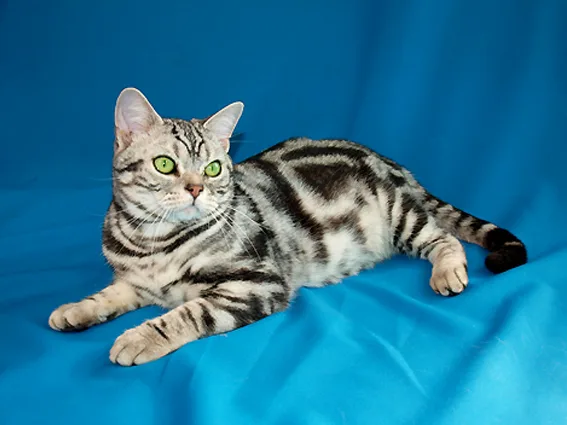
The American Shorthair is one of the few pedigree cat breeds native to the United States, developed through selective breeding from domestic shorthaired cats brought to North America by European settlers. It is not simply a random-bred domestic shorthair with a registry number; it is a distinct breed shaped over more than a century of purposeful selection for conformation, temperament, and health.
The Cat Fanciers' Association has recognized the American Shorthair since the organization's founding, and the breed consistently ranks among the top ten most registered cats in CFA records.
What sets the American Shorthair apart from a typical tabby is a combination of structural predictability, consistent head shape, body proportion, and coat quality, and a documented health profile that makes it one of the most long-lived pedigree breeds available. Owners typically report cats living fifteen to twenty years, a lifespan that reflects the breed's genetic robustness and the absence of the extreme conformational traits that shorten lives in flat-faced or fold-eared breeds.
Origin and History
The ancestry of the American Shorthair begins with working cats aboard ships crossing the Atlantic in the sixteenth and seventeenth centuries. European settlers brought shorthaired cats to North America as working animals, valued for controlling rodent populations aboard vessels and later in barns, granaries, and homesteads. These cats interbred freely across generations, developing a broadly adapted population of shorthaired domestic cats suited to North American climates and conditions.
Formal breed development began in the late nineteenth and early twentieth centuries, when American cat fanciers recognized that the best specimens of this natural population were worth preserving and standardizing. The goal was to document and selectively breed the ideal working cat, sturdy, athletic, adaptable, healthy, without introducing the exaggerated conformational features that were already appearing in Persian and Siamese breeding programs.
The breed was originally registered as the Domestic Shorthair, a name changed to the American Shorthair in 1966 to distinguish it clearly from the general population of non-pedigree domestic cats. The name change also emphasized the breed's American identity and its status as a deliberately developed breed rather than a catch-all category.
A significant early milestone was the registration of a brown tabby male named Belle in 1900 as one of the first recorded American Shorthairs. The breed was formally present at the first CFA cat shows in the early 1900s and has maintained a continuous show and breeding history since then.
Physical Characteristics
The American Shorthair is a medium to large cat with a balanced, athletic build. The overall impression is one of power without coarseness, a working cat built for stamina and function, not extreme conformation. Males are noticeably larger than females, with males typically weighing between 5.4 and 7.3 kg and females between 3.6 and 5.4 kg.
| Characteristic | Details |
|---|---|
| Weight (male) | 5.4-7.3 kg |
| Weight (female) | 3.6-5.4 kg |
| Build | Medium-large, muscular, athletic |
| Head | Large, full-cheeked, slightly longer than wide |
| Eyes | Large, wide-set, round with slight tilt at outer corner |
| Coat | Short, thick, hard texture |
| Coat colors/patterns | 80+ recognized combinations |
| Lifespan | 15-20 years |
| CFA recognition | Founding breed |
The head is large and full-cheeked with a slightly oblong shape, longer than it is wide. The muzzle is medium in length, not pushed in or elongated, giving the breed a natural feline expression free from the breathing problems that affect brachycephalic breeds. The eyes are large, round, and set wide apart, with a very slight upward tilt at the outer corners. Eye color corresponds to coat color and pattern.
The coat is the breed's most practical feature. It is short, dense, and hard in texture, a coat designed to protect against cold, moisture, and minor physical hazards in an outdoor working environment. It lies close to the body with a tight weave that resists weather better than a soft, fine coat. This coat type requires minimal grooming: weekly brushing during normal periods and slightly more frequent brushing during seasonal shedding is sufficient to keep it in good condition.
The Silver Tabby: An Iconic Color
The silver tabby with black markings is the American Shorthair's most recognizable and celebrated color variety. This combination, a pale silver ground color with dense black tabby markings in the classic (blotched), mackerel, or spotted pattern, has appeared on the covers of national magazines and won Best in Show at major cat exhibitions more than any other American Shorthair variant.
The silver tabby pattern results from the inhibitor gene (I) suppressing pigment in the banded portions of each hair shaft, creating a luminous silver base color. The black tabby markings are dense and precise against this background, producing a high-contrast pattern that reads dramatically in a show ring and in photographs.
While the silver tabby is the breed's signature look, the American Shorthair is recognized in more than eighty color and pattern combinations including solid colors, tortoiseshell, calico, shaded, smoke, and tabby patterns in a wide range of base colors. No color or pattern is considered superior to another for conformation purposes in the show ring.
Temperament and Personality
The American Shorthair is consistently described by breeders, veterinarians, and behavioral researchers as one of the most adaptable and easygoing pedigree cat breeds. The temperament reflects the breed's working-cat heritage: confident, curious, interactive, but not dependent or demanding. These are cats that enjoy company without requiring constant attention.
The breed is notably good with children and with dogs, a combination that makes it one of the most recommended breeds for family households. American Shorthairs are patient with the handling that comes with young children and will typically set their own limits by moving away rather than reacting defensively. They coexist well with dogs, particularly when introduced gradually, and many American Shorthairs actively seek canine company.
"The American Shorthair temperament is the product of natural selection for calm, confident cats that could work effectively around people and other animals. The breed retained this foundation when formal selection began, and it is one of their most valuable and consistent traits." CFA Breed Council, American Shorthair Breed Standard Commentary
Activity level is moderate. American Shorthairs are playful and athletic; they enjoy interactive play and will engage with puzzle feeders and wand toys with genuine enthusiasm, but they are not hyperactive or destructive when unstimulated. They are content to observe from a comfortable perch and do not typically vocalize excessively. This makes them suitable for apartment living as well as larger homes.
The breed matures slowly. Full physical development takes three to four years, and the personality continues to develop through this period. Adult American Shorthairs tend to be calm, self-possessed companions that maintain playful engagement into old age.
Health Profile and Genetic Testing
The American Shorthair is among the healthiest pedigree cat breeds, with a lifespan of fifteen to twenty years not uncommon among well-managed individuals. This longevity reflects both the breed's genetic diversity relative to more narrowly founded breeds and the absence of the conformational extremes that impose chronic health burdens on flat-faced, fold-eared, or extreme-typed breeds.
The primary hereditary health concern in the American Shorthair is hypertrophic cardiomyopathy (HCM), a thickening of the heart's muscular walls that reduces cardiac output and can lead to congestive heart failure, arterial thromboembolism, or sudden death. HCM is the most common acquired cardiac disease in cats of all breeds and backgrounds, but certain breeds carry genetic variants that significantly increase predisposition.
In the American Shorthair, a specific mutation in the MYBPC3 gene (the same gene implicated in HCM in Maine Coons, though the specific mutation differs) has been identified and can be tested for via DNA screening. Responsible breeders test breeding animals for this mutation and make the results available to puppy buyers. A negative test result reduces but does not eliminate HCM risk, since other genetic and acquired forms of HCM occur.
| Health Concern | Details | Management |
|---|---|---|
| Hypertrophic cardiomyopathy (HCM) | MYBPC3 mutation increases risk | DNA test available; echocardiogram screening |
| Obesity | High food motivation; easy keeper | Measured meals; weight monitoring |
| Dental disease | Common in middle age | Regular dental care from kittenhood |
| Routine parasites | No specific breed predisposition | Standard preventive care |
Obesity is a practical concern in the American Shorthair. The breed has an efficient metabolism and good appetite, and free-feeding can lead to significant weight gain, especially in indoor-only cats with reduced activity. Portion-controlled feeding, ideally based on body condition score, is recommended throughout the cat's life.
"Hypertrophic cardiomyopathy in American Shorthairs is associated with a distinct MYBPC3 variant from that found in Maine Coons, and while genetic testing is informative, comprehensive cardiac screening by echocardiography remains the most sensitive method for early detection in breeding animals." Meurs, K.M. et al., Journal of Veterinary Internal Medicine, 2007
Grooming and Care
The American Shorthair's short, hard coat is one of the lowest-maintenance coats in the pedigree cat world. Weekly brushing with a soft-bristle brush or fine-toothed metal comb removes loose hair and distributes skin oils. Shedding increases in spring and autumn, and additional brushing during these periods prevents significant hair accumulation on furniture and clothing.
Bathing is rarely necessary for an indoor American Shorthair in normal health. When bathing is required, before a show, or after contact with a substance that should not be ingested during grooming, the coat dries relatively quickly and does not mat when wet.
Nail trimming every two to three weeks, ear inspection and cleaning as needed, and regular dental care complete the grooming routine. Dental disease is common in domestic cats broadly, and the American Shorthair is not exempt. Introducing tooth brushing in kittenhood is the single most effective preventive measure; dental chews and water additives provide secondary support.
For detailed guidance on maintaining coat health see American Shorthair Care Guide.
The American Shorthair in Competition
The American Shorthair has a long and distinguished show record in both CFA and TICA competition. The breed's balanced structure, neither extreme nor understated, requires judges to evaluate every aspect of conformation rather than focusing on a single dramatic feature, which many breeders consider the most honest and demanding evaluation in cat showing.
A silver tabby American Shorthair named Shawnee Trademark became the first cat registered by both the CFA and what was then the All-American Cat Club in the early days of the American cat fancy, representing the breed's foundational status in American pedigree cat history.
The breed's wide color acceptance means that showing American Shorthairs requires entry in color-specific classes before competing at the breed level and then at the all-breed Best in Show level. Judges assess head shape, eye shape and color, body proportion, coat texture, and overall balance.
Living with an American Shorthair
American Shorthairs adapt readily to a range of living situations. They are equally content in small apartments and large houses, provided they receive adequate play and enrichment. Their moderate vocalization and independent temperament mean they can tolerate a working owner's schedule without the separation anxiety seen in more demanding breeds.
The breed is compatible with other cats, dogs, and children, making it a practical choice for multi-pet households. Early socialization, exposing kittens to a variety of people, animals, sounds, and handling before twelve weeks of age, maximizes these natural temperament advantages.
Enrichment for American Shorthairs should leverage their hunting instinct. Wand toys, puzzle feeders, and window perches with outdoor views provide mental stimulation that prevents the behavioral problems associated with boredom. These are athletic cats, and regular interactive play sessions help maintain healthy weight and behavioral balance.
For health-related questions and common breed issues see American Shorthair Health Problems.
Comparison with Related Breeds
The American Shorthair is frequently compared with the British Shorthair, its British counterpart in the shorthaired pedigree cat world. The two breeds share a broadly similar concept, a sturdy, shorthaired cat with a calm temperament, but differ significantly in detail. The British Shorthair has a rounder head, denser and plushier coat, and a somewhat more sedentary adult temperament. The American Shorthair is leaner, more athletic, and has a harder, less plush coat.
Both breeds differ substantially from the large semi-longhaired Maine Coon, which is also an American breed but with a very different origin story, the Maine Coon developed as a working cat in the harsh winters of New England, and its semi-long tufted coat reflects that heritage.
For a direct comparison of the shorthaired pedigree types see British Shorthair.
Why Choose an American Shorthair
For owners seeking a healthy, adaptable, long-lived pedigree cat with a predictable temperament and minimal grooming requirements, the American Shorthair is among the most practical choices in the entire pedigree cat world. The breed's documented health, wide color selection, and suitability for families with children and other pets give it a breadth of appeal that few breeds can match.
The combination of CFA recognition, DNA testing availability for the primary hereditary cardiac risk, and a deep gene pool relative to many numerically small pedigree breeds means that buyers working with responsible breeders can reasonably expect a cat with an exceptional chance at a long, healthy life.
For guidance on selecting the right cat for your family see Best Cats for Families with Kids.
References
- Meurs, K.M., Sanchez, X., David, R.M., et al. "A cardiac myosin binding protein C mutation in the Maine Coon cat with familial hypertrophic cardiomyopathy." Human Molecular Genetics, 2005. https://doi.org/10.1093/hmg/ddi105
- Meurs, K.M., Norgard, M.M., Ederer, M.M., et al. "A substitution mutation in the myosin binding protein C gene in ragdoll hypertrophic cardiomyopathy." Genomics, 2007. https://doi.org/10.1016/j.ygeno.2007.02.007
- Cat Fanciers' Association. "American Shorthair Breed Standard." CFA.org, 2023. https://cfa.org/american-shorthair/
- Little, S.E. (ed.) The Cat: Clinical Medicine and Management. Elsevier Saunders, 2012. ISBN 978-1437706208.
- Hartwell, S. "American Shorthair History." MessyBeast.com. https://messybeast.com/breeds/american-shorthair.htm
Frequently Asked Questions
Is an American Shorthair the same as a regular domestic shorthair?
No. An American Shorthair is a distinct pedigree breed developed through selective breeding since the late nineteenth century, with a documented lineage, breed standard, and CFA registry. A domestic shorthair is any random-bred shorthaired cat without pedigree documentation. While domestic shorthairs may superficially resemble American Shorthairs, they are not the same thing.
American Shorthairs have predictable conformation, documented health screening, and specific temperament characteristics that come from generations of purposeful breeding.
How long do American Shorthair cats live?
American Shorthairs are among the longest-lived pedigree cat breeds, with a typical lifespan of 15 to 20 years. This longevity reflects the breed’s genetic diversity and the absence of conformational extremes. Lifespans of 18 to 20 years are not uncommon among well-cared-for individuals with access to regular veterinary attention and appropriate nutrition.
Do American Shorthairs have health problems?
The primary hereditary health concern is hypertrophic cardiomyopathy (HCM), a thickening of the heart wall linked to a MYBPC3 gene mutation. DNA testing is available and responsible breeders screen breeding animals. Obesity is a practical concern given the breed’s good appetite and efficient metabolism. Overall, the American Shorthair has one of the more favorable health profiles in the pedigree cat world.
Are American Shorthairs good with children?
Yes. The American Shorthair is consistently recommended as one of the best cat breeds for families with children. The breed is patient, tolerant of handling, and tends to respond to overly enthusiastic handling by moving away rather than reacting defensively. Early socialization and teaching children appropriate interaction reinforce this natural tolerance.
What is the most famous American Shorthair color?
The silver tabby with black classic or mackerel markings is the American Shorthair’s most iconic color variety. The combination of a luminous silver background and precise black markings produces a dramatic pattern that has won Best in Show at major cat shows more than any other American Shorthair color. The breed is recognized in over 80 color and pattern combinations, but the silver tabby is the breed’s visual signature.
How much grooming does an American Shorthair need?
Very little compared to most pedigree cats. The short, hard coat needs brushing once or twice a week during normal periods and slightly more frequently during seasonal shedding in spring and autumn. Bathing is rarely necessary. The overall grooming commitment is among the lowest of any pedigree breed, which is one of the practical advantages that makes the American Shorthair a popular choice for busy households.