
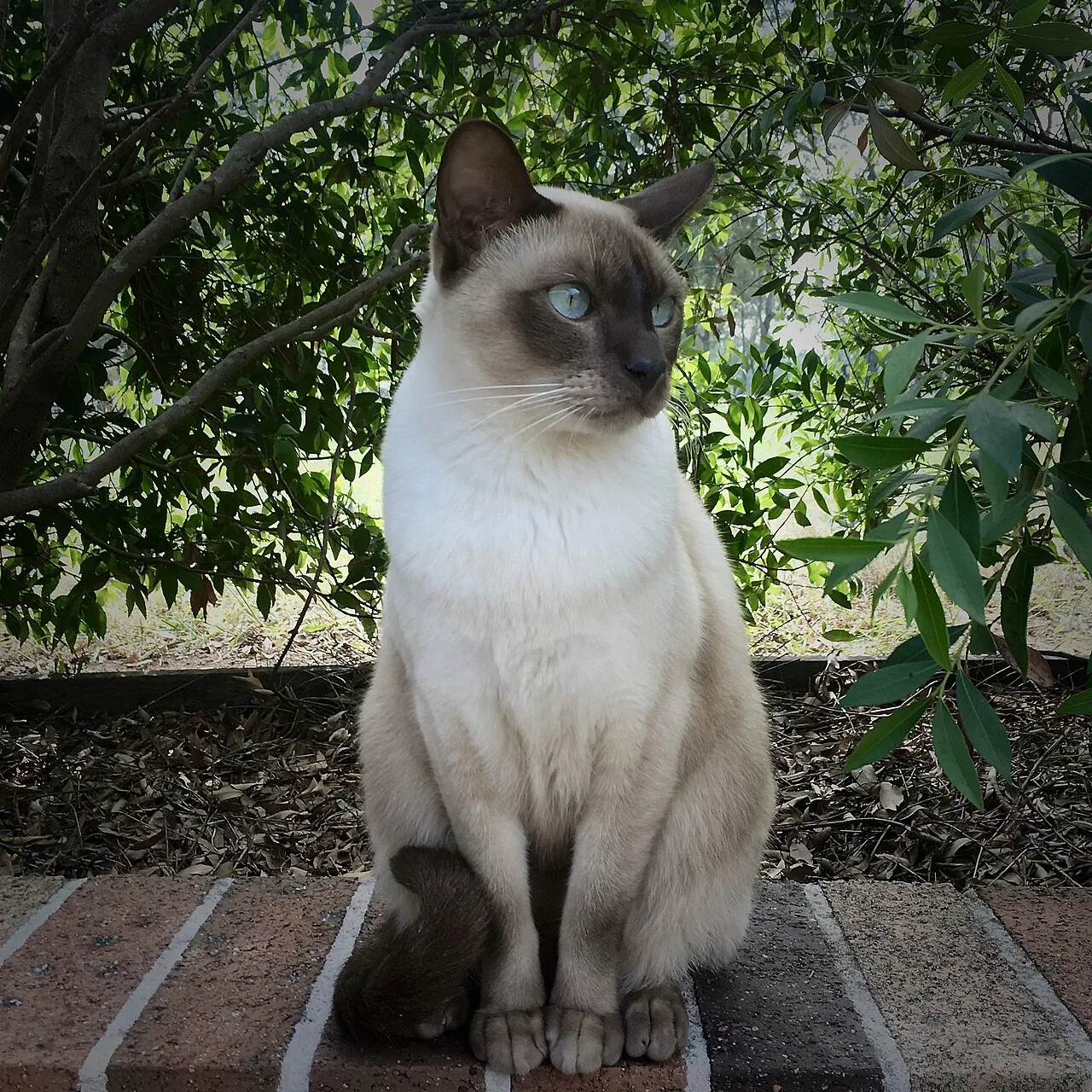
The Tonkinese is a deliberately created hybrid breed developed in Canada in the 1960s by crossing Siamese and Burmese cats with the intention of producing a cat that balanced the best qualities of both parent breeds.
The result is a medium-sized, muscular cat with an aqua-eyed mink coat pattern that is unique to the breed, a personality that blends the Siamese's outgoing intelligence with the Burmese's affectionate warmth, and a lifespan that is among the longest documented in domestic cats, often reaching fifteen to eighteen years and occasionally beyond.
The Tonkinese occupies an interesting middle ground. It is not as relentlessly demanding as the Siamese, not as laid-back as the Burmese. Owners who have found the Siamese too intense and the Burmese too quiet often find that the Tonkinese is precisely the right balance, a social, playful, interactive cat that communicates clearly without the Siamese's penetrating vocality, and that is affectionate without the Burmese's extreme clinginess.
Origin and Development
The development of the Tonkinese as a distinct breed is attributed to Canadian breeder Margaret Conroy, who began crossing Siamese and Burmese cats in the 1960s with the specific goal of creating a breed that captured the middle ground between the two. The name "Tonkinese" was suggested by Jane Barletta, with the spelling chosen to avoid confusion with the Gulf of Tonkin, and the breed was named after a Southeast Asian region to evoke the exotic origins of both parent breeds.
It should be noted that Siamese-Burmese crossbreeding had been occurring informally for far longer than the formal breed development timeline suggests. Wong Mau, the founding cat of the Burmese breed imported from Burma by Dr.
Joseph Thompson in 1930, was herself likely a hybrid of Siamese and Burmese type, when bred to Siamese males, she produced both Siamese-type kittens and kittens matching her own appearance, suggesting she was heterozygous for the Burmese coat gene. In this sense, the Tonkinese is in some respects a rediscovery of the natural hybrid that exists whenever Siamese and Burmese cats share territory.
The Canadian Cat Association (CCA) recognized the Tonkinese in 1971, making it one of the first registries to grant recognition. CFA recognition followed in 1984. TICA also recognizes the breed.
The Three Coat Patterns
The most distinctive aspect of Tonkinese genetics is the three coat patterns that appear in predictable ratios when Tonkinese cats are bred together. These patterns result from the interaction of the Siamese colorpoint gene (cs) and the Burmese sepia gene (cb), which are allelic; they occupy the same genetic locus and interact in ways that produce intermediate expressions.
| Pattern | Genetics | Appearance | Eye Color |
|---|---|---|---|
| Colorpoint | cs/cs (homozygous Siamese) | Siamese-type: pale body, dark points | Blue |
| Mink | cs/cb (heterozygous) | Intermediate: muted contrast | Aqua |
| Solid (sepia) | cb/cb (homozygous Burmese) | Burmese-type: subtle shading, rich color | Gold/yellow |
The mink pattern is the most distinctive and the most associated with the Tonkinese breed name. It produces a coat with a softer contrast between the body and points than the Siamese, and a deeper color than the Burmese solid. The body color is visibly darker than a Siamese but the points are less dramatically defined, the transition from body to point is gradual rather than sharp.
When two Tonkinese in the mink pattern are bred together, the expected ratio is 25% colorpoint, 50% mink, and 25% solid sepia. This means that only half the kittens in any Tonkinese x Tonkinese mink litter will display the classic mink pattern. Colorpoint and solid kittens from these litters are fully purebred Tonkinese and can be shown in separate classes, but many registries treat the mink as the most desirable pattern for show purposes.
The aqua eye color of the mink pattern is unique in the domestic cat world. No other breed standard describes aqua or turquoise as the ideal eye color. The color results from the intermediate expression of the colorpoint gene, the reflective layer (tapetum lucidum) interacts with the partially pigmented iris in the mink heterozygote to produce a color between the Siamese's deep blue and the Burmese's gold.
Physical Characteristics
The Tonkinese body type was intended to be the intermediate between the Siamese's elongated foreign type and the Burmese's rounded, cobby type. The breed standard describes a modified wedge head that is neither as narrow as the Siamese nor as round as the Burmese, and a medium body that is muscular and substantial without the extremes of either parent type.
| Characteristic | Details |
|---|---|
| Weight | 2.7-5.4 kg |
| Build | Medium, muscular, surprisingly solid |
| Head | Modified wedge, neither extreme |
| Eyes | Almond-shaped; aqua in mink pattern |
| Coat | Short, fine, silky, close-lying |
| Patterns | Colorpoint, mink (intermediate), solid |
| Lifespan | 15-18 years |
| CFA recognition | 1984 |
The Tonkinese tends to feel heavier than it looks, the muscular build packs more mass into the frame than the coat and body silhouette suggest. Breeders sometimes describe the breed as having a "brick wrapped in silk" quality. This density is a breed characteristic and indicates good muscular development rather than obesity.
The coat is short, fine, and silky with a distinct close-lying sheen. The mink coat has a particularly notable texture, described in the breed standard as resembling mink fur, that is soft and lustrous in a way that differs from both the Siamese's fine coat and the Burmese's plush short coat.
Temperament
The Tonkinese personality is the breed's most appealing quality for owners who have found the extremes of its parent breeds challenging. The Siamese's intensity is moderated; the Burmese's quietness is amplified. What remains is a cat that is reliably social, playful, communicative, and affectionate without being exhausting.
Tonkinese cats vocalize; they are not silent, but the communication is more conversational and less demanding than the Siamese's relentless commentary. They seek attention actively but can be redirected and respond to the household's rhythm without the anxiety that some Siamese individuals show when their social needs go unmet.
"The Tonkinese represents one of the more successful hybrid breed programs in the modern cat fancy, the blending of the Siamese's intelligence and outgoing nature with the Burmese's warmth and physical affection has produced a breed whose temperament is highly consistent and broadly appealing." CCA Tonkinese Breed Profile, 2019
The breed is notably good with children and with other cats and dogs. The activity level is high enough to keep children engaged in play but not so frenetic as to overwhelm them. Multiple Tonkinese households are popular because the cats actively enjoy feline company and play with each other enthusiastically throughout adult life.
Intelligence is a standout characteristic. Tonkinese cats learn household routines quickly, respond to their names reliably, can be trained with positive reinforcement to perform simple behaviors on cue, and will spontaneously investigate novel objects and situations. Puzzle feeders, interactive toys, and rotating enrichment are important for maintaining behavioral health.
For apartment suitability see Best Cats for Apartments.
Health Profile
The Tonkinese is a generally healthy and long-lived breed, with a typical lifespan of fifteen to eighteen years and many individuals reported living beyond twenty. This longevity reflects the hybrid vigor that often results when two distinct but related breeds are combined, along with the good health of both parent breeds when managed responsibly.
The primary hereditary health concern is hypertrophic cardiomyopathy (HCM), which occurs in the breed as it does in most domestic cat breeds. Dental disease is a consistent concern across the adult years.
| Health Concern | Details | Management |
|---|---|---|
| Hypertrophic cardiomyopathy (HCM) | Reported in breed | Echocardiogram screening |
| Dental disease | Progressive with age | Regular dental care; brushing from kittenhood |
| Inflammatory bowel disease | Anecdotal reports in some lines | Dietary management if diagnosed |
| Obesity | Risk in sedentary adults | Measured meals; active play |
"Tonkinese cats benefit from the heterozygote advantage that sometimes accompanies crossbreeding from distinct founder lines. While they are not immune to the health concerns of their parent breeds, the population as a whole shows favorable longevity statistics." Little, S.E., The Cat: Clinical Medicine and Management, 2012
For lifespan context see How Long Do Cats Live. For care guidance see Tonkinese Care Guide.
Grooming and Care
The Tonkinese coat is one of the easiest to maintain of any pedigree breed. Short, fine, and close-lying, it requires only occasional brushing with a soft bristle brush or chamois cloth to remove loose hair and add sheen. Many Tonkinese owners find that running a damp hand over the coat is sufficient maintenance for non-shedding periods.
Seasonal shedding occurs but is modest compared to medium- or long-coated breeds. Dental care is the most important proactive health maintenance measure: daily tooth brushing is ideal, with professional dental cleaning under anesthesia as needed based on the individual's plaque accumulation rate.
Comparison with Parent Breeds
The Tonkinese occupies a clear middle position between its two parent breeds in most measurable respects:
- Body type: more muscular than Siamese, leaner than Burmese
- Vocalization: less intense than Siamese, more than Burmese
- Activity level: high but less frenetic than Siamese
- Affection: warm and expressive, slightly less clingy than Burmese
- Independence: moderate, better than Siamese alone, slightly less independent than Burmese
For direct breed comparisons see Siamese Cat and Burmese Cat.
References
- Little, S.E. (ed.) The Cat: Clinical Medicine and Management. Elsevier Saunders, 2012. ISBN 978-1437706208.
- Lyons, L.A. "Genetics of feline coat colours and patterns." Journal of Heredity, 2015. https://doi.org/10.1093/jhered/esv002
- Canadian Cat Association. "Tonkinese Breed Standard and History." CCA-AFC.com, 2022.
- Cat Fanciers' Association. "Tonkinese Breed Standard." CFA.org, 2023. https://cfa.org/tonkinese/
- Dank, G., Segev, G., Gurevitz, I. "Tonkinese breed longevity: A retrospective cohort study." Israel Journal of Veterinary Medicine, 2018. https://www.ijvm.org.il/
Frequently Asked Questions
What is the mink pattern in Tonkinese cats?
The mink pattern is the intermediate coat expression that appears when a cat carries one Siamese colorpoint gene (cs) and one Burmese sepia gene (cb). It produces a coat with softer point contrast than the Siamese pattern and deeper color than the Burmese solid pattern, with the characteristic aqua eye color unique to the Tonkinese.
When two mink Tonkinese are bred, roughly 50% of kittens will be mink, 25% will be colorpoint (like Siamese), and 25% will be solid sepia (like Burmese).
How is the Tonkinese different from the Siamese and Burmese?
The Tonkinese is intermediate between its parent breeds in body type, vocalization, and temperament. It is less intensely vocal and demanding than the Siamese, more playful and outgoing than the Burmese, and has a muscular medium body type that falls between the Siamese’s slender frame and the Burmese’s rounded cobby build. Many owners who found the Siamese too intense or the Burmese too quiet find the Tonkinese to be the right balance.
How long do Tonkinese cats live?
The Tonkinese is one of the longer-lived domestic cat breeds, with a typical lifespan of 15 to 18 years and many individuals reported living beyond 20. This longevity is attributed in part to hybrid vigor from the crossing of the two distinct parent breeds. With good veterinary care and appropriate nutrition, Tonkinese cats frequently reach their late teens.
Are Tonkinese good with children?
Yes. The Tonkinese’s combination of social confidence, moderate activity level, and genuine affection makes it well-suited to family households with children. The breed plays enthusiastically and tolerates handling well, while being intelligent enough to navigate the household’s routine and social enough to seek out children for interaction rather than avoiding them.
Do Tonkinese cats have aqua eyes?
Cats with the mink coat pattern have aqua or turquoise eyes, a color unique among pedigree cat breeds. This color results from the intermediate expression of the colorpoint gene in the mink heterozygote, where the tapetum lucidum interacts with the partially pigmented iris. Tonkinese cats with the colorpoint pattern have blue eyes (like Siamese), and those with the solid sepia pattern have yellow-gold eyes (like Burmese).
How much grooming does a Tonkinese need?
Very little. The short, fine, close-lying coat requires only occasional brushing with a soft brush or chamois cloth. Many owners find that running a damp hand over the coat is sufficient between grooming sessions. Seasonal shedding is modest. The main proactive care commitment is dental hygiene, regular dental care from kittenhood reduces the risk of the dental disease that becomes increasingly significant in middle-aged and older Tonkinese.