
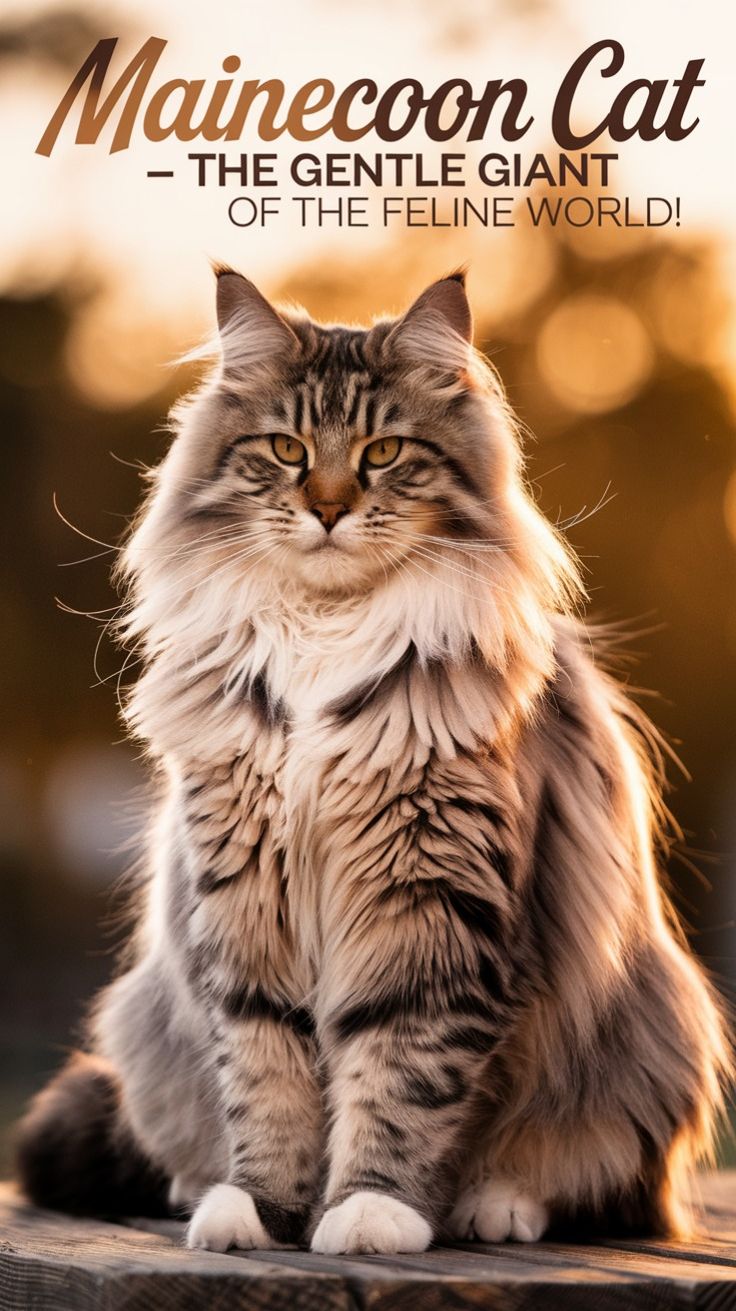
The Maine Coon is the largest domestic cat breed in the world and one of the oldest natural breeds in North America. With a semi-long, layered coat evolved for brutal New England winters, a body length that routinely exceeds one metre, and a temperament that has earned the breed the persistent nickname "the dog of the cat world," the Maine Coon occupies a unique position in feline history.
It is a cat that arrived without a studbook, shaped by geography and climate rather than deliberate selection, and has since become one of the three most popular pedigree breeds on the planet.
This guide covers every major aspect of the Maine Coon: origins and mythology, size and physical structure, coat biology, distinctive vocalisation, temperament, health conditions and genetic testing, grooming requirements, and the breed standards set by the major registries. Whether you are considering bringing a Maine Coon into your home, researching breed-specific health risks, or simply curious about why this cat behaves so differently from most others, you will find the detail you need here.
Origins and Historical Background
The Maine Coon's origin story is tangled with folklore in a way that few cat breeds can match. Three competing theories have circulated for more than a century, and untangling the plausible from the impossible requires both genetics and history.
The raccoon hybrid theory is the oldest folk explanation and the most biologically untenable. The breed's bushy, ringed tail, large size, and tufted ears inspired nineteenth-century farmers to claim that Maine Coons were the result of crossbreeding between domestic cats and raccoons. Modern genetics makes this impossible.
Cats (Felis catus) and raccoons (Procyon lotor) are separated by tens of millions of years of evolution and differ so fundamentally in chromosome number and reproductive biology that hybridisation cannot occur. The theory is retained in the breed's name and nowhere else.
The Marie Antoinette theory is historically romantic but unverifiable. According to this account, when the French queen attempted to flee to America during the Revolution, her ship carried six Turkish Angora cats. The queen was captured before she could board, but the cats allegedly reached the coast of Maine and mated with local shorthairs, founding the breed.
There is no documentary evidence linking any such cats to the Maine Coon's actual development, and the timeline is difficult to reconcile with the breed's first formal appearances. The story persists because it is a good story.
The Viking origin theory is the most scientifically plausible of the romantic accounts. Norse seafarers are known to have reached the coast of North America around 1000 CE, centuries before European colonisation. Norse ships routinely carried skogkatter, Norwegian Forest Cats, as working mousers.
If any of these cats made shore in what is now Maine and bred with local cats, the resulting population would have been subjected to the same evolutionary pressures that shaped the Maine Coon's coat and body. The Norwegian Forest Cat and the Maine Coon do share morphological similarities: both have heavy, layered, water-resistant coats, rectangular body shapes, and tufted ears.
Genetic work has not confirmed this hypothesis, and it may be coincidental parallel evolution driven by similar cold climates.
The most likely explanation is prosaic but well-supported by what we know of nineteenth-century seafaring. Long-haired cats were common aboard trading ships throughout the 1600s and 1700s, prized for rodent control. As ships arrived on the Maine coast, their long-haired cats inevitably mixed with the shorthaired cats already established in coastal towns and farming communities.
The resulting population faced Maine winters, which rank among the harshest in the continental United States, with heavy snowfall, prolonged freezing temperatures, and rapid freeze-thaw cycles. Over multiple generations, the cats that survived and reproduced most successfully were those with the densest coats, largest bodies (which retain heat more efficiently), and the greatest physical robustness.
This is natural selection operating in real time, producing a large, heavily coated, hardy cat without any human intent.
The breed received its first formal recognition in 1895, when a Maine Coon named Cosey won Best Cat at the inaugural cat show held at Madison Square Garden in New York City. A silver collar from that show is preserved by the Cat Fanciers' Association as a historical artifact.
After that early success, Persian cats arrived in America and dominated show halls for the next several decades, pushing the Maine Coon into obscurity. The breed survived through working farm populations in New England. The Central Maine Cat Club was established in 1953 and began formalising breed standards. The CFA granted the Maine Coon full championship status in 1976.
TICA recognised the breed in 1979. Today the Maine Coon consistently ranks among the top three most registered breeds in both organisations.
Size: The Largest Domestic Cat Breed
No single characteristic defines the Maine Coon more immediately than its size. The breed is categorised by registries as a large breed, but this formal description undersells the reality.
Adult male Maine Coons typically weigh between 5.9 and 8.2 kg. Females are substantially smaller, typically ranging from 3.6 to 5.4 kg, which creates one of the most pronounced sexual dimorphism ratios in domestic cats. A mature male Maine Coon standing next to a female can appear to be an entirely different breed.
Weight, however, does not capture the full picture. The Maine Coon's most distinctive measurement is length. The breed has an unusually long, rectangular body with a proportionally extended torso and tail.
Stewie, a Maine Coon owned by Robin Hendrickson of Reno, Nevada, held the Guinness World Record for the longest domestic cat, measuring 123.19 cm from the tip of his nose to the end of his tail when measured in 2010.
This record has since been broken by Barivel, an Italian Maine Coon who measured 120 cm as of 2018, and subsequently by Fenrir, another Maine Coon measured at 47.83 cm in height at the shoulder, but the central point holds: the Maine Coon regularly produces cats of a length and physical presence that surprises even experienced cat owners.
The breed also matures slowly. Maine Coons do not reach full adult size until they are three to five years old. A Maine Coon kitten at twelve months that appears large will continue adding mass and length for years. This extended growth period is unusual in domestic cats, which typically complete their growth by twelve to eighteen months.
| Measurement | Maine Coon (Male) | Maine Coon (Female) | Average Domestic Cat |
|---|---|---|---|
| Adult weight | 5.9-8.2 kg | 3.6-5.4 kg | 3.5-4.5 kg |
| Body length (nose to tail base) | 76-101 cm | 61-76 cm | 46-51 cm |
| Tail length | 33-40 cm | 28-36 cm | 25-30 cm |
| Age at full maturity | 3-5 years | 3-5 years | 12-18 months |
| Exceptional individuals | 11+ kg recorded | 7+ kg recorded | 5+ kg uncommon |
The skeletal structure supporting this size is equally notable. Maine Coons have broad chests, wide-set hind legs, and large, round, heavily tufted paws that function as natural snowshoes on frozen ground. The hind legs are slightly longer than the forelegs, giving the spine a slight upward slope toward the rump that is visible in profile.
Coat: Three-Layered and Water-Resistant
The Maine Coon's coat is one of the most functionally sophisticated of any domestic cat breed, and understanding its structure explains both the breed's cold-weather resilience and its grooming requirements.
The coat is divided into three distinct layers, each serving a different purpose.
The outer guard hairs are the longest layer, extending up to 12 cm on the belly, flanks, and ruff, and tapering shorter on the back and shoulders. These hairs have a coarser texture and a slight water-resistant quality due to the structure of their outer cuticle scales. In heavy rain or snow, the guard hairs shed water before it can penetrate to the skin. The back, which receives the most direct precipitation, typically carries shorter and denser guard hairs than the belly and sides.
The middle awn hairs are intermediate in length and texture, providing insulation and giving the coat its overall volume. They are denser in winter and partially shed in spring during the annual moult.
The soft undercoat is the innermost layer, fine and dense, providing the primary thermal insulation. In winter this layer thickens substantially. The combination of undercoat and awn hairs traps a layer of warm air next to the skin that insulates the cat from cold surfaces and low ambient temperatures.
The Maine Coon's ruff, the distinctive mane of longer fur around the chest and neck, provides insulation for the most thermally vulnerable parts of the body when the cat curls up or hunches against cold. The ear tufts, which protrude beyond the outer edge of the ear in most individuals, are thought to reduce heat loss from the highly vascularised inner ear. The tufted paws distribute weight across snow and provide grip on cold surfaces.
Coat colour in Maine Coons is exceptionally diverse. The CFA and TICA both recognise dozens of colour and pattern combinations, including solid colours (white, black, blue, red, cream), tabby patterns (classic, mackerel, ticked, spotted), tortoiseshell, calico, bicolour, and smoke varieties. The only colours not recognised by some registries are colourpoint (Siamese-pattern) and chocolate or lavender variants, which would require the introduction of genes not historically present in the breed.
The coat undergoes a pronounced seasonal change. Summer coats are visibly lighter, shorter, and less dense than winter coats. Owners who acquire a Maine Coon in winter and see their first summer may be startled by how different the cat looks. The ruff, in particular, largely disappears in warm months.
Vocalisation: Chirps, Trills, and Chatters
One of the Maine Coon's most remarked-upon characteristics is its voice. The breed does not produce the loud, demanding meow typical of Siamese or Oriental breeds. Instead, Maine Coons communicate primarily through a repertoire of chirps, trills, and chattering sounds that many owners describe as more birdlike than catlike.
The trill, a short, rolling sound produced in the back of the throat, is the Maine Coon's most common contact call. It functions as a greeting, a request, and a general-purpose social sound. Many Maine Coons use it to respond to their name, to initiate play, and to greet returning family members. The chirp is a higher-pitched variant used most often when the cat is excited by prey or stimulation through a window.
Chattering, the rapid jaw-clicking sound that many cats produce when watching birds, is particularly well-developed in Maine Coons. Their chattering sequences are longer and more complex than those of most breeds. The functional explanation for chattering remains debated; the most widely accepted hypothesis is that it represents a suppressed prey-capture bite reflex.
Standard meows do occur, but they are notably quieter than the breed's size would suggest. A large Maine Coon will produce a surprisingly soft, high-pitched meow in contrast to the chirps and trills that dominate its normal communication. This vocal characteristic, combined with the sociable temperament described below, contributes significantly to the breed's popularity with households that want a highly interactive cat without excessive noise.
Temperament: Sociable, Playful, and Dog-Like
The description "dog-like" appears in almost every account of Maine Coon temperament, and while all generalisations about individual animals carry risk, the comparison captures something real about the breed's behavioural profile.
Maine Coons are highly social cats that actively seek human company rather than tolerating it. Unlike breeds that enjoy sitting nearby but remain physically aloof, most Maine Coons will follow their owners from room to room, involve themselves in household activities, and prefer to be in the same space as their people. They do not typically demand lap-sitting, many Maine Coons prefer sitting beside rather than on their owners, but they maintain close physical proximity throughout the day.
Play behaviour remains intense well into adulthood and into old age, which is atypical for cats, which normally show declining play motivation after the first two years. Maine Coons in their seventh or eighth year may retain play energy comparable to a two-year-old cat of another breed. This sustained playfulness makes enrichment and interactive toy sessions important for the breed's mental health throughout its life.
Leash training succeeds more frequently with Maine Coons than with most other cat breeds. Many individuals accept harness training without significant resistance and develop genuine enthusiasm for outdoor walks. The breed's curiosity and physical confidence make outdoor exploration appealing to them, and their size provides a practical advantage, a large Maine Coon is less vulnerable to outdoor hazards than a small cat. Harness training should begin in kittenhood for best results.
Relationship with water is another distinctive trait. Maine Coons frequently dip their paws in water bowls, join their owners in the bathroom, sit at the edge of bathtubs, and occasionally step directly into showers. This behaviour has no universally agreed explanation but has been documented consistently enough that breeders include it in routine temperament descriptions. A Maine Coon owner who leaves a full water glass unattended should expect to find it empty.
Compatibility with dogs is unusually good for a cat breed. Maine Coons introduced to calm or medium-energy dogs in kittenhood often form genuine friendships. The breed's confidence; it does not typically respond to novel situations with fear or aggression, makes dog-cohabitation relatively straightforward compared with more anxious or reactive breeds. The Maine Coon is equally good with other cats, provided introductions are managed carefully.
Compatibility with children is strong. The breed's patience, physical robustness, and playful nature make it well-suited to households with older children who understand appropriate cat handling. Maine Coons are not fragile, and they generally de-escalate threatening situations through withdrawal rather than aggression. For households with young children, the crosslink Best Cats for Families with Kids provides comparative breed analysis.
The breed tends toward independence in the sense that Maine Coons are curious and self-directing rather than anxious without constant attention. They manage alone time better than some highly social breeds, provided they have adequate environmental enrichment. Separation anxiety at clinical levels is not commonly reported, though the breed clearly prefers company to solitude.
Health Conditions and Genetic Testing
The Maine Coon has several known hereditary health conditions, and responsible breeders test for the most serious before breeding. The health profile of a tested Maine Coon from a responsible source differs substantially from that of an untested animal. For a comprehensive review of all known conditions and their management, see Maine Coon Health Problems.
Hypertrophic Cardiomyopathy (HCM) is the most serious health concern in the breed and the primary cause of early death in affected cats. HCM is the thickening of the left ventricular wall, which reduces the heart's ability to pump blood efficiently, can cause blood clots, and may progress to heart failure or sudden death.
A specific genetic variant, designated HCM1, was identified in the Maine Coon and involves a mutation in the MYBPC3 gene (myosin-binding protein C3), the same gene implicated in human familial hypertrophic cardiomyopathy. A DNA test for the HCM1 mutation became commercially available in the mid-2000s.
Studies have estimated that the HCM1 mutation is carried by approximately 30-40% of Maine Coons in the general population. However, the HCM1 variant does not account for all HCM in the breed, a cat that tests negative for HCM1 can still develop HCM via other, currently unidentified, genetic pathways.
Annual echocardiograms performed by a board-certified cardiologist are the gold standard for monitoring, and reputable breeders screen breeding cats annually.
"Hypertrophic cardiomyopathy is the most common heart disease in cats, and Maine Coons are among the breeds with the highest documented genetic predisposition. HCM1 mutation testing reduces risk but does not eliminate it; cardiac ultrasound remains the definitive screening tool." American College of Veterinary Internal Medicine consensus statement on feline HCM screening
Hip Dysplasia is an orthopedic condition in which the hip joint develops abnormally, leading to looseness, pain, and eventual osteoarthritis. Hip dysplasia is common in large dog breeds but comparatively rare in domestic cats. Maine Coons are one of the few cat breeds in which the condition occurs at significant frequency.
The Orthopedic Foundation for Animals (OFA) maintains a registry for hip evaluations in cats, and responsible breeders submit radiographs of breeding animals for evaluation. Mild cases may be managed with anti-inflammatory medication and weight management; severe cases may require surgical intervention.
Spinal Muscular Atrophy (SMA) is a genetic neuromuscular disorder caused by a homozygous recessive mutation that causes loss of motor neurons in the spinal cord. Affected kittens typically show muscle weakness and an abnormal gait beginning at around three to four months of age. The condition is not painful, and affected cats can live comfortably as indoor-only pets with accommodations for their reduced mobility.
A DNA test is available. Carriers (one copy of the mutation) are clinically normal. Responsible breeders test breeding cats and avoid pairing two carriers.
Polycystic Kidney Disease (PKD) occurs in Maine Coons at low frequency, but it is primarily associated with Persian and related breeds. Maine Coons can carry the mutation due to outcrossing in the breed's history. DNA testing is available and recommended.
| Health Condition | Estimated Prevalence in Breed | Test Type | Testing Recommendation |
|---|---|---|---|
| HCM1 mutation (MYBPC3) | 30-40% carriers | DNA swab | Breed all cats from HCM1-negative parents; annual echo for all cats |
| Hypertrophic Cardiomyopathy (all causes) | Higher than breed average | Echocardiogram | Annual echo from age 2 onward |
| Hip Dysplasia | Uncommon but elevated vs other cat breeds | Radiograph (OFA) | Screen all breeding animals |
| Spinal Muscular Atrophy (SMA) | Rare if tested | DNA swab | Mandatory for breeding cats |
| Polycystic Kidney Disease (PKD) | Rare | DNA swab | Recommended for breeding cats |
"Breeders of Maine Coons should be required to provide documentation of HCM echocardiogram results for both parents at the time of sale. A kitten without this documentation carries a substantially higher cardiac risk than one from a tested litter." The Cat Fanciers' Association Health Committee guidance on Maine Coon breeding practices
Lifespan and General Health
With responsible breeding and attentive veterinary care, Maine Coons live between 12 and 15 years, and individuals living to 17 or 18 years are not unusual. The breed's overall constitution is robust, its origins as an unassisted working cat mean it was never subject to the health compromises that can accompany deliberate selection for extreme morphological traits.
Obesity is a practical concern in the breed. The Maine Coon's large frame and naturally heavy build can mask weight gain that would be obvious in a smaller breed. An overweight Maine Coon will carry excess weight as apparent bulk rather than the obvious roundness seen in smaller overweight cats. Regular veterinary weigh-ins and a measured feeding regimen, rather than free-choice feeding, are recommended. Obesity directly worsens both cardiac outcomes and orthopedic health in affected cats.
Dental disease follows the same patterns as other domestic cats. Regular toothbrushing, dental chews, and annual professional cleaning under anaesthesia maintain oral health and reduce the systemic inflammation that dental disease is known to cause in cats.
Grooming Requirements
The Maine Coon's coat requires less maintenance than its volume suggests, largely because the individual strands are silkier and less prone to tight matting than the denser coats of Persians or Himalayans. However, "less maintenance than a Persian" should not be confused with "low maintenance."
Brushing two to three times per week with a stainless-steel wide-toothed comb or a slicker brush prevents the formation of mats, removes dead undercoat during moult seasons, and distributes natural skin oils through the coat. The belly, armpits (axillae), and the area behind the ears are the locations where mats form most quickly and should receive priority attention during grooming sessions.
During the spring moult, daily brushing is typically required to manage the quantity of undercoat being shed. The volume of loose fur a Maine Coon produces during a heavy moult is sufficient to surprise even owners who were warned in advance. Deshedding tools designed for medium to long coats, used in the direction of hair growth, are effective at removing bulk undercoat without damaging the guard hairs.
The plumed tail, which is one of the breed's visual signatures, requires regular combing to remain free of tangles. The ear tufts, which extend from within and beyond the ear pinnae, should be inspected at each grooming session for dirt accumulation, though they rarely require trimming in otherwise healthy cats.
Bathing is tolerated by most Maine Coons better than by most cat breeds, consistent with the breed's noted affinity for water. Bathing every four to six weeks maintains coat condition in show cats. Pet cats bathed less frequently, or not at all, remain healthy provided the coat is regularly combed.
Detailed grooming instructions, tool recommendations, and a seasonal schedule are available at Maine Coon Grooming Guide.
Feeding the Maine Coon
A breed of this size has correspondingly elevated nutritional requirements. Adult male Maine Coons typically require 300-400 kcal of metabolisable energy per day, compared with 200-250 kcal for an average domestic cat. Exact requirements vary by activity level, reproductive status, and whether the cat is indoor-only or has outdoor access.
High-protein, meat-based diets are appropriate for the breed. The Maine Coon, like all cats, is an obligate carnivore with limited capacity to synthesise essential amino acids (taurine, arginine) endogenously and no ability to upregulate enzymes for carbohydrate metabolism. Low-carbohydrate, high-protein wet foods, or a well-formulated raw diet under veterinary supervision, align best with feline nutritional physiology.
Given the breed's HCM risk, diets enriched with taurine and omega-3 fatty acids from marine sources (EPA and DHA) are recommended by many veterinary cardiologists. Both nutrients have demonstrated cardiac support effects in feline studies. The Maine Coon's large body also requires sufficient calcium and phosphorus for skeletal support during the extended growth phase.
Breed Standards and Registry Recognition
The Maine Coon is recognised by all major cat registries worldwide, including the Cat Fanciers' Association (CFA), The International Cat Association (TICA), and the Governing Council of the Cat Fancy (GCCF). Standards across registries share core requirements but differ in some details.
All standards describe a large, muscular cat with a rectangular body, broad chest, and medium-long legs. The head is medium-wide with high cheekbones, a square muzzle, and large, wide-set ears that are heavily tufted. The eyes are large, slightly oblique, and can be green, gold, or copper in most colour varieties; blue eyes and odd eyes (one blue, one gold) are permitted in white cats.
The tail must be at least as long as the body and carried high; it should be full and flowing when unfurled. The coat must show the three-layer structure characteristic of the breed, with a frontal ruff, a shaggy belly, and breeches at the hind legs.
Polydactyly (additional toes, a historical trait linked to Maine Coon cats in New England) is recognised by TICA in the Maine Coon Polydactyl division but not by CFA for championship competition.
Comparing the Maine Coon to Similar Breeds
Several large, long-haired cat breeds share aesthetic and temperamental similarities with the Maine Coon, and the comparison is useful for prospective owners.
The Ragdoll is similarly large and similarly sociable but has a fundamentally different temperament, Ragdolls are notably more passive, less playful, and more prone to going limp when held. They require more human reassurance and are less independent. Their coat is silkier and mats more easily.
The Norwegian Forest Cat is the breed most morphologically similar to the Maine Coon and is often confused with it. Key differences: the Norwegian Forest Cat has a more wedge-shaped head with a straight profile, a denser undercoat, and a somewhat more reserved temperament. Norwegian Forest Cats do not share the Maine Coon's water affinity or chirping vocalisation to the same degree.
The Siberian cat, from Russia, is another large, heavily coated breed with a sociable temperament. Siberians are notable for producing reduced levels of Fel d 1 allergen compared with most cat breeds, which makes them a consideration for mildly allergic households. They are somewhat more compact than the Maine Coon.
For a comparison of the Maine Coon's lifespan relative to other breeds, see How Long Do Cats Live.
Living with a Maine Coon
The Maine Coon is one of the most comprehensively rewarding domestic cat breeds for owners who want a genuinely interactive animal. Its size, beauty, vocal distinctiveness, and sustained playfulness create a living experience that is qualitatively different from ownership of a typical domestic cat.
The practical demands are real. The breed's size means veterinary procedures, dental cleanings, surgeries, hospitalisation, cost more than for smaller cats. The coat requires consistent grooming. The HCM risk demands regular cardiac screening and the associated expense. A Maine Coon that develops HCM and requires management with atenolol, clopidogrel, and furosemide will have ongoing medication costs that a healthy domestic cat would not.
Owners who enter this relationship with clear eyes about both the rewards and the responsibilities consistently describe the Maine Coon as one of the most companion-like domestic animals available. The breed's combination of size, intelligence, and social orientation produces an animal that is difficult to describe without sounding hyperbolic to someone who has not lived with one.
For prospective owners comparing large, affectionate breeds, Persian Cat offers a useful contrast, a similarly beautiful and loving cat with a radically different temperament, coat care profile, and health architecture.
References
Lyons, L.A., et al. (2004). "Feline polycystic kidney disease mutation identified in PKD1." Journal of the American Society of Nephrology, 15(10), 2548-2555. https://doi.org/10.1097/01.ASN.0000141776.46131.46
Meurs, K.M., et al. (2007). "A cardiac myosin binding protein C mutation in the Maine Coon cat with familial hypertrophic cardiomyopathy." Human Molecular Genetics, 16(7), 764-773. https://doi.org/10.1093/hmg/ddm024
The International Cat Association (TICA). (2023). Maine Coon Breed Standard. Retrieved from https://tica.org/breeds/browse-all-breeds
Cat Fanciers' Association (CFA). (2023). Maine Coon Breed Profile and Standard. Retrieved from https://cfa.org/maine-coon/
Kittleson, M.D., et al. (1999). "Familial hypertrophic cardiomyopathy in Maine Coon cats: An animal model of human disease." Circulation, 99(24), 3172-3180. https://doi.org/10.1161/01.CIR.99.24.3172
Rand, J. (Ed.). (2006). Problem-Based Feline Medicine. Saunders Elsevier. ISBN 978-0702027840.
Guinness World Records. (2010). Longest domestic cat, Stewie. Guinness World Records Archive.
Frequently Asked Questions
How big do Maine Coon cats get?
Adult male Maine Coons typically weigh 5.9-8.2 kg, with exceptional individuals exceeding 11 kg. Females are considerably smaller at 3.6-5.4 kg. The breed’s length is its most remarkable dimension, the Guinness World Record holder, Stewie, measured 123.19 cm from nose to tail tip in 2010. Maine Coons do not reach full adult size until three to five years of age, well beyond the 12-18 month maturation timeline of most domestic cat breeds.
Are Maine Coon cats good with families?
Maine Coons are widely regarded as one of the best cat breeds for family households. They are patient, physically robust, playful well into adulthood, and generally de-escalate conflict through withdrawal rather than aggression. They coexist well with dogs and other cats when introductions are managed carefully. They are tolerant of active households and bond closely with children who interact with them respectfully.
Their sustained play drive makes them genuinely engaging companions for older children.
Do Maine Coons have health problems?
The Maine Coon has several known hereditary conditions. Hypertrophic cardiomyopathy (HCM) is the most serious: the HCM1 mutation in the MYBPC3 gene is estimated to affect 30-40% of Maine Coons, and responsible breeders conduct DNA testing and annual cardiac echocardiograms. Hip dysplasia occurs at an elevated rate compared with other cat breeds and should be screened via radiograph in breeding animals.
Spinal muscular atrophy (SMA) is testable via DNA and is uncommon in tested breeding programs. Buyers should request documentation of genetic test results for both parents.
How much grooming does a Maine Coon need?
The Maine Coon requires brushing two to three times per week under normal conditions, increasing to daily during the spring and autumn moult seasons. The coat, while long and dense, is silkier and less prone to tight matting than Persian or Himalayan coats. Priority grooming areas are the belly, axillae (armpits), and behind the ears. A stainless-steel wide-toothed comb is the most effective tool for routine maintenance.
Most Maine Coons tolerate bathing reasonably well, which is unusual for cats, and bathing every four to six weeks helps maintain coat condition.
Why do Maine Coon cats chirp instead of meow?
The Maine Coon communicates primarily through chirps and trills rather than conventional meows. The trill is a short, rolling sound produced in the back of the throat and is the breed’s default greeting and social call. Chirping is used most often when excited by prey or by activity seen through a window.
Standard meows occur but are notably quiet relative to the breed’s size, many Maine Coon owners are surprised by how soft the meow is compared with the prominent chirping and chattering. The vocal repertoire is one of the breed’s most consistently noted characteristics.
Do Maine Coon cats like water?
Yes, Maine Coons show an unusually strong affinity for water compared with most cat breeds. Common behaviours include dipping paws in water bowls, sitting at the edge of bathtubs, following owners into bathrooms, and occasionally stepping into showers. Some individuals actively seek out dripping taps.
The behaviour has no single agreed explanation but has been documented consistently enough that breeders treat it as a breed characteristic rather than individual quirk. The water-resistant outer coat may be a contributing factor, as wet fur is less immediately uncomfortable for a Maine Coon than for breeds with absorbent coats.