
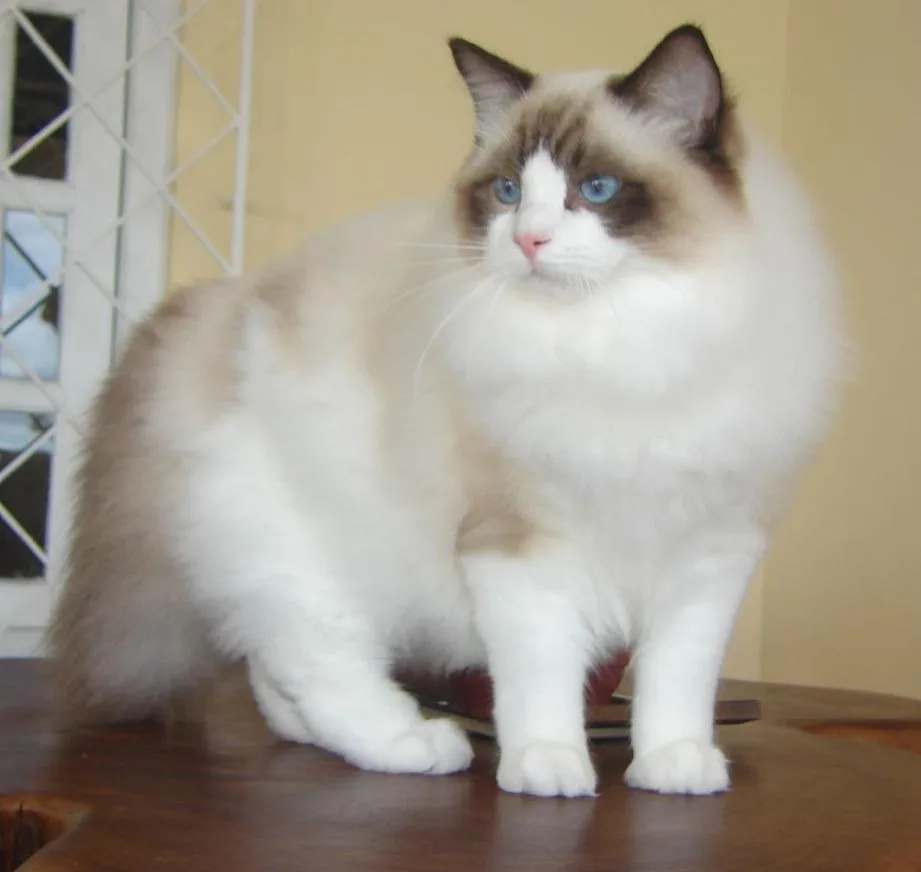
The Ragdoll cat breed is one of the largest and most recognisably gentle companion animals in the domestic cat world.
Developed in Riverside, California, during the 1960s by a controversial breeder named Ann Baker, the Ragdoll emerged from a single founding cat and grew into a formally registered breed distinguished by its pointed coat pattern, its slow physical maturation, and a temperament so reliably calm that the breed's name has become a behavioural description as much as a label.
No other major cat breed is quite so closely identified with docility, and few carry the same combination of substantial size, striking appearance, and quiet affection that defines the Ragdoll's appeal.
This guide provides a thorough account of the Ragdoll's origins and the mythology that surrounds them, the genetics of the breed's distinctive colourpoint coat, the full range of recognised colour and pattern combinations, the breed's extraordinary size and slow maturation, its health profile including the serious cardiac risks that prospective owners must understand, and the day-to-day experience of living with one of the most human-oriented cats in existence.
Origins: Ann Baker, Josephine, and the Riverside Franchise
The Ragdoll's history begins with a white longhaired cat named Josephine, owned by Ann Baker of Riverside, California. In the early 1960s, Josephine was reportedly injured in an automobile accident, and Baker claimed that after Josephine recovered and produced subsequent litters, her kittens were unusually placid, went limp when picked up, and showed reduced sensitivity to pain.
Baker promoted these claims as the defining origin story of the Ragdoll breed and argued that Josephine's accident had somehow changed the temperamental and physiological character of her offspring.
These claims are scientifically false. Acquired trauma cannot produce heritable changes in temperament across a single generation. Trauma-induced epigenetic effects, even where they have been documented in other species, do not operate in the manner Baker described, and there is no mechanism by which a car accident could produce the consistent behavioural profile Baker attributed to Josephine's kittens.
What Josephine actually produced was a group of kittens with a selectively favourable temperament, cats that, in behavioural terms, tolerated handling and physical contact unusually well. Baker selected for this temperament systematically across subsequent generations, and those selections, not the mythology, explain the breed's character today.
Baker's involvement in the breed's development is simultaneously foundational and contentious. She trademarked the name "Ragdoll" in 1975, established the International Ragdoll Cat Association (IRCA), and attempted to franchise the breed in a manner unprecedented in cat breeding history.
Breeders wishing to produce registered Ragdolls under Baker's system were required to purchase cats from her, pay ongoing franchise fees, and comply with her assertions about the breed's biology, some of which were extraordinary by any scientific standard.
Baker eventually claimed that Ragdolls were genetically unique, possibly containing non-feline DNA, and made other assertions that mainstream veterinary genetics has never supported.
Other early breeders, most notably Denny and Laura Dayton, eventually broke from Baker's IRCA and worked with mainstream registries to have the Ragdoll formally recognised. The Cat Fanciers' Association (CFA) granted the Ragdoll full championship status in 2000. The International Cat Association (TICA) recognised the breed earlier. Today the Ragdoll is consistently ranked among the top three most registered pedigree cat breeds worldwide, and Ann Baker's franchise no longer operates.
The founding cats beyond Josephine included males named Daddy Warbucks, Buckwheat, and Fugianna. The gene pool of all registered Ragdolls today traces back to these few original animals from California.
Size and Physical Structure
The Ragdoll is one of the largest domestic cat breeds in existence, rivalling the Maine Coon for the distinction of heaviest pedigree cat. Adult males weigh between 5.4 and 9 kg, with some exceptional individuals exceeding this range. Females are considerably smaller, typically ranging from 3.6 to 6.8 kg.
What makes the Ragdoll's size particularly notable is the rate at which it is achieved. The breed matures exceptionally slowly, even by the standards of large cat breeds. A Ragdoll kitten at twelve months will be substantially smaller than its adult form. Full adult size is not reached until three to four years of age, and some individuals continue filling out through their fourth year.
Owners who acquire a Ragdoll kitten should expect several years of continued physical development before the cat reaches its final weight and musculature.
| Measurement | Male Ragdoll | Female Ragdoll | Average Domestic Cat |
|---|---|---|---|
| Adult weight | 5.4-9 kg | 3.6-6.8 kg | 3.5-4.5 kg |
| Age at full maturity | 3-4 years | 3-4 years | 12-18 months |
| Body type | Large, heavy-boned, rectangular | Medium-large, substantial | Variable |
| Head shape | Broad, modified wedge, flat between ears | Same proportions | Variable |
| Eye shape | Large, oval, blue | Same | Variable |
The body is described in breed standards as large, long, and heavy-boned, with a broad chest, a relatively flat back, and heavy hindquarters. The forelegs are medium-length and well-muscled. The neck is heavy and short. The head is a broad modified wedge with a flat area between the ears, full cheeks, and a medium-length muzzle.
One of the Ragdoll's most immediate visual distinguishing characteristics is its eye colour: all Ragdolls have blue eyes, a consequence of the colourpoint genetics that govern the breed's pigmentation. Eye colour ranges from pale blue to deep sapphire, with deeper blue generally preferred in show standards.
The coat is medium to medium-long, silky in texture, and has minimal undercoat compared with breeds such as the Maine Coon or Norwegian Forest Cat. The reduced undercoat is one reason Ragdoll coats are less prone to matting than their length might suggest, though regular grooming remains necessary.
Coat Colour and Pattern Genetics
The Ragdoll carries the colourpoint gene, meaning that all Ragdolls display a pointed pattern in which the face (mask), ears, legs, and tail are darker than the body.
This colouration is controlled by the cs allele of the tyrosinase gene, which produces a temperature-sensitive enzyme: the enzyme functions at the cooler extremities of the body but is deactivated at the warmer core, restricting melanin deposition to the cooler regions. The same allele governs colouration in the Siamese, Birman, and Himalayan, and all Ragdolls carry two copies (cs/cs) of this allele.
The recognised point colours in Ragdolls are seal (dark brown), blue (cool grey), chocolate (lighter warm brown), lilac (pale lavender-grey), red (orange), and cream (pale orange). These colours follow standard feline genetics: seal and blue are eumelanin variants; red and cream are phaeomelanin variants; chocolate and lilac are dilute and recessive modifications.
Beyond colour, Ragdolls are recognised in four distinct patterns, which relate to the distribution of white in the coat:
Colourpoint is the most traditional pattern: the mask, ears, legs, and tail are the point colour, and the body is a lighter version of the same. No white markings are present.
Mitted adds white to the pattern in a specific distribution: white mittens on the front paws, white boots on the rear legs, a white chin, and typically a white stripe running along the belly. The overall effect is a colourpoint cat with formal white gloves.
Bicolour carries an inverted-V white blaze on the face, a white chest, belly, and all four legs. The ears, tail, and the area around the top of the mask remain in the point colour. Bicolours are particularly dramatic in appearance.
Lynx is an overlay pattern (technically a tabby modifier) that can be combined with any of the above three patterns. Lynx Ragdolls show tabby striping within the point colour, giving the mask, legs, and tail a striped or ticked appearance.
Tortie patterns also occur, combining two point colours (most commonly seal and red, or blue and cream) in a tortoiseshell distribution.
This combination of six point colours, four structural patterns, and tortie overlay creates a large matrix of recognised varieties. The CFA and TICA standards accept all of these combinations, though the most commonly seen Ragdolls in pet homes are seal colourpoint, seal mitted, and blue bicolour.
Temperament: The Definition of Docility
The Ragdoll's temperament is the characteristic for which the breed is universally known, and it represents a genuine and consistent trait produced by generations of deliberate selection rather than the mythological explanation Baker originally promoted.
Ragdolls are among the most passive and human-oriented of all domestic cat breeds. They follow their owners from room to room throughout the day, preferring continuous proximity. They tend to greet owners at doors, sit beside or on owners during sedentary activities, and actively seek physical contact.
This following behaviour has earned them the informal description "puppy-like" a comparison also made of Maine Coons and Burmese cats, though the Ragdoll's version of the trait leans more heavily toward quietness and passive presence than toward the active play-seeking that characterises the Maine Coon.
The name "Ragdoll" describes the breed's most striking physical behaviour: when picked up, the cat relaxes completely into the handler's arms, going limp in a manner that feels quite different from how most cats respond to being lifted. Most cats retain some degree of muscular tension when held; the Ragdoll releases it. This is not, as Baker claimed, evidence of pain insensitivity or neurological abnormality.
It is a selected-for temperament trait, a low startle response and high tolerance for physical handling, that has been consistently reinforced across many generations of breeding.
This extreme docility has one important practical consequence: Ragdolls are vulnerable when unsupervised outdoors. Their low aggression and low fear response mean they do not effectively defend themselves from dogs, other territorial cats, or people who may mistreat them.
A Ragdoll that wanders into a conflict situation is unlikely to respond with the hissing, scratching, or fleeing that would protect most cats. The breed is best maintained as an indoor-only cat, or allowed outdoors only in secured gardens or on a harness.
Ragdolls are quiet. Their voice is soft and infrequent compared with Siamese, Burmese, or even Maine Coons. When they do vocalise, the meow is gentle and rarely demanding. This quietness suits apartment living and households sensitive to noise.
The breed is highly adaptable to multi-pet households, tolerating the presence of dogs and other cats with unusual equanimity. They are equally tolerant with children, making them a consistently recommended breed for family homes. For a comparative guide to breeds suited to family life, see Best Cats for Families with Kids.
Health Conditions and Genetic Testing
The Ragdoll's health profile is dominated by one serious concern: hypertrophic cardiomyopathy. Secondary concerns include susceptibility to bladder stones and an elevated sensitivity to certain viral infections. For a comprehensive review of all documented conditions and their management, see Ragdoll Health Problems.
Hypertrophic Cardiomyopathy (HCM) is the most common heart disease in cats and the primary cause of premature death in affected Ragdolls. HCM is characterised by abnormal thickening of the left ventricular wall, which reduces the heart's ability to fill with blood between contractions, impairs cardiac output, and creates conditions favourable for dangerous blood clots.
A specific mutation in the MYBPC3 gene (myosin-binding protein C3) has been identified in Ragdolls. This mutation, designated HCM-ragdoll or the Ragdoll MYBPC3 variant, is distinct from but homologous to the HCM1 mutation identified in Maine Coons, and arises from the same gene.
A DNA test for the Ragdoll-specific MYBPC3 mutation became available commercially and is now a standard component of responsible breeding programs. Studies have estimated that as many as 30% of Ragdolls carry at least one copy of the mutation.
"The Ragdoll MYBPC3 mutation is a significant finding that responsible breeders should be actively screening for and working to reduce the frequency of in their lines. However, as with all HCM genetics in cats, testing for known mutations does not eliminate HCM risk entirely, cats without the identified mutation may still develop HCM via other pathways." Meurs, K.M. et al. (2007), Genomics, on feline HCM genetics in pedigree breeds
Cats that are homozygous for the mutation (carrying two copies) are at substantially higher risk than heterozygous carriers, but even heterozygous cats develop HCM at elevated rates compared with the general feline population. Responsible breeders test all breeding animals via DNA swab and ideally conduct annual cardiac echocardiograms performed by board-certified veterinary cardiologists.
Feline Infectious Peritonitis (FIP) susceptibility has been noted anecdotally in Ragdolls and in several other breeds including Birmans and Abyssinians. FIP is caused by a mutation of the common feline enteric coronavirus (FECV) into the virulent feline infectious peritonitis virus (FIPV) form within an individual cat.
While most cats exposed to FECV clear the infection without progression, some cats, and some breeds, appear predisposed to the mutant form. The exact genetic basis of this predisposition in Ragdolls is not fully characterised, but breeders working with the breed should be aware of the elevated incidence reports and discuss FIP monitoring with their veterinarian.
Calcium oxalate urolithiasis (bladder stones composed of calcium oxalate) has been reported at elevated frequency in Ragdolls compared with the general domestic cat population. The mechanism is not fully understood, but may relate to urine calcium and oxalate concentration.
Dietary management, high-moisture diets, adequate water intake, and avoidance of high-oxalate foods, is the primary prevention strategy. Cats that form stones may require dietary prescription food, medication, or surgical removal of obstructing stones.
| Health Condition | Estimated Prevalence | Test Type | Recommendation |
|---|---|---|---|
| HCM (MYBPC3 Ragdoll variant) | ~30% carry at least one copy | DNA swab | Screen all breeding animals; annual echo |
| Calcium oxalate bladder stones | Elevated vs general cat population | Urinalysis + imaging | High-moisture diet; regular urinalysis |
| FIP susceptibility | Elevated incidence reported | No definitive genetic test | Minimise stress; coronavirus titre monitoring |
| HCM (all causes) | Higher than breed average | Echocardiogram | Annual cardiac screening from age 2 |
"Calcium oxalate uroliths in cats are challenging to manage because they cannot be dissolved medically and require either surgical or endoscopic removal once formed. Prevention through dietary moisture and calcium/oxalate balance is preferable to treatment." Lulich, J.P. et al. (2013), Veterinary Clinics of North America: Small Animal Practice, on feline urolithiasis management
Lifespan
Ragdolls have a typical lifespan of 12 to 17 years. Cats from responsibly tested lines, maintained on appropriate nutrition and with regular veterinary cardiac screening, frequently reach the higher end of this range or beyond. Cats from untested lines, or those that develop HCM, may have substantially shorter lives.
The relationship between lifespan and cardiac health is direct: HCM that goes undetected and unmanaged can cause sudden death or rapid deterioration at any point once it becomes clinically significant.
Early detection via echocardiogram allows veterinary management with medications such as atenolol (heart rate control), clopidogrel (anti-platelet therapy to reduce clot risk), and in later stages, furosemide or other diuretics to manage fluid. These interventions do not cure HCM but can meaningfully extend quality of life and total lifespan.
For a comparison of lifespan across cat breeds, see How Long Do Cats Live.
Grooming the Ragdoll Coat
The Ragdoll's medium-long coat is silkier than the coats of most other longhaired breeds and, due to its relatively sparse undercoat, less prone to the dense matting seen in Persians and Himalayans. This does not mean the coat is maintenance-free.
Brushing two to three times per week with a stainless-steel comb or a pin brush prevents tangles from developing in the longer areas, particularly the ruff (the chest and neck mane), the armpits, and the breeches (the long fur on the rear legs). During seasonal moults, spring and autumn, daily brushing will manage the elevated shed volume and prevent fur accumulation in furniture and clothing.
The Ragdoll's coat benefits from periodic bathing, typically every four to six weeks in show cats and every two to three months in pet cats. The silky texture responds well to conditioning shampoos, which enhance the coat's natural lustre. Most Ragdolls tolerate bathing with less resistance than many other longhaired breeds.
Nail trimming every two to three weeks, ear cleaning as needed, and dental care through brushing or veterinary-approved dental products complete the routine. For detailed step-by-step grooming instructions, see Ragdoll Care Guide.
Feeding and Nutritional Needs
Given the Ragdoll's large adult size, nutritional requirements are correspondingly elevated. Adult male Ragdolls typically require 300-380 kcal of metabolisable energy per day, depending on activity level and body condition. The extended growth phase, through three to four years of age, requires diets formulated for growth or all-life-stages that provide adequate protein, calcium, and phosphorus for skeletal development.
High-protein, meat-based wet or raw diets are appropriate. Given the breed's elevated HCM risk, diets enriched with taurine and marine-sourced omega-3 fatty acids (EPA and DHA) are frequently recommended by veterinary cardiologists. Taurine deficiency has been linked to dilated cardiomyopathy in cats, and adequate taurine intake is protective at the cardiac level.
The breed's tendency to overweight in later life, combined with its sedentary temperament relative to more active breeds, means portion control is important. Free-choice feeding is generally not recommended; scheduled meals with measured quantities maintain appropriate body condition more reliably.
Comparing the Ragdoll to Similar Breeds
The Ragdoll is frequently compared to the Maine Coon due to overlapping size and longhaired coats. The two breeds differ fundamentally in temperament: Maine Coons are more active, more independent, and more vocally expressive, with sustained play energy that persists well into adulthood. Ragdolls are quieter, more passive, and derive more of their satisfaction from proximity and physical contact than from interactive play.
The Persian Cat shares the Ragdoll's gentle, indoor-oriented temperament but has a substantially different coat requiring more intensive grooming, a flat-faced (brachycephalic) structure with associated respiratory concerns, and a somewhat more aloof quality. The Ragdoll is more actively human-seeking than most Persians.
The Birman, sometimes called the "Sacred Cat of Burma," shares the colourpoint pattern and mitted markings (specifically the white gloves on all four paws) with the Ragdoll mitted variety, and the two breeds share some genetic ancestry. The Birman is smaller, with a silkier but lighter coat, and is somewhat more active than the Ragdoll.
Living with a Ragdoll
The Ragdoll experience is distinctive in ways that go beyond temperament statistics. Owners consistently describe a quality of companionship that feels closer to a close social bond with another individual than to typical pet ownership. The cat's continuous presence, its willingness to be held, its gentle response to being handled by strangers and children, and its apparent contentment with domestic life produce an animal that is profoundly easy to live with.
The obligations are proportional. The HCM risk is real and requires ongoing cardiac monitoring, which carries both time and financial costs. The coat requires regular grooming. The breed's docility means owners bear responsibility for its safety in ways that would not apply to a more assertive cat, a Ragdoll cannot be trusted to protect itself.
For a detailed review of the breed's specific health monitoring requirements and what to expect from veterinary management of HCM, see Ragdoll Health Problems. For day-to-day care including grooming, feeding schedules, and enrichment, see Ragdoll Care Guide.
References
Meurs, K.M., et al. (2007). "A cardiac myosin binding protein C mutation in the Maine Coon cat with familial hypertrophic cardiomyopathy." Human Molecular Genetics, 16(7), 764-773. https://doi.org/10.1093/hmg/ddm024
Meurs, K.M., et al. (2012). "A substitution mutation in the myosin binding protein C gene in Ragdoll hypertrophic cardiomyopathy." Genomics, 90(3), 261-264. https://doi.org/10.1016/j.ygeno.2007.04.007
Lulich, J.P., Berent, A.C., Adams, L.G., Westropp, J.L., Bartges, J.W., & Osborne, C.A. (2016). "ACVIM small animal consensus recommendations on the treatment and prevention of uroliths in dogs and cats." Journal of Veterinary Internal Medicine, 30(5), 1564-1574. https://doi.org/10.1111/jvim.14559
Cat Fanciers' Association (CFA). (2023). Ragdoll Breed Profile and Standard. Retrieved from https://cfa.org/ragdoll/
The International Cat Association (TICA). (2023). Ragdoll Breed Standard. Retrieved from https://tica.org/breeds/browse-all-breeds
Pedersen, N.C., et al. (2008). "The effects of genetic bottlenecks and inbreeding on the immune response of domestic cats." Immunogenetics, 60(12), 757-773. https://doi.org/10.1007/s00251-008-0319-9
Kittleson, M.D., Meurs, K.M., Munro, M.J., et al. (1999). "Familial hypertrophic cardiomyopathy in Maine Coon cats: an animal model of human disease." Circulation, 99(24), 3172-3180. https://doi.org/10.1161/01.CIR.99.24.3172
Frequently Asked Questions
Why do Ragdoll cats go limp when picked up?
Ragdolls go limp when held because the breed has been selectively developed for an unusually low startle response and high tolerance for physical handling. This is a temperament trait produced by generations of deliberate breeding selection, not a physiological abnormality or pain insensitivity as the breed’s founder Ann Baker originally claimed.
When lifted, a Ragdoll releases muscular tension rather than maintaining the guarded posture typical of most cats, creating the characteristic ‘ragdoll’ feel. The trait is consistent, heritable, and now a defining characteristic of the breed.
How big do Ragdoll cats get?
Adult male Ragdolls weigh between 5.4 and 9 kg, making them one of the largest domestic cat breeds. Females are smaller, typically 3.6 to 6.8 kg. The breed matures very slowly, Ragdolls do not reach their full adult size until three to four years of age, compared with twelve to eighteen months for most domestic cats. A Ragdoll at twelve months will look substantially different from the same cat at three years.
Do Ragdoll cats have health problems?
The most serious health concern in Ragdolls is hypertrophic cardiomyopathy (HCM), caused by a mutation in the MYBPC3 gene. An estimated 30% of Ragdolls carry at least one copy of this mutation. DNA testing is available, and responsible breeders screen all breeding animals. Annual cardiac echocardiograms are recommended for all Ragdolls from around age two.
Ragdolls also show elevated rates of calcium oxalate bladder stones and may have increased susceptibility to feline infectious peritonitis (FIP).
Are Ragdoll cats good indoor cats?
Ragdolls are exceptionally well-suited to indoor life. Their low aggression, minimal territorial drive, and preference for human proximity make them content in apartment settings. However, their docility also makes them vulnerable outdoors, Ragdolls do not defend themselves effectively from other animals or threatening situations. The breed is strongly recommended as indoor-only, or given outdoor access only in secured environments or on a harness.
They manage apartment living without stress as long as they have regular human interaction.
What is the difference between a Ragdoll and a Birman?
The Ragdoll and Birman share colourpoint colouring and the mitted pattern (white gloves on all four paws in the mitted variety), and there is genetic overlap in the breeds’ histories. Key differences: Ragdolls are substantially larger; Birmans typically weigh 3-6 kg. The Ragdoll coat has less undercoat and is silkier. Birmans tend to be slightly more active and independently minded.
Ragdolls have a wider range of recognised patterns (colourpoint, mitted, bicolour, lynx, tortie) while the Birman is always mitted. Both breeds have blue eyes due to carrying the colourpoint gene.