
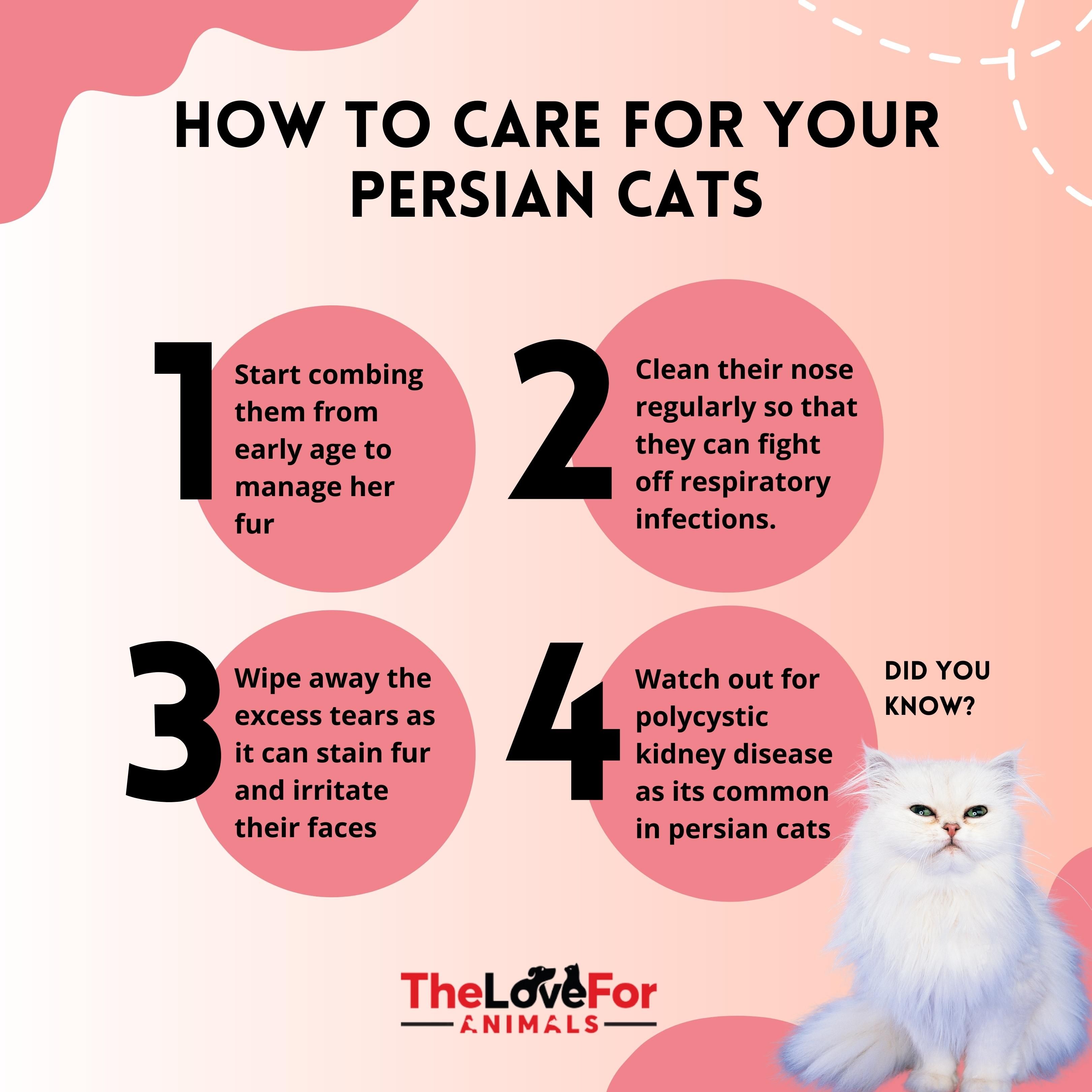
The Persian cat is one of the most recognisable and historically significant cat breeds in the world. With its flowing, silky coat, broad flat face, and exceptionally calm temperament, the Persian has dominated pedigree cat shows for more than a century and remains among the most registered breeds in the Cat Fanciers' Association and The International Cat Association.
It is also among the most medically complex, because decades of selective breeding for extreme facial flattening in the show type have produced a population of cats that struggle with breathing, eye drainage, and dental crowding as a direct consequence of their skull architecture.
Understanding the Persian cat requires engaging honestly with this split between beauty and welfare.
There are two functionally different Persians: the Traditional or Doll-face Persian, which retains the breed's original longer muzzle and has relatively minor breed-specific health concerns, and the Modern or Show-type Persian, whose extreme brachycephalic structure, the flat, almost vertical face, is associated with a documented clinical syndrome that affects quality of life in a significant proportion of cats. This guide covers both types with full specificity.
Origins and Historical Background
The Persian is among the oldest documented cat breeds, with a history that predates formal cat fancy by centuries. Long-haired cats consistent with Persian description are referenced in manuscripts from Persia (modern Iran) dating to the 1500s. Whether these cats represent the direct genetic ancestors of today's Persians or were simply similar in appearance due to parallel adaptation to cold highland climates is impossible to determine from historical records alone.
The breed's verifiable arrival in Europe dates to the early seventeenth century. Pietro della Valle, an Italian nobleman and traveller, brought long-haired cats from Khorasan (in modern north-eastern Iran) to Italy in 1620. He described them in his writings as distinct from European cats in coat length and overall appearance.
Shortly afterward, Nicholas-Claude Fabri de Peiresc, a French diplomat, imported long-haired cats to France from Angora (modern Ankara, Turkey). These Turkish Angora cats and Iranian long-haired cats entered the European cat population simultaneously, and for the next two centuries they were not consistently distinguished from one another.
British cat breeders in the Victorian era took up Persian breeding systematically, and the breed was displayed at the world's first modern cat show, held at Crystal Palace in London in 1871, organised by Harrison Weir. From that point, British breeders began selecting for the characteristics that define the modern Persian: heavier bone, denser coat, rounder head, and shorter nose.
American breeders continued this selection trajectory through the twentieth century, and by the 1980s the show-type Persian had developed the extreme flat-faced profile that now characterises the breed in championship competition.
The Traditional Persian, also called the Doll-face Persian, retains the facial structure of the breed before extreme brachycephaly became the show norm. It has a distinct nose that is set lower on the face and a longer, more recognisable muzzle. Many veterinarians and animal welfare organisations prefer this type precisely because of its reduced health burden.
The word "Persian" in the breed's name is now primarily historical. Modern genetic studies indicate that Persian cats cluster with breeds of Western origin, not with cats from the Near East or Iran. The Iranian long-haired cats that Pietro della Valle described have likely long since been absorbed into the broader pedigree population.
Brachycephaly: The Central Welfare Issue
Brachycephaly refers to the anatomical condition in which the skull is compressed in the rostrocaudal (front-to-back) dimension, producing a flattened face. In Modern Persians, this compression is extreme. The nasal bones are shortened, the maxilla is compressed, and the entire craniofacial structure is reoriented in a way that has no natural analogue in the wild.
The clinical syndrome that results is known as Brachycephalic Obstructive Airway Syndrome (BOAS). In Persians, BOAS manifests through several anatomical abnormalities that frequently occur together:
Stenotic nares are narrowed nostril openings that restrict the initial intake of air. Affected cats breathe with visible effort and their nostril apertures collapse slightly with each inhalation.
Elongated soft palate refers to soft tissue that extends too far back into the throat, partially obstructing the tracheal opening. This causes the characteristic snoring, stertor (noisy breathing), and snorting that many Persian owners normalise as breed characteristics but which are clinical signs of obstruction.
Hypoplastic trachea, a trachea narrower than normal, occurs in some individuals and compounds the breathing restriction imposed by the soft tissue abnormalities.
Laryngeal collapse can occur as a secondary consequence, where chronic effort in breathing against obstruction weakens the cartilage structures of the larynx.
The practical consequences range from reduced exercise tolerance (severely affected cats may be unable to run or climb stairs without becoming distressed), to sleep-disordered breathing, to hypoxic episodes during anaesthesia that require specialist veterinary management.
Surgical correction, most commonly, widening the nares surgically and shortening the soft palate, can provide significant relief for severely affected cats. Many veterinarians now recommend nare-widening surgery proactively in flat-faced kittens.
"Brachycephalic airway syndrome in cats, particularly Persians, represents a significant welfare concern. The anatomical modifications that produce the exaggerated flat face also impose lifelong breathing impairment on a proportion of affected animals. Veterinary associations including the British Veterinary Association have called for breeding standards that prioritise functional anatomy over extreme conformation." British Veterinary Association (BVA) position statement on brachycephalic breeds, 2018
The Governing Council of the Cat Fancy (GCCF) in the United Kingdom updated its Persian breed standard in recent years to explicitly discourage extreme facial flattening, and the revised standard states that the nose should be visible in profile and that the cat should be able to breathe freely without noise. TICA and CFA have moved more slowly, but veterinary pressure on both organisations has increased.
The Traditional Persian is not immune to brachycephalic effects, the skull is broader and shorter than in an average domestic cat, but the degree of obstruction is typically far less severe, and many Traditional Persians breathe without clinical difficulty.
Physical Description
The Persian's most immediately recognisable feature is its head. In the show-type, the skull is nearly round in every plane. The nose is set high, at or above the level of the lower eyelids, and the overall profile of the face is nearly flat or even slightly convex (meaning the nose protrudes less than the forehead and chin). The cheeks are full, the jaw is broad, and the chin is strong. The eyes are large, round, and set far apart, producing the breed's characteristic wide-eyed expression.
The body is cobby, short-limbed, broad-chested, and low-slung, with heavy bone and dense musculature. Males typically weigh 4.5-7 kg; females 3.2-5.4 kg. Despite the dense coat that adds considerable visual bulk, the Persian is a medium to medium-large cat by weight, not a large cat like the Maine Coon. The legs are short, thick, and straight. The tail is short relative to the body and is carried low.
The ears are small, with rounded tips and tufts of fur at the base that blend into the broad ruff framing the face. The neck is thick and short. The entire silhouette reads as round, compact, and densely padded.
| Feature | Modern/Show-type Persian | Traditional/Doll-face Persian |
|---|---|---|
| Facial profile | Flat or convex, nose at or above eye level | Distinct muzzle; nose below eye level |
| Nostril aperture | Often narrow (stenotic nares common) | Normal to near-normal |
| Breathing at rest | Often audible (snoring/snuffling) | Usually silent |
| BOAS risk | Moderate to high | Low to moderate |
| Exercise tolerance | Reduced in affected individuals | Normal |
| Eye tearing (epiphora) | Common, shallow tear ducts | Less common but present |
| Show eligibility (CFA/TICA) | Fully eligible | Eligible in some programs |
The Coat: Most High-Maintenance in the Cat World
The Persian coat is the most demanding coat of any recognised domestic cat breed. This is not hyperbole; it is a clinical and practical reality that drives owner decisions, veterinary recommendations, and shelter intake statistics.
The coat is composed of a long, silky outer layer that can reach 10-15 cm in length at the ruff and flanks, combined with a dense, woolly undercoat. Unlike the Maine Coon's coat, which has a slightly coarser outer layer that resists matting, the Persian's coat is fine throughout, which allows individual strands to interlock and tangle with minimal mechanical provocation.
A Persian cat left ungroomed for even a week will develop mats. Left for two to three weeks, the coat can develop pelting, dense, felt-like mats that pull the skin, cause discomfort, and can only be removed by shaving under veterinary sedation.
Daily brushing is not optional for Persian cats; it is a medical necessity. The minimum tool requirement is a wide-toothed steel comb to work through the coat layer by layer, followed by a slicker brush to remove loose fur. The belly, groin, axillae, and the back of the hind legs are the areas where pelting forms fastest and most severely.
Professional grooming every four to six weeks is recommended even for owners who brush daily, because professional groomers can identify and address early mats before they become severe.
"Persian and Himalayan cats represent the single largest breed cohort surrendered to shelters in the United States specifically due to coat maintenance. Many owners acquire Persian kittens without adequate preparation for the daily time commitment grooming requires. The coat care burden is not seasonal; it is daily and lifelong." American Society for the Prevention of Cruelty to Animals (ASPCA), companion animal surrender data review
The colour and pattern range of the Persian coat is extensive. The CFA recognises Persians in seven colour divisions: Solid, Silver and Golden, Shaded and Smoke, Tabby, Particolour, Bicolour, and Himalayan (pointed, equivalent to the Himalayan breed in some registries). The Chinchilla Persian and Shell Cameo variants, with their tipped coat patterns in which colour appears only at the tip of each hair, are among the most striking and most labour-intensive colour variations in the cat fancy.
Coat condition is strongly influenced by diet, with protein quality and omega-3 fatty acid levels directly affecting coat sheen and skin health. Persians fed low-quality food frequently present with dry, dull coats and increased mat formation independent of grooming frequency. A complete guide to maintaining the Persian coat is available at Persian Cat Grooming Guide.
Eye Care and Epiphora
The Persian's large, forward-facing eyes and shallow orbit architecture produce a secondary problem that requires daily management: epiphora, or excessive tearing. The nasolacrimal duct, the drainage channel that carries tear fluid from the eye to the nasal passages, is compressed and often kinked in brachycephalic cats. When this drainage is obstructed, tear fluid overflows onto the face rather than draining internally.
In Persians, this produces the characteristic reddish-brown tear staining below the inner corner of each eye. The staining results from porphyrins, iron-containing pigments excreted in tears, which oxidise on contact with air and light to produce the rust-coloured marks. Beyond aesthetics, the chronically wet facial skin is at risk for skin-fold dermatitis: bacterial and yeast infections in the moist skin between the facial folds.
Daily cleaning of the eye corners and facial skin folds with a damp cloth or veterinary-approved wipe prevents infection and reduces staining. Severe epiphora may be managed medically with tear-staining supplements containing tylosin (in some jurisdictions) or low-level antibiotics, though the underlying anatomy cannot be corrected without surgical intervention.
Persian owners should examine the eyes daily as part of the grooming routine. Discharge that is thick, yellow-green, or accompanied by squinting requires veterinary evaluation, as Persians are predisposed to corneal sequestrum (dark plaques on the cornea) and entropion (inward rolling of the eyelid margin) due to their orbital anatomy.
Temperament: The Quintessential Lap Cat
The Persian's temperament is as distinctive as its appearance, and it represents the opposite end of the domestic cat activity spectrum from breeds like the Maine Coon or Bengal. Persians are calm, quiet, and affectionate. They are not playful in the sustained, active sense of many other breeds, and they are not exploratory or energetic. They prefer to be still, to observe, and to accept attention when offered.
Activity level is low to very low relative to the cat population. Persians are not climbers or jumpers by preference, and their cobby, short-limbed body confirms this; they are not built for the vertical agility that more athletic breeds employ. They are content to spend much of the day resting on preferred surfaces, and they rarely cause the kind of household disruption, toppled objects, raided countertops, that characterises more active breeds.
Affection style is moderate to high, but expressed passively. Persians typically do not follow their owners from room to room (as Maine Coons typically do) or demand interactive play. Instead, they settle into proximity, accept being held and petted, and redirect attention to their favoured person when petted. Most Persians have a strong preference for one or two household members over others.
True lap-sitting is more characteristic of the Persian than of almost any other breed, many Persians will settle on a lap for two to three hours at a stretch.
Voice is quiet. Persians rarely vocalise, and when they do, the sound is soft and undemanding. The breed is not silent, but it is unlikely to disturb household members or neighbours. This makes the Persian well-suited to apartment living.
Environmental preference is for a calm, predictable household. Persians are among the most sensitive domestic cat breeds to environmental disruption. Loud children, energetic dogs, frequent visitors, and unpredictable noise patterns cause visible stress responses in many Persians. They recover poorly from disrupted routines.
This trait makes the Persian an excellent choice for quiet adult households or seniors living alone, and a poor choice for chaotic or high-traffic homes. For small-space living comparisons, see Best Cats for Apartments.
Compatibility with children depends entirely on the child's behaviour rather than the cat's. Persians can live safely with respectful, gentle children. They do not have the physical robustness or playful energy to serve as active play partners for boisterous young children, and their preference for stillness means they will remove themselves from chaotic situations. They should not be the sole pet in a household where children regularly play in a rough, active way.
Health Conditions and Genetic Testing
The Persian carries the highest density of known genetic health conditions of any major cat breed, a consequence of its long history as a heavily bred show cat and the health consequences of extreme morphological selection.
Polycystic Kidney Disease (PKD) is the single most significant hereditary disease in Persian cats. PKD is caused by a dominant mutation in the PKD1 gene that causes progressive formation of fluid-filled cysts in the kidney tissue, gradually replacing functional kidney parenchyma and leading to renal failure, typically between the ages of 7 and 10 years in affected cats.
Before genetic testing became widespread and accessible, the prevalence of PKD in the Persian population was alarming. In a landmark 2004 study, Lyons et al. tested Persian and Persian-derived cats from populations across the United States, Australia, and Europe and found the PKD1 mutation in 36-49% of individuals, depending on the population sampled.
"The prevalence of PKD in Persian cats is sufficiently high that PKD testing should be considered a prerequisite rather than an option for any responsible Persian breeding program. Affected cats should not be bred under any circumstances. The dominantly inherited mutation means that even one PKD-positive parent confers a 50% transmission risk to offspring." Lyons, L.A., et al. (2004). Journal of Veterinary Internal Medicine, 18(4), 448-457. https://doi.org/10.1892/0891-6640(2004)18<448:APKDIN>2.0.CO;2
Mandatory PKD testing programs, voluntary breeding codes, and registry requirements introduced after this research began taking effect in the mid-2000s. The result has been a significant reduction in PKD prevalence in tested breeding populations, though the mutation persists in untested lines and in rescue cat populations. The DNA test for PKD1 is a simple cheek swab and is available from multiple commercial veterinary genetics laboratories. Cats testing positive should not be bred.
Brachycephalic Obstructive Airway Syndrome (BOAS), described in detail above, is the second primary health concern and is structural rather than genetic in the classical sense; it results from the sum of individual skull-shape genes selected over generations rather than a single-gene mutation. Management is surgical in severe cases.
Progressive Retinal Atrophy (PRA), specifically the rdAc allele, causes gradual degeneration of the photoreceptors in the retina, leading to progressive vision loss and eventual blindness. A DNA test is available.
Dental malocclusion is a near-universal consequence of maxillary compression. The shortened jaw contains the full complement of feline teeth in a smaller-than-normal space, causing overcrowding, abnormal tooth alignment, and accelerated periodontal disease. Regular dental evaluation and professional cleanings are more important in Persians than in most other breeds.
| Health Condition | Prevalence Before Testing Programs | Current Status in Tested Lines | Available Test |
|---|---|---|---|
| Polycystic Kidney Disease (PKD1) | 36-49% (Lyons et al., 2004) | Substantially reduced | DNA swab (PKD1 mutation) |
| BOAS (structural) | Very common in show-type | Ongoing; reduced in GCCF-standard lines | No single gene test; clinical assessment |
| Progressive Retinal Atrophy (rdAc) | Rare to uncommon | Rare in tested lines | DNA swab |
| Dental malocclusion | Near-universal in show-type | Ongoing | Clinical examination |
| Epiphora / facial fold dermatitis | Very common in show-type | Ongoing | Clinical examination |
For a complete overview of all health conditions and recommended management protocols, see Persian Cat Health Problems.
Lifespan and Long-Term Health Management
Persian cats without serious health conditions live between 12 and 17 years. The median lifespan is somewhat shorter than this upper figure because a proportion of Persians develop PKD or BOAS complications that shorten life or reduce quality. Persians from tested breeding programs with no PKD history and Traditional facial type live at the longer end of this range.
Annual veterinary examinations are especially important for Persians. The examination checklist for the breed should include: respiratory assessment (audible breathing at rest is abnormal and should be evaluated, not assumed normal), kidney palpation and urinalysis from middle age onward to screen for early renal changes, dental evaluation, and examination of the eye tear duct drainage and facial fold condition.
Echocardiography is not a primary Persian screening requirement in the way it is for Maine Coons, but hypertrophic cardiomyopathy does occur in the breed.
Weight management matters. The Persian's low activity level means caloric requirements are lower than for active breeds. Overfeeding a sedentary Persian leads to obesity that further compromises breathing in already-restricted airways and accelerates renal decline in PKD-affected animals. Measured feeding twice daily is recommended over free-choice feeding.
For a comparative look at Persian lifespan relative to other breeds and the factors that most influence feline longevity, see How Long Do Cats Live.
Grooming in Practice: A Daily Commitment
The daily brushing requirement for Persians is not the light maintenance that some breed profiles describe. A thorough grooming session for a Persian in full coat takes fifteen to twenty minutes, performed correctly. This is seven to fourteen minutes longer than the same session for a Maine Coon and incomparably longer than the self-maintenance of a shorthaired cat.
The sequence: begin at the extremities (legs, tail tip) and work toward the body to prevent pushing tangles into denser areas. Use a wide-toothed steel comb to work through each section of coat, using short strokes to avoid ripping mats. If a mat is encountered, hold the base of the mat with two fingers against the skin to prevent pulling, and gently tease the mat apart from the outer edge inward. A small amount of detangling spray designed for cats reduces friction and aids this process.
After the steel comb, a fine-toothed comb identifies any remaining small knots. A finishing brush distributes natural oils and removes fine debris. The facial area around the eyes requires separate attention: the fur at the inner corners of the eyes tends to mat quickly due to tear accumulation, and these small mats are uncomfortable and invisible under the coat unless specifically sought.
Persian coats require professional grooming approximately every six weeks for full-coated individuals. Many owners opt for a "lion cut" shaving the body coat short while leaving the head and tail, during summer months. This dramatically reduces the grooming burden and is widely accepted by cats who have been accustomed to grooming from kittenhood. Lion cuts do not damage the coat; full regrowth occurs in four to six months.
Bathing a Persian requires more care than bathing a short-coated cat. The dense undercoat holds water, and a wet Persian takes one to two hours to fully dry with a forced-air dryer on a low-heat setting. Persians should not be allowed to air-dry because prolonged wet coat traps moisture against the skin, promoting dermatitis.
Feeding the Persian Cat
Persian cats have standard feline nutritional requirements but with two breed-specific considerations. First, their low activity level means they require fewer calories than active breeds, approximately 150-250 kcal per day for most adults, compared with 250-300 kcal for a similarly sized but more active breed. Caloric density of the chosen diet should be matched to actual intake to prevent weight gain.
Second, the compressed jaw and dental overcrowding mean that kibble size and texture matter more than in other breeds. Large, hard kibble can be physically challenging for brachycephalic cats to grasp and chew. Some Persians fare better on wet food or on small-diameter kibble specifically formulated for flat-faced breeds.
Several commercial diets market to brachycephalic cats, with kibble shaped and sized for easier manipulation. Whether the specific shape provides a meaningful benefit over appropriately sized standard kibble is debated, but the size consideration is valid.
High-quality protein sources as the primary ingredient support both coat quality and renal health. Persians at middle age and beyond benefit from diets with moderate phosphorus restriction, since phosphorus accelerates progression in cats with early renal disease.
Persian vs Other Breeds: Situational Fit
The Persian is the correct breed choice for a specific owner profile: someone who wants a calm, beautiful, highly affectionate cat and who either has the time for daily grooming or is prepared to fund regular professional grooming. It is the wrong choice for owners who want an active, curious, independent companion, who dislike veterinary visits, or who have young boisterous children or high-energy dogs.
The Maine Coon makes an instructive contrast. Both breeds are large, beautiful, and affectionate, but the Persian is quiet, still, and lap-preferring where the Maine Coon is active, playful, and following-you-room-to-room. The Maine Coon's coat is demanding but less so than the Persian's. The Persian's health profile is dominated by structural and single-gene conditions (PKD, BOAS); the Maine Coon's is dominated by cardiac disease.
The Ragdoll occupies an intermediate position: calmer and more docile than the Maine Coon but more interactive than the Persian, with a semi-long coat that is less demanding than the Persian's but more demanding than a short coat. Ragdolls have the PKD mutation in some lines as a legacy of historical outcrossing.
The Persian's apartment suitability is excellent precisely because of its low activity level, quiet voice, and preference for still environments. It does not require outdoor access, does not climb countertops, and does not entertain itself with destructive behaviour when left alone. Its primary environmental requirement is a calm, stable, and comfortable household.
Breed Standards and Registry Recognition
The Persian is recognised by every major cat registry worldwide. Standards vary somewhat by registry, with CFA maintaining the most detailed colour classification and GCCF having moved toward discouraging extreme brachycephaly most actively among the major registries.
CFA divides the Persian into colour classes for show purposes and maintains the Himalayan as a separate colour division (pointed pattern cats). TICA treats the Himalayan as a colourpoint Persian rather than a separate breed. The GCCF Breed Advisory Committee published revised guidance in 2019 explicitly stating that the nose tip should be situated above the lower rim of the eye and that cats with breathing difficulties should not win awards.
The Traditional Persian is not consistently defined across registries. TICA does not maintain a separate traditional division; CFA has a separate Breed Council for the Traditional category. Independent registries including the Traditional Cat Association (TCA) maintain their own standards explicitly favouring the pre-modern facial type.
References
Lyons, L.A., et al. (2004). "Feline polycystic kidney disease mutation identified in PKD1." Journal of Veterinary Internal Medicine, 18(4), 448-457. https://doi.org/10.1892/0891-6640(2004)18<448:APKDIN>2.0.CO;2
Hubler, M., et al. (2004). "Palliative irradiation of Scottish Fold osteochondrodysplasia." Veterinary Radiology and Ultrasound, 45(6), 582-585. (Referenced for brachycephalic context in companion animals.)
Farnworth, M.J., et al. (2018). "Persian cats and the flat-faced dilemma: Welfare implications of extreme brachycephaly in domestic cats." Animals, 8(7), 115. https://doi.org/10.3390/ani8070115
Cat Fanciers' Association (CFA). (2023). Persian Breed Profile and Standard. Retrieved from https://cfa.org/persian/
The International Cat Association (TICA). (2023). Persian Breed Standard. Retrieved from https://tica.org/breeds/browse-all-breeds
Governing Council of the Cat Fancy (GCCF). (2019). Breed Advisory Committee guidance on brachycephalic conformation in Persians. Retrieved from https://www.gccfcats.org/
Schlueter, C., et al. (2009). "Brachycephalic ocular syndrome in Persian cats: Evaluation of corneal sensitivity and morphology." Veterinary Ophthalmology, 12(S1), 37-43. https://doi.org/10.1111/j.1463-5224.2009.00745.x
Frequently Asked Questions
Do Persian cats have breathing problems?
Show-type (Modern) Persian cats frequently have brachycephalic obstructive airway syndrome (BOAS) due to their extreme flat-faced skull structure. Common abnormalities include stenotic nares (narrowed nostrils), an elongated soft palate, and occasionally a hypoplastic (narrow) trachea. Audible breathing at rest, snoring, snuffling, stertor, is a clinical sign, not a normal breed characteristic.
Surgical correction (nare widening and soft palate shortening) can significantly improve quality of life in severely affected cats. Traditional Persians with a longer muzzle have substantially reduced BOAS risk.
What is PKD in Persian cats?
Polycystic kidney disease (PKD) is a dominant genetic disorder caused by the PKD1 mutation, in which fluid-filled cysts form progressively in the kidneys and eventually cause renal failure. Before widespread testing, 36-49% of Persians in some populations carried the mutation (Lyons et al., 2004). A DNA test is available from a simple cheek swab. Responsible breeders test all breeding cats and do not breed PKD-positive animals.
Buyers should request documented PKD test results for both parents. Cats from untested breeding programs remain at significant risk.
How much grooming does a Persian cat need?
The Persian cat requires daily brushing; this is not optional and is the single most demanding grooming commitment of any recognised cat breed. The long, silky coat mats quickly even with daily care, and a Persian left ungroomed for one to two weeks will develop tight mats. Pelting, dense, skin-pulling felt-like mats, forms within weeks without grooming and can only be removed by veterinary shaving under sedation.
Professional grooming every four to six weeks is recommended even for owners who brush daily. Many owners opt for a lion cut (body shaving) in summer to reduce the grooming burden.
Are Persian cats good for apartments?
Persian cats are excellent apartment cats. They have low activity levels, do not require outdoor access, are quiet, do not climb countertops, and prefer calm, stable environments. They do not entertain themselves through destructive exploration. Their primary environmental requirement is comfort and predictability.
The main consideration for apartment Persian ownership is the daily grooming commitment and the additional veterinary costs associated with the breed. Persian cats are not a low-maintenance choice financially or in terms of time, but their temperament and behavioural profile suit apartment living well.
What is the difference between a Traditional and Modern Persian?
The Traditional (Doll-face) Persian has a longer muzzle with a clearly visible nose set below the eye level, similar to the breed’s pre-twentieth-century appearance. It has substantially reduced risk of BOAS (breathing problems) and epiphora (tear overflow). The Modern (Show-type) Persian has an extreme flat face with a nose set at or above eye level, nearly vertical facial profile, and round skull.
The show type is eligible for CFA and TICA championship competition in its standard form. The GCCF has revised its standard to discourage extreme flat face. Veterinary bodies broadly prefer the Traditional type for welfare reasons.
How long do Persian cats live?
Persian cats from tested breeding programs with no PKD history and Traditional or moderate facial type typically live 12-17 years. The median is shorter in untested or show-type populations due to BOAS complications and undetected PKD. Early-stage kidney disease (detectable by annual urinalysis from age 7 onward in susceptible lines) can be managed to extend quality life.
The breed’s low activity level means it is less prone to trauma-related mortality than more adventurous breeds. Dental disease, BOAS severity, and renal health are the primary determinants of longevity in the breed.