
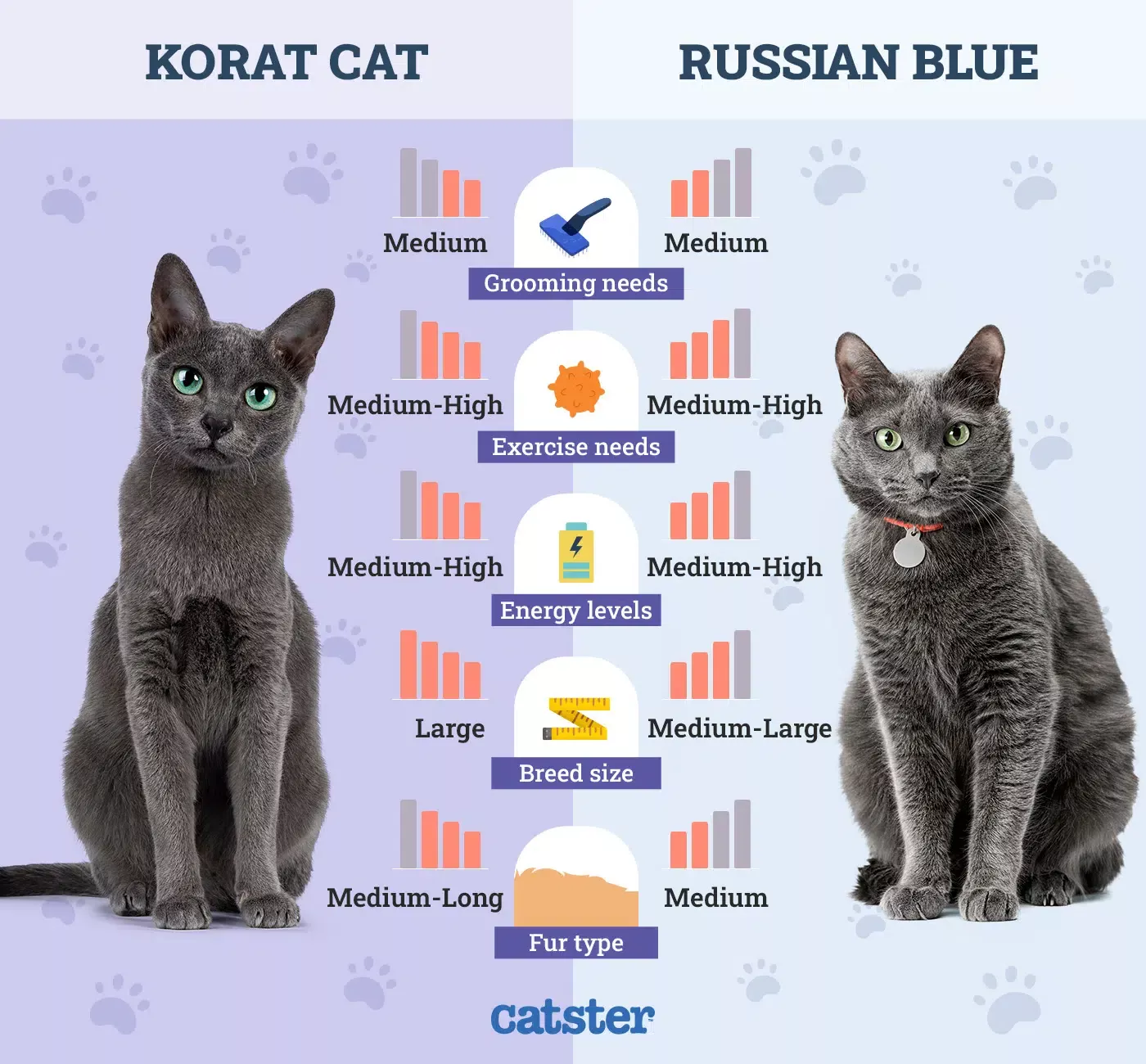
The Russian Blue is a natural cat breed from the Russian Arctic coast, a cat shaped by northern cold rather than deliberate selective breeding, with a coat of remarkable density and a personality of equally remarkable depth. Behind the breed's striking appearance, the dense blue-grey plush coat with its silvery sheen, the luminous emerald eyes, the gentle expression, lies an animal of considerable intelligence, strong personal loyalty, and one of the longest lifespans of any pedigree cat.
This guide covers every significant aspect of the Russian Blue: origins and history, the unique biology of the coat, eye colour development, temperament and social behaviour, the question of allergen production and hypoallergenic claims, health profile, nutritional needs, and what ownership of this particular cat genuinely involves.
Origins: The Cat of Archangel
The Russian Blue's origin story is tied to Arkhangelsk, known in older Western texts as Archangel, a major port city on the White Sea in northwestern Russia, roughly 1,000 kilometres north of Moscow and well within the Arctic influence zone. The cats of Arkhangelsk are documented in seafarers' accounts from the 1860s and 1870s as distinctive blue-grey cats with notably dense, plush coats suited to the brutal northern winters.
The first documented exhibition of Russian Blues outside their home country occurred at Crystal Palace in London in 1875, where they were shown under the name Archangel Cats. Contemporary accounts described them as unlike any cat previously seen in British shows, distinct in coat texture, colour, and general type from the domestic cats and early Persians that dominated British shows of that era.
Early breeding in Britain was complicated by the disruption of two world wars. By the end of World War II, the Russian Blue population in Europe was severely depleted. British breeders crossed the remaining Russian Blues with Siamese cats to restore numbers, which introduced pointed colouring and a more angular type incompatible with the breed's original character.
Scandinavian breeders, who had worked to preserve the original type, contributed significantly to restoring the breed in the 1960s, and Finnish and Swedish bloodlines became central to the modern Russian Blue's genetic foundation.
In the United States, the breed developed along a parallel path and was recognised by the CFA in the mid-twentieth century. The two main lines, British-influenced and Scandinavian, were largely reunified into the current standard, which emphasises the dense blue coat, emerald eyes, and foreign body type that define the breed today.
The Coat: Biology of the Blue Plush
The Russian Blue coat is one of its most remarkable physical features, and understanding what makes it distinctive requires looking at its structure rather than just its appearance.
The coat is described as a double coat, meaning it has a clearly differentiated undercoat and outer coat. What distinguishes the Russian Blue from most other double-coated cats is the density of the undercoat and the relationship between the two layers: the undercoat is so dense that it causes the entire coat to stand out from the body rather than lying flat.
The coat can be literally parted with a finger and will hold the parted position rather than springing back, a characteristic used by judges to verify coat quality in show cats.
The colour is described as blue, specifically a medium blue that is neither too dark nor too pale, ideally a clear, consistent slate-blue without shading, ticking, or tabby marking (ghost tabby patterns may be visible in kittens and young cats but typically fade with maturity).
The technical genetic explanation is that the coat is dilute black: the cat carries two copies of the dilution gene (dd), which converts what would otherwise be solid black pigmentation into the characteristic blue-grey. Russian Blues are essentially always genetically aa (non-agouti), B- (not brown), dd (dilute), the combination producing clear, uniform blue.
The silvery sheen that gives the coat its lustrous quality results from the tip of each individual guard hair being silver rather than blue. This silver tipping is not visible as a distinct banding pattern; it appears as a luminous quality to the coat when light catches it. The effect is most pronounced in well-structured coats in good condition and makes the coat appear to shimmer slightly when the cat moves.
The dense, standing coat requires surprisingly modest grooming maintenance. The plush texture does not mat easily, and the coat's natural structure keeps it orderly without frequent brushing. Weekly combing with a fine-toothed metal comb is sufficient to remove loose hairs and maintain the coat's characteristic appearance.
| Coat Property | Russian Blue |
|---|---|
| Coat type | Double, dense undercoat + outer guard hairs |
| Coat texture | Plush, dense, stands out from body |
| Colour | Medium blue (dilute black, dd genotype) |
| Hair tip | Silver-tipped, creating a subtle sheen |
| Can be parted | Yes, holds parted position |
| Grooming requirement | Low, weekly comb sufficient |
| Seasonal shedding | Moderate, managed with regular combing |
Eye Colour: Yellow to Green
Russian Blue kittens are born with yellow eyes. This is not a defect or a sign of genetic inconsistency; it is the normal developmental trajectory of the breed. Eye colour in cats is determined by the density and distribution of melanin in the iris, and this melanin deposition continues to develop after birth.
In Russian Blues, the yellow of kittenhood transitions through a range of lighter yellows and greenish-yellows to arrive at the vivid, clear emerald green that defines the breed's adult eye colour. This transition is typically complete by four months of age, though the final depth of green continues to intensify until approximately one year.
The adult eye should be a vivid, clear green, described in the CFA standard as emerald green, deeply saturated, and without hazel, yellow, or brown tones. In show evaluation, eye colour is weighted heavily. Eyes that remain green with yellow or grey undertones represent a departure from the ideal, though they are common in otherwise correctly typed cats.
Russian Blues with very vivid, deeply saturated emerald eyes are striking in person in a way that photographs only partially capture. The combination of the medium-blue coat and the intense green eyes is the breed's most immediately distinctive visual feature and a large part of its enduring aesthetic appeal.
Temperament: Reserved, Loyal, and Intelligent
The Russian Blue's personality is often described through a contrast: reserved with strangers, deeply devoted to its chosen person or family. This is not shyness in a pathological sense, nor is it the aloofness of a cat that simply prefers solitude. It is the behaviour of a highly observant, somewhat cautious animal that makes careful social judgements and, once those judgements are made in a person's favour, maintains exceptional loyalty.
A Russian Blue meeting a visitor for the first time will typically withdraw to observe from a distance. It is not uncommon for the cat to disappear entirely during social gatherings. This behaviour misleads some guests into believing the household has no cat.
The same cat will greet its owner at the door, follow them through the house, seek physical contact in the evenings, and in many cases maintain the kind of close presence that owners of more superficially sociable breeds never achieve. The devotion, once established, is total, but it is reserved for the people who have earned it.
"The Russian Blue develops an attachment to its human family that is among the most intense of any domestic cat breed. This attachment manifests as constant monitoring of the owner's whereabouts, preference for physical proximity, and distress when the familiar routine is disrupted." Fogle, B., The New Encyclopedia of the Cat, Dorling Kindersley, 2001
Intelligence in Russian Blues is observed in their problem-solving ability, their memory for routine, and their capacity to read human emotional states. The breed learns household schedules quickly and anticipates routines, appearing at the door before an owner's return, or at the food bowl before feeding time arrives.
Russian Blues also demonstrate the kind of toy-selection preference that indicates genuine play cognition, differentiating between toy types and favouring novelty in ways that suggest assessment rather than reflexive stimulus-response.
The Russian Blue is a quiet breed. The voice is soft and used infrequently, most communication occurs through body language and physical proximity rather than vocalisation. This quiet quality, combined with the moderate activity level, makes the Russian Blue one of the most suitable breeds for apartment living. For a comparative discussion of breeds suited to smaller living spaces, see Best Cats for Apartments.
One significant consideration for prospective owners is the breed's sensitivity to change and disruption. Russian Blues establish routines and expectations and can show stress when these are altered, new furniture arrangements, changes in feeding times, household moves, or the introduction of new animals can trigger anxiety behaviours including reduced appetite, withdrawal, and inappropriate elimination.
This sensitivity is not a flaw; it is the inverse of the deep attention the breed pays to its environment, which is also what makes it so responsive and perceptive as a companion. Transitions should be managed gradually with appropriate environmental support.
The Allergen Question: Hypoallergenic Claims Examined
The Russian Blue appears on virtually every list of hypoallergenic cat breeds published online, and the claim has become so embedded in the breed's popular reputation that it requires careful examination.
No cat is truly allergen-free. The primary feline allergen responsible for human cat allergies is a small glycoprotein called Fel d 1, produced in the cat's sebaceous glands and salivary glands and deposited on hairs and skin during grooming. Fel d 1 is present in all domestic cats. Breeds marketed as hypoallergenic are more accurately described as producing lower levels of this allergen than the median domestic cat.
The evidence for reduced Fel d 1 production in Russian Blues comes primarily from self-reported owner surveys and observational data rather than controlled studies. The breed does appear, on available evidence, to produce below-average Fel d 1 levels. The dense, low-shedding nature of the coat means that less loose hair is distributed through the environment, which reduces allergen dispersal even if total production is not dramatically lower.
For mildly allergic individuals who are sensitive to environmental allergen load rather than to Fel d 1 production per se, a Russian Blue in a regularly vacuumed home may cause fewer symptoms than a heavy-shedding breed. For individuals with moderate to severe cat allergies, no breed guarantees tolerance, and extended exposure trials before acquisition are essential.
"The concept of a hypoallergenic cat should be understood as a reduction in allergen exposure rather than allergen elimination. Individual sensitivity thresholds vary enormously, and a breed that causes no reaction in one allergic person may trigger significant symptoms in another." American College of Allergy, Asthma and Immunology (ACAAI), patient education materials on pet allergy
The comparison of breeds by Fel d 1 production and its implications for allergic households is discussed in detail at Best Cats for Allergy Sufferers.
Health Profile: One of the Healthiest Pedigree Breeds
The Russian Blue has an unusually clean health record for a pedigree cat. No breed-specific hereditary genetic disease has been identified with the frequency or severity seen in many other popular breeds. The Maine Coon's HCM risk, the Persian's polycystic kidney disease, the Scottish Fold's osteochondrodysplasia, none of these have a direct equivalent in the Russian Blue.
This is consistent with the breed's origin as a natural working cat rather than a product of deliberate selection for extreme conformation.
Two practical health concerns deserve attention: obesity and lower urinary tract issues.
Obesity is the Russian Blue's primary nutritional health risk. The breed has a notably enthusiastic appetite and will eat beyond its energy requirements if food is freely available. Russian Blues in free-feeding households frequently become overweight, which predisposes them to diabetes mellitus, joint stress, and reduced lifespan.
Measured feeding, a fixed quantity twice daily rather than ad libitum access, is strongly recommended. The breed's tendency to eat readily can actually facilitate good management, as the cats typically accept structured meal times without difficulty.
Bladder stones and lower urinary tract disease occur in the breed at rates consistent with domestic cats generally, with no specific elevated predisposition documented, but the tendency toward obesity increases urinary tract risk. Adequate water intake, a wet-food-based diet, and maintenance of healthy body weight reduce urinary disease risk in all cats.
The Russian Blue's lifespan is exceptional among pedigree cats. Well-managed animals routinely live 15-18 years, and individual cats reaching 20 years are not rare. This longevity is one of the breed's most valued characteristics and a direct reflection of the absence of the severe hereditary disease burden that shortens the lives of less fortunate breeds. For comparison across multiple breeds, see How Long Do Cats Live.
| Health Consideration | Details |
|---|---|
| Major hereditary disease | None documented at significant breed prevalence |
| Primary nutritional risk | Obesity, measures meals, do not free-feed |
| Urinary health | Adequate hydration; wet food recommended |
| Lifespan | 15-20 years typical; 20+ not rare in well-managed cats |
| Cardiac screening | Recommended every 2-3 years by echocardiogram |
| Dental care | Annual professional cleaning recommended |
| Vaccination and parasite control | Standard schedule |
Routine preventive care follows standard feline protocols: annual veterinary examination, dental assessment, vaccination, and parasite control. The absence of major breed-specific disease does not reduce the value of these interventions; it means that the Russian Blue is more likely to benefit from them fully rather than having its lifespan limited by genetic disease regardless of care quality.
Feeding and Nutrition
Given the breed's obesity risk, diet management is the most practically important aspect of Russian Blue care. Portion control is non-negotiable. An adult Russian Blue should receive a measured daily ration calibrated to maintain body weight in the lean-to-ideal range.
The best reference point is the cat's body condition score (BCS): the ribs should be easily felt but not prominently visible; there should be a visible waist when viewed from above; the abdomen should be flat or slightly tucked, not rounded.
High-protein, low-carbohydrate diets align with the Russian Blue's metabolic requirements as an obligate carnivore. Wet foods have the additional advantage of contributing to hydration, which supports urinary tract health. Dry-only diets, while convenient, typically contain higher carbohydrate loads and provide less moisture than wet foods.
Fresh water should be available at all times. Many Russian Blues show a preference for moving water, drinking fountains are well accepted by the breed and can increase voluntary water intake compared with a static bowl.
Social Needs and Environmental Enrichment
The Russian Blue's close bonding with its primary person means that solitary confinement for extended periods carries real cost. The breed manages reasonable periods alone without visible distress, but it thrives in households with regular human presence.
For households where all occupants are away for eight or more hours daily, a companion animal, ideally another cat introduced carefully, can provide social engagement that prevents the gradual withdrawal and anxiety that some Russian Blues develop when left alone too consistently.
Environmental enrichment should include both vertical space (cat trees, shelving) and interactive play. Russian Blues are intelligent enough to engage with puzzle feeders, which have the dual benefit of providing mental stimulation and slowing food consumption.
Interactive wand toy sessions of 10-15 minutes twice daily maintain play motivation and provide the kind of predatory exercise sequence, stalk, chase, catch, that cat behavioural science identifies as essential for feline psychological wellbeing.
The breed's quiet, observant nature means that enrichment does not need to be high-intensity. A Russian Blue that has access to a window perch, a comfortable elevated resting place, regular interactive play, and consistent human companionship has most of its environmental needs met.
Russian Blue in the Context of Similar Breeds
The Russian Blue is often compared with other medium-sized, blue-coated or reserved-temperament breeds. The British Shorthair produces a blue-coloured variant (the British Blue) that is superficially similar but has a fundamentally different temperament, more placid and less intensely bonded, and a rounder, cobby body type quite distinct from the Russian Blue's svelte foreign type.
The Chartreux, a French breed, produces a similar blue coat and is sometimes confused with the Russian Blue, but the Chartreux has a different facial structure, a different coat texture, and is substantially less common. The Nebelung is essentially a longhaired Russian Blue and shares the breed's temperament and coat colour in a medium-length coat.
The Siamese influence in the Russian Blue's post-war reconstruction history means that the breed is temperamentally closer to the Oriental cat family than its reserved exterior suggests. The intelligence, close bonding, and environmental sensitivity of Russian Blues reflect that heritage even as the coat and colour are wholly different.
Understanding the bond that Russian Blues form with their people illuminates an important aspect of feline social cognition. For research on how cats perceive and respond to their owners, see Do Cats Recognize Their Owners.
References
Turner, D.C., & Bateson, P. (Eds.). (2014). The Domestic Cat: The Biology of Its Behaviour (3rd ed.). Cambridge University Press. ISBN 978-1107654488.
Lipinski, M.J., et al. (2008). "The ascent of cat breeds: Genetic evaluations of breeds and worldwide random-bred populations." Genomics, 91(1), 12-21. https://doi.org/10.1016/j.ygeno.2007.10.009
Duthie, S., & Mactavish, J. (1992). "Russian Blue." In The Complete Cat Encyclopedia. National Cat Club, UK.
Cat Fanciers' Association (CFA). (2023). Russian Blue Breed Standard and Breed Profile. Retrieved from https://cfa.org/russian-blue/
The International Cat Association (TICA). (2023). Russian Blue Breed Standard. Retrieved from https://tica.org/breeds/browse-all-breeds
Cats Protection. (2021). Breed information: Russian Blue. Retrieved from https://www.cats.org.uk/help-and-advice/cat-care/cat-breeds
Frequently Asked Questions
Are Russian Blue cats really hypoallergenic?
Russian Blues are often listed as hypoallergenic, but no cat is truly allergen-free. All cats produce Fel d 1, the primary protein responsible for cat allergies. Russian Blues appear to produce below-average levels of Fel d 1, and their dense, low-shedding coat distributes less loose hair through the environment. For mildly allergic individuals, this can make a meaningful difference in symptom load.
For people with moderate to severe cat allergies, extended exposure trials before acquiring any cat are essential, no breed guarantees a reaction-free experience.
How long do Russian Blue cats live?
Russian Blues are among the longest-lived pedigree cat breeds. Well-managed cats routinely live 15-18 years, and individuals reaching 20 years are not rare. This longevity reflects the breed’s origin as a natural working cat rather than a product of selection for extreme conformational traits, which has spared it the severe hereditary disease burden that shortens the lives of many other breeds.
Obesity is the most significant manageable risk factor for reducing Russian Blue lifespan.
Why are Russian Blue cats so shy with strangers?
Russian Blues are not shy in a pathological sense; they are selective and observant. The breed is highly attuned to its environment and makes careful social judgements before extending trust to unfamiliar people. Once trust is established, the Russian Blue’s loyalty is exceptional. With its primary people, the Russian Blue is a close, attentive, and affectionate companion.
The reserved behaviour with strangers is the same quality expressed in reverse; it reflects the depth of attention the cat pays to its social world, not a generalised fearfulness.
What do Russian Blue eyes look like?
Adult Russian Blues have vivid emerald green eyes, deeply saturated, clear green without hazel or yellow undertones. The breed is born with yellow eyes, and the transition to green begins at around four months of age, with the full depth of green developing over the first year. Eye colour is weighted heavily in show evaluation, and the combination of the blue-grey coat and the intense green eyes is the breed’s most distinctive visual feature.
Do Russian Blue cats get along with other pets?
Russian Blues can coexist successfully with other cats and calm dogs when introductions are managed carefully and gradually. The breed’s selective social nature means it establishes trust with other animals on its own timeline. Forced or rushed introductions typically produce extended periods of avoidance. Given adequate space and patient management, most Russian Blues adapt to a multi-pet household.
They often form particularly close bonds with one other animal and maintain a polite but independent relationship with others.
Are Russian Blue cats good for apartments?
Yes, Russian Blues are well suited to apartment living. They are quiet, have moderate activity levels, are comfortable as indoor-only cats, and do not require outdoor access to remain content. The breed’s primary need is close human companionship rather than physical space. A well-enriched apartment with a reliable owner presence meets a Russian Blue’s requirements effectively.
The combination of low vocal volume, moderate shedding, and adaptable temperament makes the Russian Blue one of the most practical large-city companion cats.