
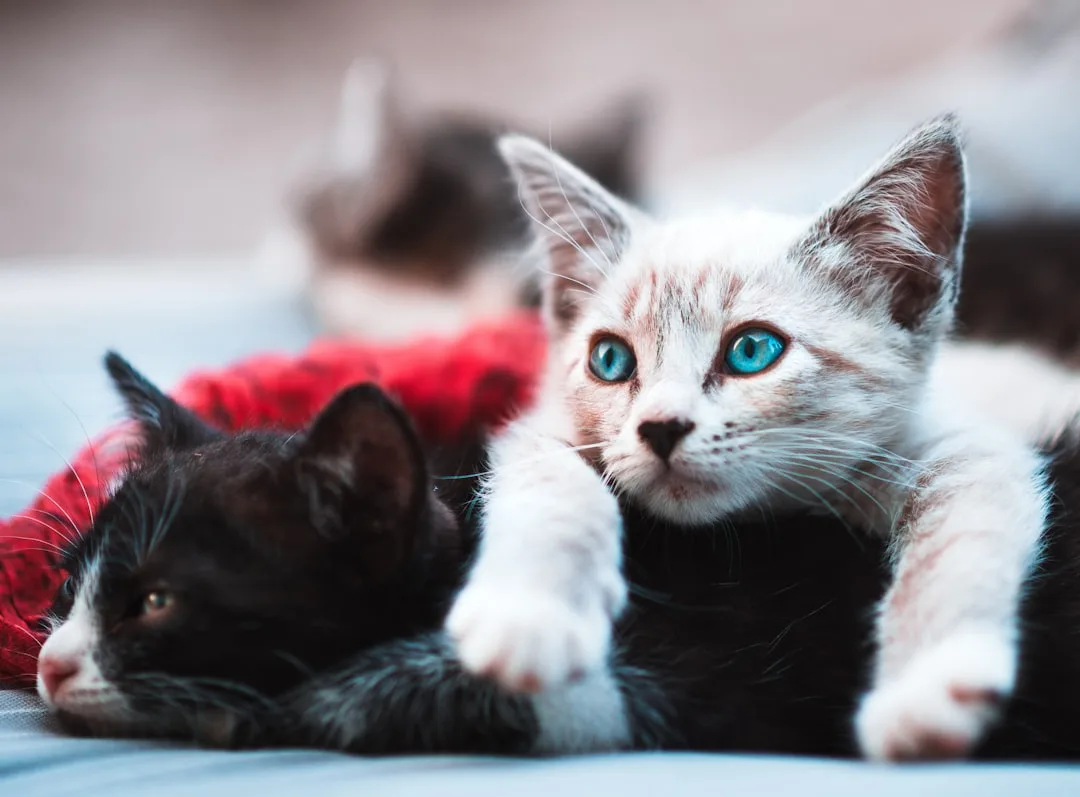
Cats bring dead animals home because they are hardwired hunters whose instincts do not align with the domestic arrangement in which food is provided in a bowl. The behaviour reflects predatory drive, possible social learning impulses, and territory-related food caching instincts, not gratitude, spitefulness, or a desire to disturb the household.
Understanding the evolutionary and behavioural roots of this habit helps owners respond appropriately and, where necessary, reduce it through targeted management strategies.
The Evolutionary Basis of Prey Retrieval
Domestic cats (Felis catus) are obligate carnivores descended from the African wildcat (Felis lybica), a solitary hunter that evolved in the arid regions of North Africa and the Near East. Unlike pack hunters such as wolves, wildcats hunt alone and do not share prey at a kill site.
Instead, they must carry prey to a safe location to consume it without being displaced by competitors or scavengers. This carry-to-safety instinct persists intact in domestic cats even when the safety concern no longer applies.
The prey retrieval instinct is particularly strong in cats because, unlike most large predators, cats frequently catch prey smaller than a single meal. A mouse or small bird represents roughly 30 to 50 calories, a domestic cat with a daily requirement of 200 to 250 calories would need four to eight separate kills to meet its energy needs. Caching and retrieving multiple small prey items is an adaptive strategy that becomes instinctively triggered every time a hunt is successful.
Why Do Cats Bring Prey Specifically to Humans?
This is the question most owners ask, and the answer involves several overlapping hypotheses, each with some behavioural support.
The Teaching Hypothesis
Several animal behaviourists, including Desmond Morris in his widely cited work Catwatching (1986), have proposed that female cats bring prey to humans as an expression of maternal instinct. In the wild, a mother cat brings live or dead prey to kittens to teach them hunting and feeding skills. The cat's relationship with its human owner, particularly for cats that were separated from their mothers early, may activate this maternal or quasi-social teaching impulse.
This hypothesis is supported by the observation that female cats, especially those that have previously raised kittens, bring home prey more frequently than male cats. Neutered females still engage in this behaviour, suggesting the hormonal component is secondary to the behavioural pattern itself.
The Territory and Resource Pooling Hypothesis
A competing explanation is that the home represents a territory boundary, and prey delivery to the territory centre is an instinctive behaviour related to resource pooling rather than social teaching. The cat is not delivering prey to the human so much as depositing it within the home's core space, which the cat considers the safest part of its range.
In this framing, the human's presence is incidental, the cat would carry prey to the same location whether the human was there or not. The fact that owners are often present to witness the delivery is a function of living patterns rather than intent.
The Social Bonding Hypothesis
A third explanation is that prey delivery is a form of social bonding display, a signal of the cat's productive activity and status within the social group. Research by Robbie McDonald and colleagues published in the journal Global Change Biology (2020) studied prey return rates in detail and found that well-fed cats with higher environmental enrichment brought home fewer prey items, while those with limited stimulation and enrichment brought home more.
This finding supports the idea that the behaviour is partly driven by an activity deficit: cats that lack adequate mental and physical stimulation are more likely to spend extended time hunting and more likely to complete the full predatory sequence including retrieval.
"Cats that were provided with greater play opportunities and puzzle feeders showed a statistically significant reduction in prey return rates over the study period, suggesting that the predatory impulse underlying prey retrieval can be redirected through appropriate enrichment." McDonald et al., Global Change Biology, 2020
The Predatory Sequence and Why It Matters
Understanding why cats bring prey home requires understanding the feline predatory sequence: orient, stalk, chase, catch, kill, carry, eat. Domestic cats frequently experience the early stages of this sequence through play (chasing toy mice, stalking insects) but are disrupted before completing the later stages. When a cat successfully catches live prey, the sequence runs to completion, including the carry phase.
The key insight is that the carry behaviour is not a separate, independent act layered onto the predatory sequence. It is an intrinsic component of successful hunting. A cat that catches a mouse will carry it, whether the destination is a feeding corner, a cat tree, a human's bed, or the centre of the living room floor.
"The domestic cat has retained the full ancestral predatory sequence essentially intact. The carry phase is not an elaboration or learned addition; it is a fixed action pattern triggered by successful prey capture." John Bradshaw, Cat Sense, 2013
How Often Do Cats Kill Wildlife?
The ecological impact of domestic cat predation is significant and well-documented. Research published in Nature Communications by Loss, Will, and Marra (2013) estimated that free-roaming domestic and feral cats in the United States kill between 1.3 and 4.0 billion birds and between 6.3 and 22.3 billion mammals annually, representing the largest human-associated source of bird and mammal mortality in North America.
The animals cats bring home represent only a fraction of total kills. Studies using cat-worn cameras have consistently found that cats consume or cache prey at the kill site more often than they carry it home. Estimates range from one in four to one in seven kills being retrieved to the home, meaning that any count based on animals delivered to owners substantially undercounts total predation.
"Camera-collar studies reveal that owners see only a small proportion of their cat's actual hunting activity. A cat that brings home three prey items per week may be killing fifteen to twenty." George et al., Mammal Review, 2020
Prey Types Cats Most Commonly Deliver
| Prey Type | Frequency | Notes |
|---|---|---|
| Small mammals (mice, voles, shrews) | Most common | Available in most habitats, easy to catch |
| Birds (sparrows, finches, robins) | Common | Fledglings particularly vulnerable in spring/summer |
| Reptiles (lizards, slow worms) | Moderate | Common in warmer climates and gardens |
| Amphibians (frogs, toads) | Occasional | Less frequently eaten; sometimes just brought in alive |
| Large insects (beetles, moths) | Occasional | Often live; part of play predation rather than food predation |
| Rabbits | Rare | Requires a larger, more capable cat; more common in rural settings |
Should Owners Scold Their Cat for Bringing Prey Home?
No. Scolding a cat for delivering prey is both ineffective and potentially counterproductive. Cats do not connect after-the-fact reactions to the earlier behaviour and cannot understand why the human is upset. A strong negative reaction from the owner may cause the cat to associate the home's entrance or the owner's presence with an aversive experience, increasing anxiety without altering the hunting behaviour.
The appropriate response is to quietly remove the animal (or remain calm if it is still alive), dispose of it hygienically, and take no action that the cat might associate with punishment. This is consistent with the advice given by the Royal Society for the Prevention of Cruelty to Animals (RSPCA) and the Cats Protection charity in the United Kingdom.
Methods to Reduce Hunting and Prey Retrieval
Research and veterinary behavioural guidance point to several evidence-based approaches to reducing how often cats hunt.
Bell Collars and Brightly Coloured Collars
A study by Cecchetti and colleagues published in Current Biology (2021) tested several intervention approaches. They found that bright, colourful collar covers (Birdsbesafe covers) reduced bird prey returns by 42% and mammal prey returns by a smaller but measurable amount. Bell collars reduced overall prey returns by approximately 34% in the same study.
Dietary Protein Enrichment
The same study found that providing cats with a grain-free, high-protein, high-meat diet reduced prey returns by 36% compared to standard commercial food. The authors proposed that cats on nutritionally complete, meat-based diets may have a reduced drive to supplement their nutrition through hunting.
Play Enrichment
Providing daily interactive play sessions, specifically wand-toy or feather-toy play that mimics prey movement, reduced prey returns by approximately 25% in the Cecchetti et al. study. Play that allows the cat to complete the predatory sequence (stalking, chasing, catching, and receiving a food reward at the end of the session) appears to partially satisfy the hunting impulse.
Keeping Cats Indoors During Peak Hunting Hours
Cats are most actively predatory at dawn and dusk. Keeping cats indoors from one hour before sunset to two hours after sunrise, as recommended by several wildlife conservation organisations, captures the highest-risk hunting windows and can substantially reduce both hunting activity and prey delivery.
Intervention Effectiveness Comparison
| Intervention | Reduction in Bird Prey Returns | Reduction in Mammal Prey Returns | Evidence Level |
|---|---|---|---|
| Birdsbesafe collar cover | 42% | 21% | RCT (Cecchetti et al., 2021) |
| High-protein diet | 36% | 36% | RCT (Cecchetti et al., 2021) |
| Bell collar | 34% | 22% | RCT (Cecchetti et al., 2021) |
| Daily interactive play (5-10 min) | 25% | 23% | RCT (Cecchetti et al., 2021) |
| Keeping indoors at dawn/dusk | Substantial reduction estimated | Substantial reduction estimated | Observational data |
| Puzzle feeders | Moderate reduction | Moderate reduction | Case series / observational |
For related reading on feline behaviour and ecology, see How Do Cats Communicate?, Are Cats Nocturnal?, Why Do Cats Scratch Things?, and How Smart Are Cats?. For information on dietary needs, see What Can Cats Eat?.
References
Cecchetti, M., Crowley, S. L., Goodwin, C. E. D., & McDonald, R. A. (2021). Provision of high meat content food and object play reduce predatory behaviour in domestic cats: A non-invasive practical intervention for conservation. Current Biology, 31(5), 1107-1111. https://doi.org/10.1016/j.cub.2020.12.044
Loss, S. R., Will, T., & Marra, P. P. (2013). The impact of free-ranging domestic cats on wildlife of the United States. Nature Communications, 4, 1396. https://doi.org/10.1038/ncomms2380
McDonald, R. A., Cecchetti, M., & Crowley, S. L. (2020). Invasive predators and global biodiversity loss. Proceedings of the National Academy of Sciences, 117(46), 28676-28686.
George, N., Harris, S., & Biggs, J. (2020). Domestic cat predation: Extent, impact and management. Mammal Review, 50(2), 87-100. https://doi.org/10.1111/mam.12175
Bradshaw, J. W. S. (2013). Cat Sense: How the New Feline Science Can Make You a Better Friend to Your Pet. Basic Books. ISBN 978-0465031016.
Morris, D. (1986). Catwatching: Why Cats Purr and Everything Else You Ever Wanted to Know. Crown Publishers. ISBN 978-0517562512.
Loyd, K. A. T., Hernandez, S. M., Carroll, J. P., Abernathy, K. J., & Marshall, G. J. (2013). Quantifying free-roaming domestic cat predation using animal-borne video cameras. Biological Conservation, 160, 183-189. https://doi.org/10.1016/j.biocon.2013.01.008
Frequently Asked Questions
Why does my cat bring me dead animals?
Cats bring prey home because carrying it to a safe location is an instinctive part of the predatory sequence. Some researchers also propose that female cats express a maternal teaching impulse by delivering prey to humans, as they would to kittens.
Is it normal for cats to bring home dead birds or mice?
Yes, it is completely normal feline behaviour rooted in evolutionary hunting instincts. It does not indicate aggression or a problem with the cat’s temperament.
Should I punish my cat for bringing home dead animals?
No. Cats do not connect after-the-fact reactions to their earlier behaviour. Scolding is ineffective and may increase anxiety. Simply remove the prey calmly and focus on reducing hunting opportunities through enrichment and management.
How can I stop my cat from hunting birds?
Evidence-based approaches include Birdsbesafe collar covers (42% reduction in bird kills), providing a high-protein diet (36% reduction), daily interactive play sessions (25% reduction), and keeping the cat indoors at dawn and dusk.
Do cats bring prey home as a gift to their owners?
The ‘gift’ interpretation is a popular but simplified explanation. The more likely mechanisms are prey-carry instinct, territory-based food deposition, and possible maternal teaching behaviour in female cats. The human interpretation as a ‘gift’ reflects our social framing rather than feline intent.
Why does my cat bring home prey but not eat it?
Cats are well-fed by owners and may have no hunger drive once the hunt is complete. The predatory sequence runs to completion independently of hunger, a satiated cat will still hunt and carry prey, then leave it when the carry phase ends.