
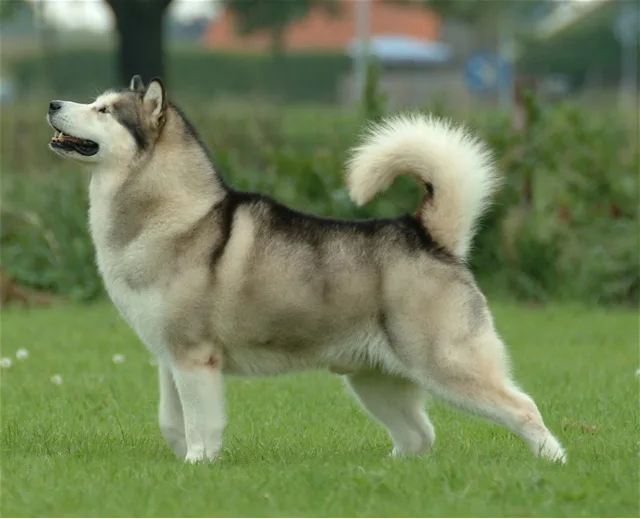
The Alaskan Malamute is one of the oldest and most magnificent of all dog breeds, a massive, powerful Arctic sled dog developed by the Mahlemut Inuit people of Alaska over thousands of years for the specific purpose of hauling heavy loads across the frozen wilderness of the far north.
Often confused with the Siberian Husky by the uninitiated, the Malamute is substantially larger, built for power and endurance rather than speed, and carries a distinct independence and prey drive that make it one of the most challenging breeds for inexperienced owners, and one of the most rewarding for those who understand it.
Origins: The Mahlemut Inuit
The Alaskan Malamute's history is inseparable from the Mahlemut people, an Inuit group that lived along the shores of Norton Sound in northwestern Alaska. These people and their dogs co-evolved in one of the harshest environments on Earth, and the relationship between the Mahlemut people and their dogs was one of profound mutual dependence.
The Mahlemut required dogs that could haul heavy loads of seal meat, whale blubber, and supplies over long distances of Arctic terrain, often through deep snow and across sea ice. These were not speed dogs like the Siberian Husky; they were freight dogs, built for raw pulling power and the ability to sustain effort over long distances. Adult Malamutes were expected to haul loads of several hundred kilograms over distances that could span days of travel.
Archaeological evidence suggests the Mahlemut and their dogs have been in Alaska for at least 2,000-3,000 years, with some researchers suggesting an even longer continuous tradition. When American and Russian traders began encountering the Mahlemut in the 18th and 19th centuries, they documented the dogs and recognized them as something exceptional.
The breed acquired wider recognition during the Klondike Gold Rush (1896-1899), when thousands of prospectors flooded into Alaska and required sled dogs.
The AKC recognized the Alaskan Malamute in 1935, placing it in the Working Group.
Physical Characteristics: Built for Power
The Alaskan Malamute's physical presence is immediately impressive. This is a large, heavily muscled dog with substantial bone, a deep chest, powerful hindquarters, and the kind of physical solidity that communicates its freight-hauling heritage at a glance.
| Physical Characteristic | Males | Females |
|---|---|---|
| Height | ~63 cm (25 in) | ~58 cm (23 in) |
| Weight | ~38 kg (85 lbs) | ~34 kg (75 lbs) |
| Build | Large, heavy-boned, muscular | Same |
| Coat | Thick double coat: coarse outer guard coat, dense undercoat | Same |
| Coat colors | Grey and white, black and white, red and white, sable and white, or all white | Same |
| Eyes | Brown, blue eyes are a disqualification in the breed standard | Same |
| Tail | Carried over the back in a plume | Same |
| Feet | Large, cat-like, with thick pads for Arctic conditions | Same |
| Lifespan | 10-14 years | 10-14 years |
One of the most significant practical distinctions between the Alaskan Malamute and the Siberian Husky, the two Arctic spitz breeds most commonly confused, is size. Malamutes are substantially larger: the average Malamute weighs 34-38 kg vs 16-27 kg for a Siberian Husky. The Malamute's more substantial build, larger head, and generally more placid (though still high-energy) expression distinguish it on close inspection.
A critical point: the Alaskan Malamute breed standard specifies brown eyes only. Blue eyes are a disqualification in show competition. This distinguishes the breed definitively from the Siberian Husky, which may have blue eyes as a breed characteristic.
Comparing the Malamute and the Siberian Husky
The confusion between Malamutes and Huskies is extremely common and worth addressing systematically:
| Feature | Alaskan Malamute | Siberian Husky |
|---|---|---|
| Size | 34-38 kg, 58-63 cm | 16-27 kg, 50-60 cm |
| Purpose | Freight hauling (power) | Racing/distance (speed) |
| Eye color | Brown only | Blue, brown, or bi-colored |
| Energy | High | Very high |
| Independence | Very high | High |
| Vocalization | Howls, "talks" | Howls, highly vocal |
| Off-lead safety | Not safe (prey drive) | Not safe (prey drive) |
| AKC group | Working | Working |
The Malamute was bred for sustained power hauling; the Husky was bred for speed over long distances. Both are high-energy, independent, and potentially dangerous to small animals.
For the Husky see Siberian Husky. For the Samoyed see Samoyed. For cold weather guides see Best Dogs for Cold Weather.
Prey Drive and Off-Lead Safety
The most important safety consideration with an Alaskan Malamute is its prey drive. Malamutes have extremely strong, deeply ingrained instincts to pursue, catch, and kill small animals. This instinct does not turn off in a family home or with training; it is a fundamental behavioral characteristic of the breed.
A Malamute that sights a squirrel, rabbit, cat, or small dog is very likely to give chase regardless of any other training or bonding with its owner. Given a Malamute's power and running speed, this is genuinely dangerous both for the pursued animal and for any owner trying to restrain the dog. The Alaskan Malamute must be kept on lead or within secure, high fencing at all times when outdoors.
A securely fenced yard means a fence of at least 1.8 meters (6 feet) that is embedded into the ground or has anti-dig protection, as Malamutes are accomplished diggers. Many experienced Malamute owners use underground electrical fencing as a supplement, though this cannot prevent another animal entering the yard.
Temperament: Loyal, Independent, Powerful
Despite the prey drive and size challenges, the Alaskan Malamute is a fundamentally affectionate, loyal, and family-oriented dog with people. These dogs are not aggressive toward humans under normal circumstances; they lack the territorial guardian instinct of breeds like the Cane Corso or the Rottweiler and are typically friendly with strangers.
"The Alaskan Malamute was not bred to be a guard dog and does not behave like one. Its power is redirected entirely toward its working capabilities, hauling and endurance, and its social relationships with its pack, whether canine or human. Understanding this distinction is essential to understanding the breed." Alaskan Malamute Club of America, Breed Education Materials (2020)
Malamutes are pack animals with a clear sense of social hierarchy. They may challenge other dogs of the same sex, particularly in intact-dog situations. They are typically not appropriate housemates for cats, rabbits, or other small animals.
Health: Hip Dysplasia and Chondrodysplasia
Hip dysplasia occurs in Alaskan Malamutes at approximately 20% in OFA data, a significant rate for a large working breed. OFA or PennHIP certification of both parents is essential before purchasing a puppy.
Chondrodysplasia (dwarfism), also called Alaskan Malamute chondrodysplasia (AMCD), is an inherited condition in the breed that causes abnormal bone and cartilage development. Affected dogs have shorter, bowed limbs than normal (similar in appearance to Dachshunds or Basset Hounds), and may have abnormal blood cell formation (hemolytic anemia).
The condition is autosomal recessive; a DNA test is available and should be used in all breeding decisions. Carrying the AMCD mutation does not cause symptoms in a heterozygous dog, but breeding two carriers together produces a 25% risk of affected puppies.
| Health Condition | Prevalence/Notes | Screening |
|---|---|---|
| Hip dysplasia | ~20% (OFA) | OFA/PennHIP X-ray |
| Chondrodysplasia (AMCD) | Autosomal recessive | DNA test available |
| Polyneuropathy | Progressive nerve disease | DNA test (some forms) |
| Hypothyroidism | Reported | Thyroid panel |
| Day blindness/cone degeneration (CORD1) | Present | DNA test |
| Cataracts | Hereditary form present | Ophthalmological exam |
Health: Polyneuropathy and Day Blindness
Polyneuropathy, a progressive disease affecting multiple peripheral nerves, has been documented in Alaskan Malamutes. Affected dogs show progressive weakness and muscle wasting starting in the hind limbs, exercise intolerance, and eventual respiratory compromise. The condition is inherited; DNA testing is available for some forms.
Day blindness (cone degeneration, CORD1) is a condition in which the cone photoreceptors of the retina fail to develop normally, leaving affected dogs with severe visual impairment in bright light while maintaining relatively normal vision in dim conditions. A DNA test is available. Breeders should screen all breeding stock for this condition.
"Alaskan Malamute chondrodysplasia has been invaluable as a naturally occurring model of skeletal dysplasia for comparative medical research. The identification of the underlying mutation and the development of a DNA test for carrier status represents an important achievement in breed health management." Jezyk, P.F., et al. (1986). Journal of the American Veterinary Medical Association
Exercise and Working Activities
The Alaskan Malamute needs substantial daily exercise, at minimum 60-90 minutes of vigorous activity, and most Malamutes benefit from significantly more. Their freight-hauling heritage means they particularly enjoy pulling activities: skijoring (being harnessed to a cross-country skier), weight pulling competitions, canicross, and bikejoring. These activities channel the breed's work ethic constructively.
Malamutes are heat-sensitive due to their Arctic coat, exercise should be limited during warm weather and access to shade and water must always be available. They thrive in cold climates.
For exercise guidance see Exercise Needs by Dog Breed. See Alaskan Malamute Care Guide for comprehensive care guidance.
Grooming
The Alaskan Malamute's thick double coat requires significant grooming, particularly during the seasonal coat blows that occur twice yearly. During these periods, typically spring and autumn, the dense undercoat sheds in quantities that can seem overwhelming, requiring daily brushing for extended periods.
Between coat blows, brushing two to three times weekly prevents matting and removes loose hair. Like the Samoyed, the Malamute's coat should never be shaved; it provides insulation in both cold and warm conditions and shaving can permanently damage coat quality.
Suitability Assessment
The Alaskan Malamute is appropriate for:
- Experienced dog owners who have handled large, powerful breeds
- Active households with significant time for daily exercise
- Owners with access to securely fenced outdoor space
- Cold or temperate climates (not recommended for hot climates)
- Owners without cats or small pets
The Malamute is not appropriate for:
- First-time dog owners
- Households with cats, rabbits, or small dogs
- People who cannot commit to 60+ minutes of vigorous daily exercise
- Hot climates without significant management
- Owners seeking a reliably off-lead dog
Summary
The Alaskan Malamute is a breed of extraordinary power, ancient heritage, and genuine working ability. Its size, prey drive, and exercise requirements make it demanding to own responsibly. Health priorities include DNA testing for chondrodysplasia and cone degeneration, OFA hip certification, and polyneuropathy screening in affected lines. For experienced, active owners who appreciate working breeds, the Alaskan Malamute is a singular, magnificent companion.
References
Jezyk, P.F., Haskins, M.E., & Patterson, D.F. (1986). Chondrodysplasia in the Alaskan Malamute. Journal of the American Veterinary Medical Association, 189(8), 936-942. https://pubmed.ncbi.nlm.nih.gov/3782578/
Orthopedic Foundation for Animals. (2023). Alaskan Malamute breed statistics. https://www.ofa.org/diseases/hip-dysplasia/statistics/
Zangerl, B., Wickström, K., Slavik, J., et al. (2010). Assessment of canine cone photoreceptor function using flicker electroretinography. Veterinary Ophthalmology, 13(3), 187-192. https://doi.org/10.1111/j.1463-5224.2010.00778.x
Bhatt, D., et al. (2020). Polyneuropathy in the Alaskan Malamute: Genetic basis and clinical outcomes. Journal of Veterinary Internal Medicine, 34(2), 601-608. https://doi.org/10.1111/jvim.15726
American Kennel Club. (2023). Alaskan Malamute breed information. https://www.akc.org/dog-breeds/alaskan-malamute/
Alaskan Malamute Club of America. (2022). Breed health and genetics. https://www.alaskanmalamute.org/health/
Frequently Asked Questions
What is the difference between an Alaskan Malamute and a Siberian Husky?
Malamutes are significantly larger (34-38 kg vs 16-27 kg), built for power freight hauling rather than speed racing. Malamutes always have brown eyes; Huskies may have blue eyes. Both are high-energy, independent, and not safe off-lead due to prey drive. Malamutes are generally calmer in the home but require equally substantial exercise.
Are Alaskan Malamutes safe with cats?
No. Alaskan Malamutes have very strong, deeply ingrained prey drive and will typically pursue and potentially injure or kill cats, small dogs, and other small animals. This instinct cannot be fully trained away. Malamutes are generally not appropriate housemates for cats, rabbits, or other small pets.
What is chondrodysplasia in Alaskan Malamutes?
Alaskan Malamute chondrodysplasia (AMCD) is an inherited skeletal condition causing abnormal bone and cartilage development, resulting in shortened, bowed limbs. It is autosomal recessive, two copies of the mutation are needed to produce an affected dog. A DNA test is available, and all breeding stock should be screened to prevent producing affected puppies.
Can an Alaskan Malamute be kept in an apartment?
It is generally not advisable. Malamutes require substantial daily exercise (60+ minutes of vigorous activity), produce very significant shedding, can be vocal, and need secure outdoor space for safe exercise. Their size and exercise needs make apartment living very challenging without exceptional commitment to daily outdoor activity.
How much does an Alaskan Malamute shed?
Alaskan Malamutes shed heavily year-round and undergo intense seasonal coat blows twice yearly (spring and autumn), during which the dense undercoat sheds in large quantities requiring daily brushing for extended periods. This is one of the heaviest-shedding domestic dog breeds and a major practical consideration for prospective owners.
Why do Alaskan Malamutes have brown eyes?
Brown eyes are the only accepted eye color in the Alaskan Malamute breed standard. Blue eyes are a disqualification in AKC show competition and are not characteristic of the breed. This is one of the reliable distinguishing features from the Siberian Husky, which may have blue, brown, or bi-colored eyes as breed characteristics.