
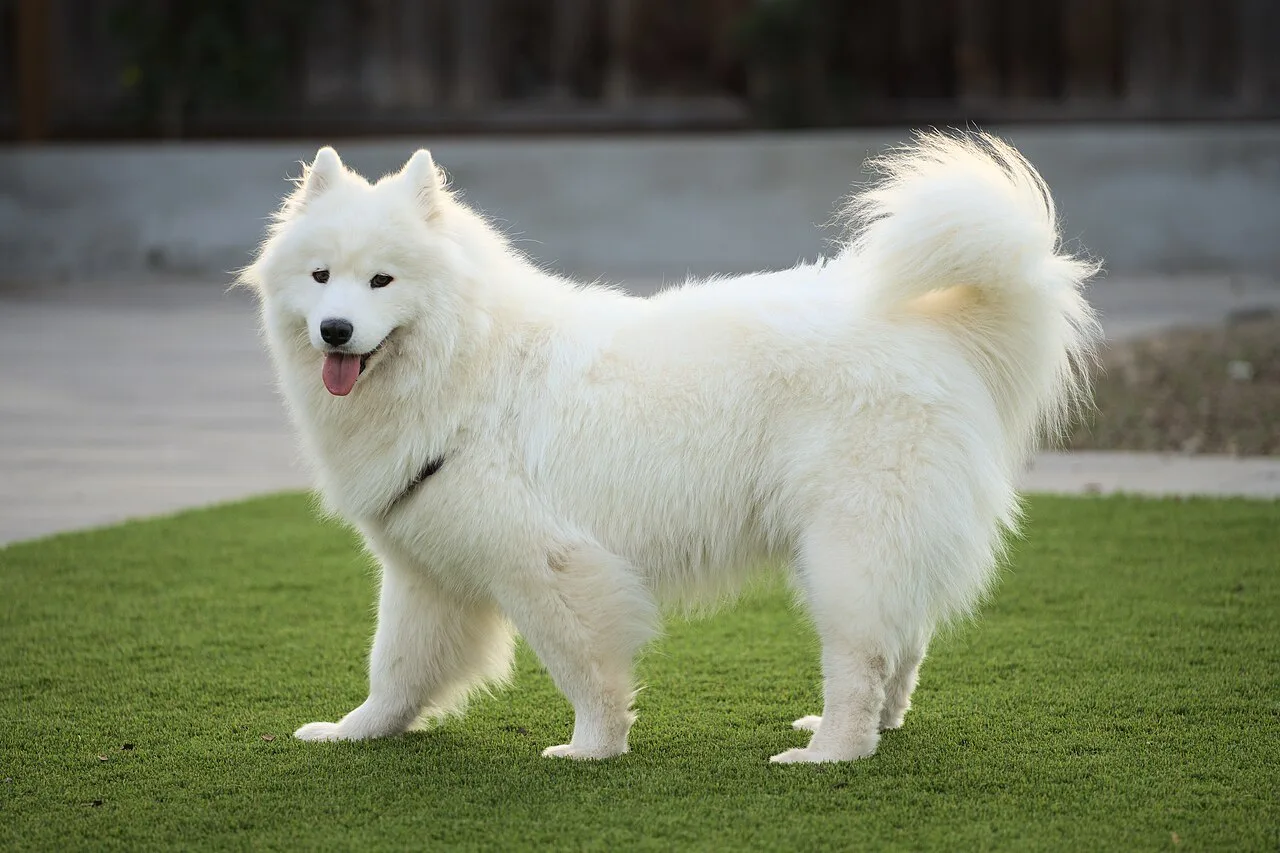
The Samoyed is one of the most visually spectacular dog breeds in the world, a large, pure white, densely coated spitz of Siberian origin whose perpetual smile and cloud-like coat have made it one of the most photographed and admired dogs alive.
Developed by the nomadic Samoyedic peoples of northwestern Siberia over thousands of years as a herding, sledding, and companion dog, the Samoyed combines extraordinary cold-weather adaptation with an affectionate, people-oriented temperament that makes it as suited to family life as to the Arctic tundra.
Origins: The Samoyedic Peoples of Siberia
The Samoyed is named for the Samoyedic people, a collective term for several nomadic ethnic groups of northwestern Siberia (including the Nenetsy, Enets, and Selkup peoples) who herded reindeer across the tundra and taiga from the Ural Mountains to the Yenisei River and beyond. These people depended entirely on their reindeer herds and on their dogs for survival in one of the most extreme environments on Earth.
The Samoyed dogs served multiple essential functions: herding reindeer to keep the herd together; pulling sleds carrying supplies and people across the vast distances of the Arctic; and warming their owners at night by sleeping alongside and on top of them in the extreme cold.
This last function helps explain one of the Samoyed's most distinctive characteristics, its profound attachment to and need for human closeness. A dog bred to sleep with humans develops very different bonding characteristics than one bred to work independently.
The Samoyed is genetically one of the most ancient of all domestic dog breeds, DNA studies have placed it among the basal (most ancestrally close to the wolf) dog breeds, alongside the Akita, the Chow Chow, and the Siberian Husky. A 2015 study of ancient and modern dog genomes found that Samoyeds cluster with ancient Siberian dogs in ways that suggest they have been relatively isolated from other dog populations for thousands of years.
The first Samoyeds were brought to England in the late 19th century by Arctic explorers and traders, including Robert Scott's expedition team members. Queen Alexandra of England received a Samoyed as a gift and helped promote the breed. The AKC recognized the Samoyed in 1906, placing it in the Working Group.
Physical Characteristics
The Samoyed's most immediately striking feature is its coat, a thick, profuse, pure white or cream double coat that provides insulation in temperatures down to -60°C. The outer coat is long, harsh, and straight; the undercoat is extremely dense, soft, and woolly. The combination provides both waterproofing and extraordinary insulation.
| Physical Characteristic | Males | Females |
|---|---|---|
| Height | 54-60 cm (21-23.5 in) | 50-56 cm (19.5-22 in) |
| Weight | 20-30 kg (44-66 lbs) | 16-20 kg (35-44 lbs) |
| Build | Muscular, substantial, balanced | |
| Coat | Long, harsh outer coat; dense, soft undercoat | Same |
| Coat color | Pure white, white and biscuit (cream), or all biscuit | Same |
| Eyes | Dark brown; almond-shaped | Same |
| Nose | Liver, brown, or black (liver and brown permitted in standard) | Same |
| Distinctive feature | "Sammy smile" upturned lip corners | Same |
| Lifespan | 12-14 years | 12-14 years |
The "Sammy smile" upturned corners of the lips that give the Samoyed a permanent appearance of smiling or grinning, is not merely charming. It has a functional explanation: the upturned lip corners prevent drooling, which would freeze solid on the face in the extreme temperatures of the Siberian Arctic and cause frostbite and tissue damage.
The Sammy Smile: Function and Form
The perpetual smile of the Samoyed is perhaps its single most distinctive characteristic and has contributed enormously to the breed's popularity as a visual icon. The anatomical basis, upturned lip corners that prevent moisture accumulation, is a genuine cold-weather adaptation that has been maintained because it happens to also produce an expression that humans find irresistibly appealing.
"The Samoyed's characteristic upturned lip corners represent one of the more elegant examples of form following function in dog evolution. What we perceive as a smile is actually a drool-prevention mechanism of profound practical importance in an environment where any moisture on the face would freeze instantly." Dr. Adam Boyko, Department of Biomedical Sciences, Cornell University College of Veterinary Medicine
The smile has made the Samoyed one of the most shared and celebrated dog images in social media, and demand for the breed has increased substantially in recent years as a result. Prospective owners attracted by images of beautiful, smiling white dogs should understand the full commitment the breed requires before deciding.
Temperament: Friendly, Active, Independent
The Samoyed is a fundamentally friendly, social, and people-oriented dog, less of the reserved or aloof character found in some Nordic spitz breeds. Samoyeds were bred to live in close proximity to their human families and to share warmth with them physically, and this history produces a dog with genuine warmth and interest in human company.
They are playful, sometimes clownish, and retain a puppy-like enthusiasm well into adulthood. They typically get along well with other dogs, children, and strangers; this is not a typical guardian breed. Their alert nature means they will bark at unusual sounds, making them reasonable watchdogs, but they lack the aggression toward strangers that makes a true guard dog.
The Samoyed has a notable independent streak, a characteristic of working dogs that had to make decisions without constant human direction. This independence can manifest as selective responsiveness to commands (deciding not to obey when more interesting options are available), which requires patient, consistent, reward-based training to manage.
Health: Samoyed Hereditary Glomerulopathy (SHG)
The most breed-specific serious health condition in the Samoyed is Samoyed hereditary glomerulopathy (SHG), a progressive kidney disease caused by a defect in type IV collagen, the structural protein that forms a key component of the glomerular basement membrane in the kidney's filtering units (glomeruli). Without functional type IV collagen, the filtration membrane deteriorates progressively, leading to protein loss in the urine and eventually kidney failure.
SHG has an X-linked inheritance pattern, the gene is located on the X chromosome. This means that affected males (who have only one X chromosome) develop the full, severe disease, typically leading to kidney failure between 8 and 15 months of age. Affected females (who have two X chromosomes) are typically carriers: they may develop mild to moderate kidney disease but survive longer than affected males.
A DNA test for SHG is available and is one of the most important health screenings for the Samoyed breed.
| Health Condition | Prevalence/Notes | Screening |
|---|---|---|
| Samoyed hereditary glomerulopathy | X-linked; males most severely affected | DNA test available |
| Hip dysplasia | ~10% (OFA) | OFA/BVA X-ray |
| Progressive retinal atrophy (PRA) | Present | DNA test (PRCD) |
| Aortic/subaortic stenosis | Present | Cardiac auscultation/echo |
| Diabetes mellitus | Higher breed prevalence | Glucose monitoring |
| Hypothyroidism | Reported | Thyroid panel |
Health: Hip Dysplasia and Cardiac Conditions
Hip dysplasia occurs in Samoyeds at approximately 10% in OFA data, relatively low compared to many large breeds but still warranting routine screening of breeding stock. Aortic stenosis (a narrowing of the aortic valve or the outflow tract below it), a congenital heart defect, has been documented in the breed. Breeding stock should undergo cardiac auscultation and ideally echocardiographic evaluation before breeding.
"Samoyed hereditary glomerulopathy represents one of the most informative inherited kidney diseases in veterinary medicine, having contributed significantly to our understanding of glomerular basement membrane biology and type IV collagen function in both dogs and humans." Bhatt, K., & Bhatt, P. (2018). Seminars in Nephrology
Coat Maintenance: The Major Commitment
The Samoyed's magnificent double coat is its most demanding maintenance requirement. The breed sheds heavily, year-round and intensely during the seasonal coat blows in spring and autumn (when the undercoat sheds in large mats known as "blowing the coat"). During these periods, daily brushing for extended periods is required simply to keep up with shedding.
Between coat blows, brushing two to three times weekly maintains the coat. The coat should never be shaved, the double coat protects against both cold and heat by providing insulation in both directions. Shaving a Samoyed's coat can damage the follicles and permanently alter coat texture and function.
Bathing should occur every 4-8 weeks. Samoyeds have a naturally self-cleaning coat, dirt tends to fall away as the coat dries. Thorough drying after bathing is essential; moisture trapped in the dense undercoat can cause skin problems.
For detailed grooming guidance see Samoyed Grooming Guide and How to Groom a Dog at Home. For related breeds see Siberian Husky and Alaskan Malamute. For cold weather considerations see Best Dogs for Cold Weather.
Exercise Requirements
Samoyeds are working dogs with genuine exercise requirements. Adults need at least 60-90 minutes of vigorous exercise daily. They are not as high-drive as some working breeds, but they are not well-suited to sedentary households. They enjoy running, hiking, pulling sports (skijoring, bikejoring, canicross), and play.
Their Arctic heritage means they are heat-sensitive, exercise should be limited during hot weather, and access to shade and water must always be available. Samoyeds should never be left in hot cars or direct sun for extended periods.
Living with a Samoyed: Practical Considerations
The Samoyed's beauty attracts many owners who are not fully prepared for what living with the breed involves. The critical practical realities are:
- Shedding: Significant, constant, and seasonally overwhelming. White dog hair appears on every dark surface.
- Grooming: Time-consuming and requires commitment.
- Noise: Samoyeds are vocal dogs; they bark, howl, and communicate with considerable enthusiasm.
- Exercise: Genuine daily exercise requirement, not a casual walk around the block.
- Heat sensitivity: Not suited to hot climates without careful management.
- Independence: Training requires patience and consistency.
Owners who accept these realities and fall in love with the breed typically become devoted Samoyed advocates who rarely keep fewer than one.
Summary
The Samoyed is a breed of extraordinary beauty, ancient heritage, and genuine warmth of character. Its smile is functional as well as charming, its coat is a feat of natural engineering, and its temperament reflects thousands of years of living alongside humans in extreme conditions. Health priorities include DNA testing for SHG and PRCD-PRA, OFA hip certification, and cardiac screening. For prepared owners, the Samoyed is a spectacular, deeply rewarding companion.
References
Bhatt, K., & Bhatt, P. (2018). X-linked hereditary nephropathy in Samoyed dogs: Molecular pathogenesis and therapeutic implications. Seminars in Nephrology, 38(4), 349-358. https://doi.org/10.1016/j.semnephrol.2018.05.006
Galibert, F., Quignon, P., Hitte, C., & André, C. (2011). Toward understanding dog evolutionary and domestication history. Comptes Rendus Biologies, 334(3), 190-196. https://doi.org/10.1016/j.crvi.2010.12.011
Orthopedic Foundation for Animals. (2023). Samoyed breed statistics. https://www.ofa.org/diseases/hip-dysplasia/statistics/
Miyadera, K., Acland, G.M., & Aguirre, G.D. (2012). Genetic and phenotypic variations of inherited retinal diseases in dogs. Veterinary Journal, 194(3), 290-299. https://doi.org/10.1016/j.tvjl.2012.04.013
American Kennel Club. (2023). Samoyed breed information. https://www.akc.org/dog-breeds/samoyed/
Samoyed Club of America. (2022). Health and genetics. https://www.samoyedclubofamerica.org/the-samoyed/health-and-genetics/
Frequently Asked Questions
Why do Samoyeds always look like they're smiling?
The Samoyed’s characteristic upturned lip corners that create the famous ‘Sammy smile’ are a cold-weather adaptation rather than an expression of emotion. The upturned corners prevent drooling and moisture accumulation on the face, which would freeze solid in the extreme temperatures of the Siberian Arctic and cause frostbite. The functional result happens to look like a smile to humans.
What is Samoyed hereditary glomerulopathy?
Samoyed hereditary glomerulopathy (SHG) is a progressive X-linked kidney disease caused by a defect in type IV collagen that forms the filtration membrane in the kidney. Affected males (with one X chromosome) develop severe kidney failure between 8-15 months of age. Affected females (carriers) typically develop milder disease. A DNA test is available and is essential for responsible breeding.
Do Samoyeds shed a lot?
Yes. Samoyeds shed heavily year-round and undergo intense seasonal coat blows in spring and autumn, during which the dense undercoat sheds in large mats. Daily brushing is required during coat blows. White dog hair will appear on all dark surfaces in the home. This is one of the most significant practical considerations for prospective Samoyed owners.
Should you shave a Samoyed in summer?
No. A Samoyed’s double coat should never be shaved. The coat insulates against both cold and heat, and the undercoat actually helps keep the dog cooler by preventing direct solar radiation from reaching the skin. Shaving can permanently damage hair follicles and alter coat texture. Shade, fresh water, and avoiding exercise during peak heat are appropriate summer management strategies.
Are Samoyeds good family dogs?
Yes. Samoyeds are excellent family dogs, genuinely friendly, playful, and affectionate with all family members including children. They are not guard dogs; their default response to strangers is friendly interest. Their social nature means they do not do well when isolated or left alone for long periods.
What health tests should Samoyed breeders perform?
Samoyed breeders should DNA test for SHG (hereditary glomerulopathy) and PRCD-PRA on all breeding stock. OFA hip certification and cardiac evaluation (auscultation or echocardiography) are also recommended. Thyroid testing is advisable in lines where hypothyroidism has been reported.