
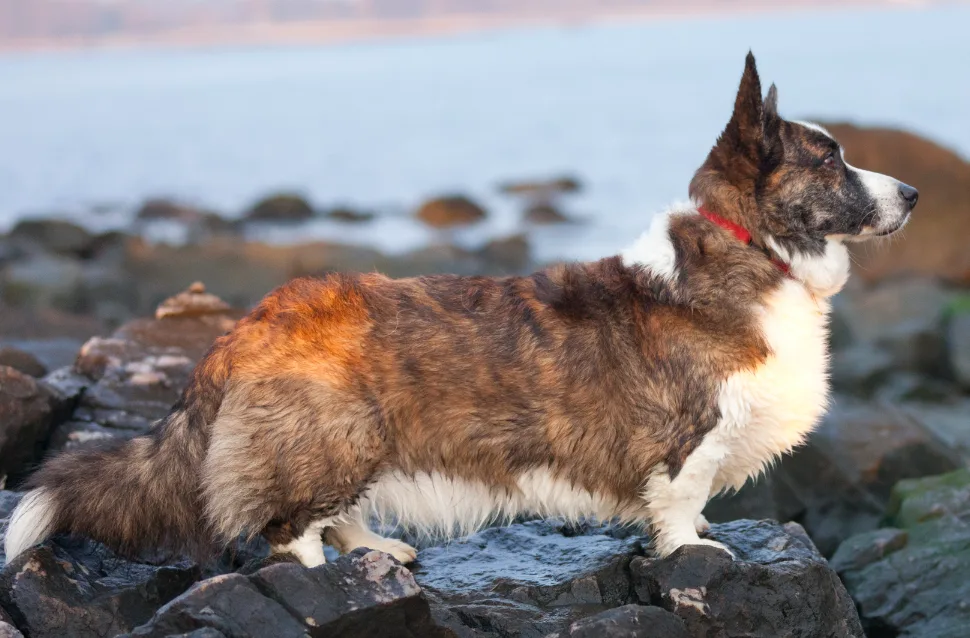
The Cardigan Welsh Corgi is the older and lesser-known of the two Corgi breeds, a dog of ancient Welsh origin that has served as a cattle herder, farm guardian, and family companion for over three thousand years.
Often overshadowed by its more famous cousin the Pembroke, the Cardigan is in many ways a deeper and more complex dog: larger-boned, longer-tailed, coming in a wider range of colors, and carrying a slightly more reserved and independent temperament that reflects its longer history as an all-purpose working farm dog.
Origins: Three Thousand Years of Welsh History
The Cardigan Welsh Corgi's origins are remarkable in the depth of their antiquity. Archaeological and historical evidence places the Cardigan's ancestors in Wales over 3,000 years ago, making it one of the oldest herding breeds in the British Isles.
The breed is believed to have descended from dogs brought by Central European Celts to Wales, specifically from the Teckel (dachshund-type) family of dogs, long-bodied, short-legged dogs of considerable utility that the migrating Celts carried with them.
This ancient connection to the Teckel family explains a great deal about the Cardigan's distinctive conformation, the long body, short legs, and the chondrodystrophic (dwarf) body type that is a defining anatomical feature of both the Teckel/Dachshund family and the Corgis.
In Wales, the Cardigan served the specific and important function of a "heeler" a dog used by Welsh tenant farmers to drive cattle on common grazing land. Welsh tenant law entitled farmers to graze their cattle on the common land, but the cattle that could graze the most land would thrive best. A heeling dog that could drive the cattle quickly and keep them moving across the commons maximized a farmer's grazing rights. The Cardigan was perfectly designed for this role.
The Cardigan and the Pembroke Welsh Corgi were recognized as a single breed by the Kennel Club in the UK in 1928. In 1934, after years of debate about their distinct identities and separate histories, they were separated into two distinct breeds. The Pembroke achieved fame far outstripping the Cardigan's, largely due to the Royal Family's preference for Pembrokes, but the Cardigan maintains dedicated breeding programs and clubs in both the UK and the United States.
Physical Characteristics: The Long-Tailed Corgi
The Cardigan Welsh Corgi is immediately distinguishable from the Pembroke by its long, fox-like tail, one of the most practical identification features between the two breeds. The Cardigan is also somewhat larger and more heavily boned than the Pembroke, with a rounder eye, a broader head, and a longer, deeper body.
| Physical Characteristic | Measurement |
|---|---|
| Height | 27-32 cm (10.5-12.5 in) |
| Weight (males) | 14-17 kg (31-37 lbs) |
| Weight (females) | 11-15 kg (25-34 lbs) |
| Build | Long body, heavy bone, low-set |
| Head | Broad, moderately flat skull; rounded eyes |
| Ears | Large, erect, rounded at tips (larger than Pembroke) |
| Coat | Medium-length, dense, double coat |
| Tail | Long, fox-like, set fairly low |
| Coat colors | All shades of red, sable, brindle, black and tan, blue merle, with or without white |
| Lifespan | 12-15 years |
The Cardigan's color range is notably broader than the Pembroke's. The blue merle color pattern, produced by the merle gene that creates a mottled grey, black, and white coat with often blue or one blue and one brown eye, occurs in Cardigans but not in Pembrokes. Merle breeding requires careful genetic management: breeding two merle dogs together produces "double merle" offspring with severe visual and auditory impairments.
Distinguishing Cardigan from Pembroke
The most frequently asked question about Corgis is how to distinguish the Cardigan from the Pembroke. The key differences are:
Tail: Cardigans have a long tail; Pembrokes have a natural bobtail or very short tail. This is the single most reliable identification point.
Size: Cardigans are slightly larger and heavier-boned (14-17 kg vs 10-13.6 kg for Pembrokes).
Ears: Cardigan ears are typically larger and more rounded at the tips; Pembroke ears are more pointed.
Head and eyes: Cardigans have a rounder, fuller skull and rounder eyes; Pembrokes have a more wedge-shaped, "foxy" head.
Colors: Cardigans come in blue merle (among other colors); Pembrokes do not.
History: The Cardigan is significantly older and has a distinct lineage from the Teckel family; the Pembroke's ancestors arrived later with Flemish weavers.
For direct comparison see Pembroke Welsh Corgi.
Temperament
The Cardigan Welsh Corgi is an intelligent, loyal, and active dog with a slightly more reserved temperament than the Pembroke. Where Pembrokes are often described as outgoing and eager, Cardigans are typically described as more thoughtful, a little more independent, and sometimes slower to warm to strangers. Both descriptions reflect working dog heritage, the Cardigan spent millennia as an all-purpose farm dog that needed to make independent judgments in the field.
"The Cardigan Welsh Corgi has a personality that rewards patience. These are dogs with genuine depth, observant, steady, and deeply loyal to their families while maintaining appropriate reserve with newcomers. That reserve should never be confused with shyness; a well-bred Cardigan is confident and curious, just measured in its responses." Cardigan Welsh Corgi Club of America, Breed Description (2021)
Cardigans are active dogs that enjoy having a job or purpose. They respond very well to obedience training, agility, herding work, and tracking. Like all herding breeds, they can attempt to control the movement of children or other pets through nipping at heels, this behavior needs to be addressed through training from puppyhood.
Health: IVDD in a Chondrodystrophic Breed
Like the Pembroke, the Dachshund, and all chondrodystrophic breeds, the Cardigan Welsh Corgi is at significant risk for intervertebral disc disease (IVDD). The CDDY mutation (chondrodystrophy with intervertebral disc disease) causes the soft inner material of the intervertebral discs to calcify prematurely, typically by middle age, increasing the risk of disc rupture and spinal cord compression.
Clinical signs of disc disease range from spinal pain and reluctance to move to sudden-onset hind limb weakness or paralysis. Emergency surgery (hemilaminectomy or fenestration) is often required for severe cases to relieve spinal cord compression. Outcomes are better with earlier intervention.
A DNA test for the CDDY mutation is available. Breeders should test all breeding stock. Weight management and discouraging repetitive high-impact activities (jumping on and off furniture, climbing stairs) reduce IVDD risk.
| Health Condition | Prevalence/Notes | Screening |
|---|---|---|
| IVDD | Significant, chondrodystrophic breed | DNA test (CDDY) |
| Degenerative myelopathy | Present, SOD1 mutation | DNA test |
| Hip dysplasia | ~12% (OFA) | OFA/BVA X-ray |
| Progressive retinal atrophy | Present | DNA test (PRCD) |
| Blue merle blindness/deafness | Double merle breeding risk | Responsible breeding |
| Obesity | Common tendency | Weight monitoring |
Health: Degenerative Myelopathy and PRA
The same SOD1 mutation that causes degenerative myelopathy (DM) in Pembroke Welsh Corgis and German Shepherd Dogs also occurs in Cardigan Welsh Corgis. DM is a progressive, fatal spinal cord disease causing gradual hind limb paralysis. A DNA test is available. Carriers (one copy of the mutation) rarely develop DM themselves; affected dogs (two copies) have a significantly elevated lifetime risk.
Progressive Retinal Atrophy (PRCD form) affects Cardigans as it does Pembrokes. DNA testing for PRCD-PRA is available and should be a standard component of any responsible Cardigan breeding program.
The hip dysplasia rate in Cardigans is approximately 12% in OFA data, somewhat lower than in Pembrokes (17%) but still warranting routine screening of breeding stock.
Exercise and Mental Engagement
The Cardigan Welsh Corgi is a working herding dog that needs daily exercise appropriate to its herding heritage. Forty-five to sixty minutes of exercise daily is the minimum, off-lead running in secure areas, play, and training sessions provide necessary physical and mental outlets. Cardigans that do not receive adequate exercise channel their energy into less desirable activities: barking, chasing, and herding family members.
Mental engagement is as important as physical exercise for this intelligent breed. Training, puzzle feeders, nose work, agility, and herding trials all provide the cognitive stimulation Cardigans need to thrive. They are quick learners and genuinely enjoy working with their owners.
For exercise needs context see Exercise Needs by Dog Breed. For related breed health see Dachshund. For a closely related herding breed see Shetland Sheepdog.
See Cardigan Welsh Corgi Health Problems for comprehensive health monitoring guidance.
"Both Corgi breeds share the chondrodystrophic body plan that creates IVDD risk, but each breed has its own health profile and personality that rewards separate consideration. The Cardigan's greater longevity, 12-15 years versus 12-13 for the Pembroke, reflects subtle differences in the gene pools that should not be overlooked by health-conscious breeders." Journal of Veterinary Internal Medicine, Breed Health Database Analysis (2019)
Living with a Cardigan
Cardigans are adaptable dogs that can live comfortably in a variety of settings, including apartments, provided their exercise needs are met. Their moderate size, manageable coat, and tractable temperament make them accessible to a range of owners.
The shedding of the Cardigan's double coat is significant, particularly during the seasonal coat blows in spring and autumn. Regular brushing (two to three times weekly, daily during heavy shedding periods) keeps the coat manageable. The Cardigan is not a high-maintenance grooming breed but is definitely a shedding breed.
Weight management is particularly critical for Cardigans. Their long backs relative to their height means that extra weight creates significant additional stress on the spine, increasing IVDD risk substantially.
Summary
The Cardigan Welsh Corgi is one of the oldest and most historically significant dog breeds in Britain, with over 3,000 years of documented use as a Welsh farm and cattle dog. Its gentle, loyal, and thoughtful temperament, combined with genuine working intelligence, makes it a rewarding companion for active owners.
Health priorities include DNA testing for IVDD, degenerative myelopathy, and PRA, along with vigilant weight management to protect the spine. The Cardigan represents a living link to the Celtic past of the British Isles and a genuinely outstanding working and companion dog.
References
Awano, T., Johnson, G.S., Wade, C.M., et al. (2009). Genome-wide association analysis reveals a SOD1 mutation in canine degenerative myelopathy that resembles amyotrophic lateral sclerosis. Proceedings of the National Academy of Sciences, 106(8), 2794-2799. https://doi.org/10.1073/pnas.0812297106
Batcher, K., Dickinson, P., Maciejewski, H., et al. (2019). Phenotypic effects of FGF4 retrogenes on intervertebral disc disease in dogs. Genes, 10(6), 435. https://doi.org/10.3390/genes10060435
Orthopedic Foundation for Animals. (2023). Cardigan Welsh Corgi breed statistics. https://www.ofa.org/diseases/hip-dysplasia/statistics/
Miyadera, K., Acland, G.M., & Aguirre, G.D. (2012). Genetic and phenotypic variations of inherited retinal diseases in dogs. Veterinary Journal, 194(3), 290-299. https://doi.org/10.1016/j.tvjl.2012.04.013
American Kennel Club. (2023). Cardigan Welsh Corgi breed information. https://www.akc.org/dog-breeds/cardigan-welsh-corgi/
Cardigan Welsh Corgi Club of America. (2022). Breed history and health guidance. https://www.cardiganwelshcorgiclubofamerica.org/
Frequently Asked Questions
How do I tell a Cardigan Corgi from a Pembroke Corgi?
The most reliable difference is the tail: Cardigans have a long, fox-like tail while Pembrokes have a natural bobtail or very short tail. Cardigans are also slightly larger and heavier-boned, have rounder eyes, larger ears, and come in blue merle, a color pattern not found in Pembrokes. The Cardigan’s head is broader and more rounded than the Pembroke’s more fox-like head.
Is the Cardigan Welsh Corgi older than the Pembroke?
Yes. The Cardigan is believed to have been in Wales for over 3,000 years, descended from Teckel-type (dachshund-related) dogs brought by Celtic migrants. The Pembroke’s ancestors arrived later with Flemish weavers in the 12th century. The Cardigan is one of the oldest herding breeds in the British Isles.
Are Cardigan Corgis good family dogs?
Yes, Cardigan Welsh Corgis are loyal, affectionate family dogs. They are slightly more reserved with strangers than Pembrokes but deeply devoted to their own family. They are good with children and other pets when properly socialized. Their herding instinct to nip at heels should be addressed through training from puppyhood.
What health tests should Cardigan Welsh Corgi breeders perform?
Cardigan breeders should DNA test for degenerative myelopathy (SOD1 mutation), PRCD-PRA, and the CDDY/IVDD intervertebral disc disease mutation. OFA hip certification is recommended. Blue merle dogs must never be bred together (double merle produces severely vision/hearing-impaired offspring).
Do Cardigan Welsh Corgis shed a lot?
Yes. Cardigans have a dense double coat that sheds year-round with heavier seasonal shedding in spring and autumn. Regular brushing (two to three times weekly) is needed to manage loose hair. They are not a suitable breed for people with strong objections to dog hair in the home.
Can a Cardigan Corgi live in an apartment?
Cardigans can adapt to apartment living with consistent daily exercise of 45-60 minutes. Their moderate size makes small living spaces manageable. Their alert, vocal nature means barking management training is important for apartment residents. They settle well indoors when their exercise and mental stimulation needs are met.