
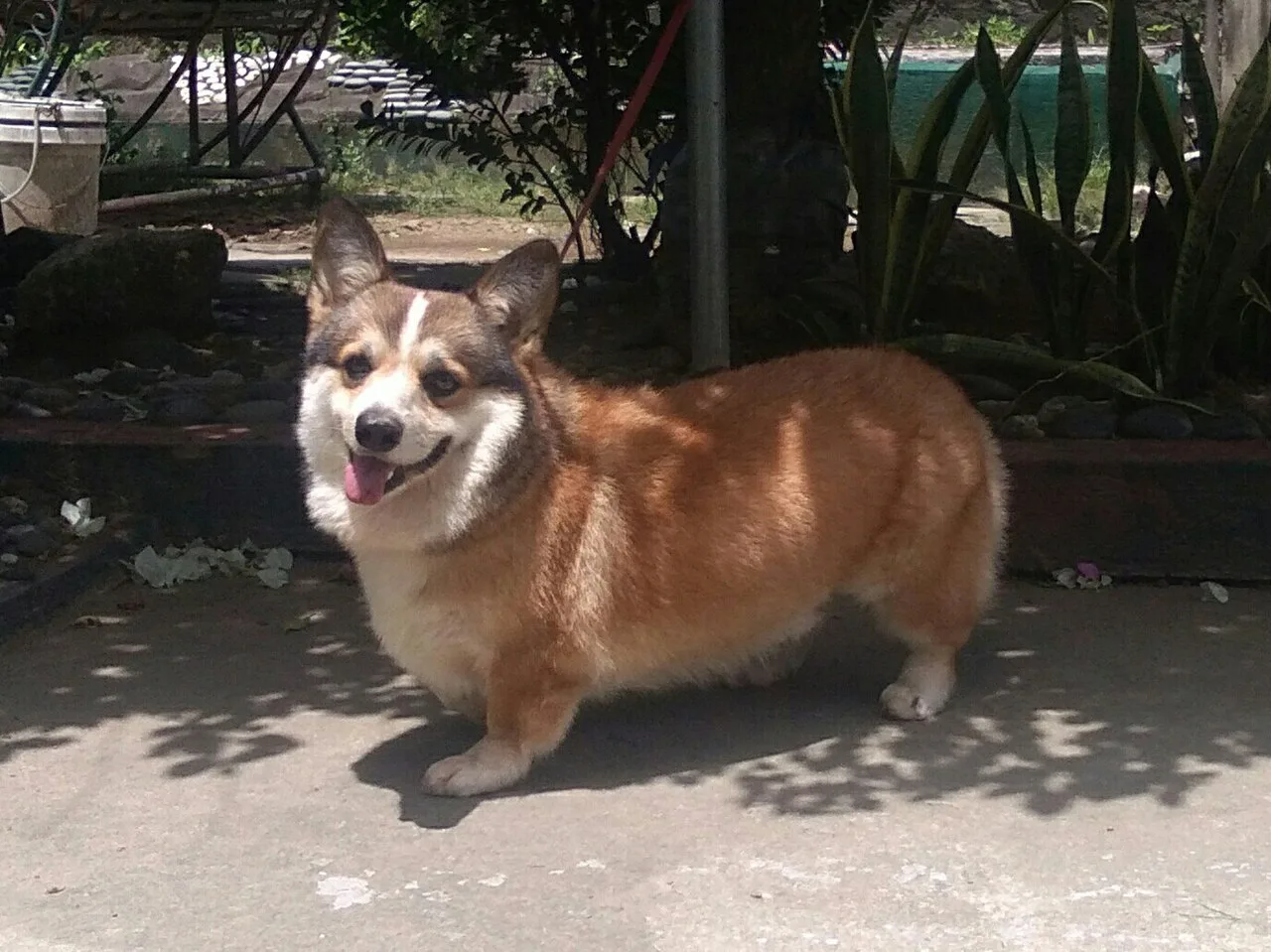
The Pembroke Welsh Corgi is one of the most beloved dog breeds in the world, a small, sturdy herding dog from the hills of Wales that became globally famous as the companion of choice of Queen Elizabeth II, who kept more than 30 of them over the course of her 70-year reign. Beneath the fame and the undeniable cuteness of its long-eared, big-eyed, round-bottomed silhouette lies a genuinely capable, intelligent, and active herding dog with a personality that is both engaging and demanding.
Pembroke Welsh Corgi Origins in Wales
The Pembroke Welsh Corgi's origins in Wales are ancient, though the precise timeline is a matter of historical interpretation and legend. Welsh legend places the Corgi in the realm of fairy cattle herders, mythology holds that these small dogs were gifted to humans by fairies, and that the marks on their coats (a stripe across the shoulders and down the back that some Corgis carry) are the saddle and harness marks left by fairy riders.
Historical evidence places Corgis in Wales for at least a thousand years. Dogs resembling the modern Pembroke are described in Welsh law codes from the 10th century, and the breed's ancestors likely arrived with Flemish weavers who immigrated to Wales in the 12th century, bringing their small herding dogs with them. These dogs integrated with existing Welsh dogs to produce the Pembroke type we recognize today.
The Pembroke Welsh Corgi was used specifically to herd cattle, a task requiring a dog that could move cattle by nipping at their heels without being kicked. The Corgi's low-to-the-ground build allowed it to duck under the cattle's kick radius while still being agile enough to control the herd. This is a dog designed from the ground up for a specific working purpose.
The Kennel Club in the UK recognized the Pembroke and Cardigan Welsh Corgi as a combined breed in 1928. They were separated into distinct breeds in 1934, with the Pembroke, the smaller, more common, and lighter-boned of the two, receiving independent recognition. The American Kennel Club placed the Pembroke in the Herding Group.
Pembroke Welsh Corgi Physical Characteristics
The Pembroke Welsh Corgi is a small to medium dog with a long body, short but powerful legs, erect ears, and the breed's most distinctive feature: the natural absence of a tail, or a very short natural bobtail. The Pembroke's coat is medium-length, weather-resistant, and double-layered.
| Physical Characteristic | Measurement |
|---|---|
| Height | 25-30 cm (10-12 in) |
| Weight | Males up to 13.6 kg (30 lbs); females up to 12.7 kg (28 lbs) |
| Build | Long body, short legs, sturdy and muscular |
| Head | Foxy, pointed muzzle, large erect ears |
| Ears | Large, erect, slightly rounded at tips |
| Coat | Medium-length, dense, water-resistant double coat |
| Coat colors | Red, sable, fawn, black and tan, with or without white markings |
| Tail | Naturally bobbed (very short or absent) |
| Lifespan | 12-13 years |
The most common Pembroke colors are red and sable (various shades of golden-red to darker brownish-red), often with white markings on the face, chest, legs, and neck. Black and tan is less common. The Cardigan Welsh Corgi, by contrast, comes in a broader range of colors including blue merle, a key visual distinction between the two breeds alongside the Cardigan's long tail.
Queen Elizabeth II and the Royal Connection
No discussion of the Pembroke Welsh Corgi is complete without acknowledging its extraordinary connection to Queen Elizabeth II, which transformed the breed from a well-regarded Welsh working dog into an internationally recognized cultural icon.
The Queen's love of Corgis began in 1933 when her father, then Duke of York (later King George VI), acquired a Corgi named Dookie. Elizabeth was seven years old, and from that moment she formed an attachment to the breed that would last her entire life. Her first personally owned Corgi, Susan, was a gift for her 18th birthday in 1944.
Susan was the foundation of a breeding line that the Queen maintained for over 70 years; almost all of the Queen's subsequent Corgis were direct descendants of Susan.
At the height of her Corgi keeping, Queen Elizabeth had as many as eight at once. The dogs were reportedly fed individually prepared meals and slept in their own rooms at Buckingham Palace. Her Corgis appeared in official photographs, accompanied her on royal engagements, and became synonymous with her public image to a degree unmatched by any other monarch's pet.
Temperament: Herding Intelligence in a Small Package
The Pembroke Welsh Corgi has the temperament of a much larger working dog in a compact, low-to-the-ground body. These dogs are intelligent, alert, active, and opinionated. They were bred to make independent decisions about cattle movement and to work with initiative rather than following step-by-step commands. That independence shows up in the home as a dog that is confident, sometimes stubborn, and always engaged.
"The Pembroke Welsh Corgi has all the intellectual and behavioral characteristics of a herding breed in a body that many owners underestimate. These dogs need training, activity, and mental engagement. When those needs are met, they are outstanding companions. When they are not, the herding instinct finds outlets in nipping at heels and chasing, including the children's heels." Pembroke Welsh Corgi Club of America, Breed Education Materials (2021)
Corgis are typically eager to please when properly motivated, highly food-driven, and responsive to positive reinforcement training. They excel in obedience, agility, herding trials, and tracking. Their alert, vocal nature makes them good watchdogs, though they can be prone to excessive barking without training to moderate this.
Health: Intervertebral Disc Disease (IVDD)
The Pembroke Welsh Corgi, like the Dachshund and other chondrodystrophic (long-backed, short-legged) breeds, is at significant risk for intervertebral disc disease (IVDD). Chondrodystrophic breeds carry a genetic mutation (CDDY, chondrodystrophy with intervertebral disc disease) that causes the soft inner material of intervertebral discs to calcify and harden earlier in life than in normal breeds.
When a calcified disc ruptures or herniates, it can compress the spinal cord, causing pain, weakness, and potentially permanent paralysis.
IVDD in Corgis most commonly affects the thoracolumbar spine (mid-back). Symptoms range from back pain and reluctance to jump or climb stairs to knuckling of the hind feet, weakness, and in severe cases complete paralysis of the hind limbs with loss of bladder and bowel control. Treatment ranges from strict rest and pain management for mild cases to emergency spinal surgery for severe cases. A DNA test (IVDD/CDDY test) is commercially available and should be used in breeding decisions.
| Health Condition | Prevalence/Notes | Screening |
|---|---|---|
| IVDD | Significant, chondrodystrophic breed | DNA test (CDDY/IVDD) |
| Degenerative myelopathy | Significant | DNA test (SOD1 mutation) |
| Hip dysplasia | ~17% (OFA) | OFA/BVA X-ray |
| Progressive retinal atrophy | Present | DNA test (PRCD) |
| Obesity | Very common tendency | Weight monitoring |
| Von Willebrand disease | Reported | DNA test |
See Pembroke Welsh Corgi Health Problems for comprehensive health guidance.
Health: Degenerative Myelopathy
Degenerative myelopathy (DM) is a progressive, fatal neurological disease that affects the spinal cord of dogs, typically in middle to older age. The SOD1 mutation responsible for DM was first identified in German Shepherd Dogs but is now known to be present in many breeds, including the Pembroke Welsh Corgi, where it occurs at significant frequency.
DM begins with weakness and coordination loss in the hind limbs, progresses to paralysis, and ultimately affects the forelimbs and ability to swallow. The disease is painless but progressive, with most affected dogs experiencing complete paraplegia within 6-18 months of symptom onset. There is no cure; supportive care and physical therapy can maintain quality of life for a period but do not stop progression.
A DNA test for the SOD1 mutation is available and is a recommended health test for Pembroke breeding stock. Carriers (one copy of the mutation) are unlikely to develop DM themselves but can pass the mutation to offspring. Affected (two copies) dogs have a significantly elevated lifetime risk of developing DM.
Health: Progressive Retinal Atrophy
The PRCD form of Progressive Retinal Atrophy (PRA), the most common inherited cause of blindness in dogs, affects Pembroke Welsh Corgis. The same mutation found in Cocker Spaniels and other breeds causes progressive loss of retinal photoreceptors, beginning with night blindness and progressing to complete blindness.
A DNA test (OptiGen PRCD-PRA test) identifies affected, carrier, and clear dogs. Breeders should test all breeding stock; mating two carriers must be avoided.
Exercise, Training, and Mental Stimulation
The Pembroke Welsh Corgi needs more exercise than its small size might suggest. These are active herding dogs that require at least 45-60 minutes of vigorous exercise daily, including opportunities to run and play. A tired Corgi is a well-behaved Corgi; an under-exercised Corgi redirects its energy into herding household members, excessive barking, and destructive behavior.
Mental stimulation is particularly important for this intelligent breed. Training sessions, puzzle toys, nose work, and agility all help channel the Corgi's working intelligence constructively. For exercise guidance see Exercise Needs by Dog Breed. For lifespan context see How Long Do Dogs Live.
For comparison with the other Corgi breed see Cardigan Welsh Corgi. For related long-backed breed health see Dachshund.
"Degenerative myelopathy in breeds like the Pembroke Welsh Corgi and German Shepherd Dog has taught us a great deal about the genetic architecture of progressive neurodegenerative diseases in dogs. The SOD1 mutation is now one of the most studied canine inherited disease variants, and its identification has provided a powerful tool for breeding programs worldwide." Awano, T., et al. (2009). Proceedings of the National Academy of Sciences
Living Conditions and Suitability
Pembroke Welsh Corgis are adaptable dogs that can thrive in a variety of living environments, including apartments, provided their exercise needs are consistently met. Their herding instincts mean they may attempt to herd children, other pets, or even adults by nipping at heels, early training should address this behavior.
They are generally excellent with children and other pets when properly socialized. Their alertness and vocal nature make them natural watchdogs, and they will notify their owners of anything unusual with characteristic Corgi commentary.
Weight management is critical for Corgis, their long, heavy back relative to their short legs means that extra weight significantly increases stress on the spine and worsens IVDD risk.
Summary
The Pembroke Welsh Corgi is a breed of genuine charm, intelligence, and historical significance, the beloved companion of Queen Elizabeth II for seven decades and a herding dog of Welsh origin with over a thousand years of history. Its health profile requires attention to IVDD, degenerative myelopathy, and PRA through DNA testing, as well as vigilant weight management. For active owners who can meet its exercise and mental stimulation needs, the Pembroke is an extraordinary companion.
References
Awano, T., Johnson, G.S., Wade, C.M., et al. (2009). Genome-wide association analysis reveals a SOD1 mutation in canine degenerative myelopathy that resembles amyotrophic lateral sclerosis. Proceedings of the National Academy of Sciences, 106(8), 2794-2799. https://doi.org/10.1073/pnas.0812297106
Batcher, K., Dickinson, P., Maciejewski, H., et al. (2019). Phenotypic effects of FGF4 retrogenes on intervertebral disc disease in dogs. Genes, 10(6), 435. https://doi.org/10.3390/genes10060435
Orthopedic Foundation for Animals. (2023). Pembroke Welsh Corgi statistics. https://www.ofa.org/diseases/hip-dysplasia/statistics/
Miyadera, K., Acland, G.M., & Aguirre, G.D. (2012). Genetic and phenotypic variations of inherited retinal diseases in dogs. Veterinary Journal, 194(3), 290-299. https://doi.org/10.1016/j.tvjl.2012.04.013
American Kennel Club. (2023). Pembroke Welsh Corgi breed information. https://www.akc.org/dog-breeds/pembroke-welsh-corgi/
Pembroke Welsh Corgi Club of America. (2022). Health and genetics information. https://www.pwcca.org/health/
Frequently Asked Questions
Why did Queen Elizabeth II love Corgis so much?
Queen Elizabeth II’s love of Pembroke Welsh Corgis began in 1933 when her father acquired a Corgi named Dookie. Her personal connection deepened with her own first Corgi, Susan, given as an 18th birthday gift in 1944. She maintained a direct breeding line descending from Susan for over 70 years, keeping as many as eight Corgis at once. The breed became inseparable from her public image.
What is IVDD and how does it affect Corgis?
Intervertebral disc disease (IVDD) occurs when the soft inner material of spinal discs hardens and herniates, compressing the spinal cord. Pembroke Welsh Corgis carry the CDDY mutation that causes premature disc calcification. This can cause back pain, weakness, and paralysis of the hind limbs. A DNA test for the CDDY/IVDD mutation is available for use in breeding programs.
Do Pembroke Welsh Corgis need a lot of exercise?
Yes. Despite their small size, Pembroke Welsh Corgis are active herding dogs that need at least 45-60 minutes of vigorous daily exercise. They benefit from running, play, and mentally stimulating activities. Insufficient exercise leads to herding behavior, excessive barking, and destructive activity.
What is the difference between Pembroke and Cardigan Welsh Corgis?
The most obvious difference is the tail: Pembrokes have a natural bobtail (very short or absent), while Cardigans have a long, fox-like tail. Cardigans are also slightly larger and heavier-boned. Cardigans come in a broader color range including blue merle. The two breeds have distinct ancient histories and were formally separated into separate registrations in 1934.
What DNA tests should Corgi breeders perform?
Pembroke Welsh Corgi breeders should test for degenerative myelopathy (SOD1 mutation), PRCD-PRA (progressive retinal atrophy), and the CDDY/IVDD intervertebral disc disease mutation. OFA hip certification is also recommended. Von Willebrand disease testing is advisable in affected lines.
Are Corgis good apartment dogs?
Corgis can adapt to apartment living if their exercise needs are consistently met with daily walks and active play. Their vocal nature (they are alert barkers) should be managed with training. They do well in small spaces when given adequate physical and mental stimulation.