
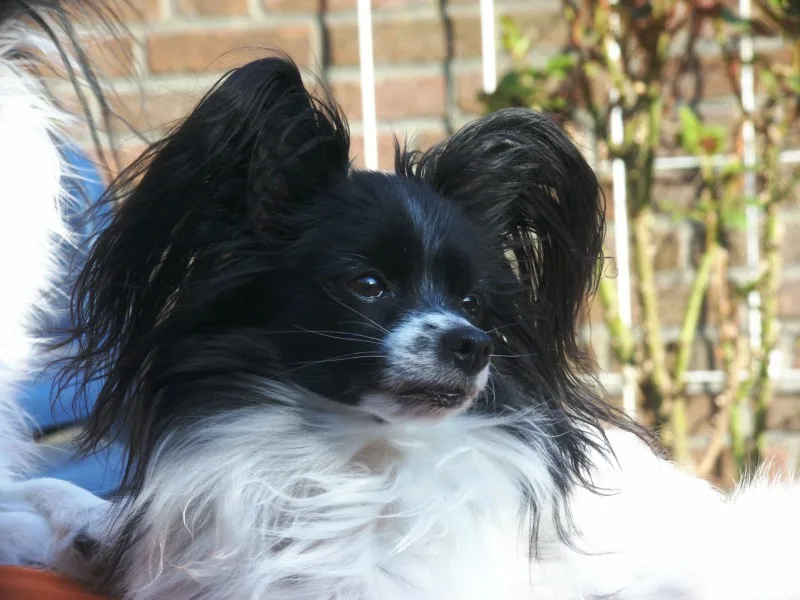
The Papillon is one of the oldest and most elegant toy breeds in the world, a delicate, butterfly-eared dog of European royal courts whose beauty, intelligence, and remarkable athleticism have made it a perennial favorite across five centuries of recorded history.
Named for the French word for butterfly, reflecting the breed's distinctive large, fringed, wing-like erect ears, the Papillon belies its fragile appearance with exceptional trainability and one of the highest measured intelligence rankings in all of dogdom.
Origins: European Royal Courts
The Papillon's history is among the best-documented of all toy breeds, preserved in the portraits of European royalty that survive from the 16th century onward. These paintings, by Titian, Rubens, Van Dyck, Watteau, and others, depict small spaniel-type dogs with large, fringed ears in the laps and company of the most powerful families of Europe: the Medicis, the Habsburgs, and eventually the royal courts of France and Spain.
In these early portraits, the dogs typically show drop (pendant) ears, the type now known as the Phalene variety, rather than the erect ears of the modern Papillon. The transition from primarily drop-eared to primarily erect-eared appears to have occurred during the 18th and 19th centuries through selective breeding, possibly through crosses with Asian breeds with erect ear types.
The breed's most famous historical owner was Madame de Pompadour, mistress of King Louis XV of France, who is recorded to have owned several Papillons. Marie Antoinette is also said to have loved the breed and allegedly carried her Papillon on the walk to the guillotine (an account that, while charming, has limited historical substantiation). These royal associations created enormous prestige for the breed in French and broader European society.
The AKC recognized the Papillon in 1915, placing it in the Toy Group.
Physical Characteristics
The Papillon is a fine-boned, elegant, medium-energy toy dog whose most immediately distinctive feature is its ears. The erect ear type (giving the butterfly appearance that defines the breed's name) carries a profusion of fine, silky fringing that falls dramatically outward from the central ear structure, creating the wing impression. The overall appearance is of lightness, balance, and refinement.
| Physical Characteristic | Measurement |
|---|---|
| Height | 20-28 cm (8-11 in) |
| Weight | 3.6-4.5 kg (8-10 lbs) |
| Build | Fine-boned, light, elegant |
| Head | Small and fine; rounded skull |
| Ears | Large, with long, silky fringe, either erect (Papillon) or pendant/drop (Phalene) |
| Eyes | Round, medium-sized, dark |
| Coat | Long, silky, single-layer, abundant; no undercoat |
| Coat color | Always white with patches of color (black, red, brown, sable), no all-color with no white |
| Tail | Long, plumed, arched over the back |
| Lifespan | 14-16 years |
The two ear varieties, Papillon (erect) and Phalene (drop), are considered varieties of the same breed rather than separate breeds in most registries. In the same litter, both erect and drop-eared puppies can occur. Ear type is determined genetically; the erect ear gene is dominant over the drop ear gene, but drop-eared parents can still produce erect-eared puppies if they carry the erect allele.
Intelligence: Among the Most Trainable Dogs
The Papillon's intelligence is a defining characteristic of the breed and one of the most important aspects of living with one. In Stanley Coren's well-known ranking of dog breeds by intelligence and trainability (The Intelligence of Dogs, 1994), the Papillon ranks 8th out of 138 breeds evaluated, placing it in the top 6% of the most intelligent dog breeds, above many larger breeds commonly thought of as working or obedience dogs.
"The Papillon consistently demonstrates the capacity for complex multi-step learning tasks that we associate with the most cognitively capable breeds. Their performance in competitive obedience and agility reflects genuine problem-solving ability and working memory rather than simply conditioned reflexes." Dr. Stanley Coren, The Intelligence of Dogs, University of British Columbia, 1994
This intelligence means that Papillons learn extremely quickly, both the things owners want them to learn and the things owners would prefer they did not. A Papillon without training and mental stimulation quickly applies its intelligence to mischief. With training, it is capable of remarkable performance: many Papillons have earned the highest levels of AKC obedience and agility titles despite the competitive advantage that larger breeds typically have in these sports.
For a broader discussion of canine intelligence see How Smart Are Dogs.
Temperament: Alert, Friendly, Bold
The Papillon's temperament is surprisingly bold for its size. These are alert, curious, energetic dogs that are not typically timid with strangers or other dogs. They approach new situations with interest and confidence rather than anxiety, a trait that reflects both careful selective breeding for companion temperament and the intelligence that allows them to assess situations accurately.
They are highly sociable dogs that enjoy company, both human and canine. They get along well with other dogs, cats when socialized, and with children who handle them respectfully. Their small size means they are vulnerable to injury from rough handling, and families with very young children should supervise interactions carefully.
Their energy level is moderate to high for a toy breed; they are more active and exercise-motivated than many other toys, which contributes to their success in dog sports.
| Comparison Factor | Papillon | Chihuahua |
|---|---|---|
| Intelligence rank (Coren) | #8 | Not ranked (small sample) |
| Energy level | Moderate-High | Moderate |
| Trainability | Very High | Moderate |
| Coat maintenance | High (long, silky) | Low (smooth) to Moderate (long coat) |
| Ear type options | Erect (Papillon) or drop (Phalene) | Erect only (standard) |
| Size | 3.6-4.5 kg | 1.8-2.7 kg |
Health: Patellar Luxation
Patellar luxation is the most common orthopedic problem in Papillons, as it is in most toy breeds. The breed's fine-boned, lightweight build can be associated with insufficient depth of the trochlear groove that the kneecap tracks in. Grade I-II luxation often causes minimal symptoms; grade III-IV requires surgery.
OFA patellar evaluation is recommended for breeding stock. The condition is heritable, and dogs with significant luxation should not be used for breeding.
| Health Condition | Prevalence/Notes | Screening |
|---|---|---|
| Patellar luxation | Common in toy breeds | OFA examination |
| Progressive retinal atrophy | Present | DNA test (PRCD) |
| Dental disease | Very common in toys | Regular dental exams |
| Fontanel (open skull) | Present in some, similar to Chihuahua molera | Veterinary assessment |
| Von Willebrand disease | Reported | DNA test |
| Hypoglycemia | Puppies and very small adults | Blood glucose monitoring |
Health: Progressive Retinal Atrophy and Eye Conditions
Progressive Retinal Atrophy (PRCD form) has been documented in Papillons. A DNA test is available that identifies affected, carrier, and clear dogs. Breeding stock should be tested to prevent producing affected puppies.
The Papillon's large eyes are relatively prominent compared to breed size, which creates some risk of corneal trauma and injury, though not to the degree seen in breeds like the Pug. Regular eye examination by an ACVO-certified veterinary ophthalmologist is recommended for breeding stock.
Health: Persistent Fontanel
Some Papillons, like Chihuahuas, are born with an incompletely closed opening in the skull (fontanel or molera). In most dogs this closes as the skull matures. A persistent fontanel of significant size may be associated with hydrocephalus (excess cerebrospinal fluid in the brain). Veterinary assessment of any Papillon with a large or persistently open fontanel is recommended.
"Open fontanels in toy breed dogs are relatively common and often benign, but they should be distinguished from cases associated with hydrocephalus through careful neurological assessment. Most affected dogs require no intervention; those with concurrent hydrocephalus may benefit from medical management." Dr. Curtis Dewey, DVM, DACVIM, Cornell University College of Veterinary Medicine
Grooming
The Papillon's long, silky single-layer coat is relatively easier to maintain than its appearance suggests. Because there is no undercoat, the coat does not mat as readily as the double coats of many other breeds. Weekly brushing with a slicker brush and comb is typically sufficient for most pet Papillons, with additional attention to the ear fringing and the long tail plume.
The coat should be bathed every 2-4 weeks. Professional grooming is not required frequently, many Papillon owners manage coat maintenance entirely at home.
Like all toy breeds, dental care is a significant health requirement. Daily brushing is ideal. For apartment and small space living see Best Dogs for Apartments. For comparisons with related breeds see Chihuahua and Pomeranian.
The Phalene: The Drop-Eared Variety
The Phalene (meaning "moth" in French, referring to the wing-down, resting position of the moth) is the original drop-eared form of the breed, the type seen in the 16th-century royal portraits. For centuries it was the dominant form; the erect-eared Papillon type became more prevalent in the 19th century and is now the more common variety worldwide.
In show competition, Papillons and Phalenes may be shown in the same class in most registries, and both carry equal merit under the breed standard. A single litter may contain both erect and drop-eared puppies. The Phalene is significantly rarer than the Papillon variety today and is considered deserving of preservation by dedicated breed enthusiasts.
For detailed training resources see Papillon Training Guide.
Exercise and Sport Performance
The Papillon's combination of high intelligence, athletic ability, and eagerness to work with its handler has made it remarkably successful in competitive dog sports. Papillons regularly compete against and outperform much larger breeds in obedience trials and agility competitions, earning titles that were historically dominated by working breeds.
Exercise requirements are moderate, 30-45 minutes of daily activity suits most Papillons, though highly energetic individuals benefit from more. Their athleticism should not be underestimated: Papillons can jump, run, and maneuver with surprising speed and precision for their size.
Summary
The Papillon is a breed of rare combination, ancient aristocratic history, extraordinary beauty, elite intelligence, and athletic ability, all in a compact, manageable toy package. Its #8 ranking in canine intelligence makes it one of the most trainable dogs in existence. Health priorities include patellar evaluation, PRA DNA testing, and consistent dental care. For owners who want a toy breed with the mind and capabilities of a working dog, the Papillon is without equal.
References
Coren, S. (1994). The Intelligence of Dogs: Canine Consciousness and Capabilities. Free Press. ISBN 978-0-7432-8087-7.
Miyadera, K., Acland, G.M., & Aguirre, G.D. (2012). Genetic and phenotypic variations of inherited retinal diseases in dogs. Veterinary Journal, 194(3), 290-299. https://doi.org/10.1016/j.tvjl.2012.04.013
Dewey, C.W. (2013). A Practical Guide to Canine and Feline Neurology (3rd ed.). Wiley-Blackwell. Chapter on hydrocephalus.
Englar, R.E. (2019). Patellar luxation in dogs. Today's Veterinary Practice, 9(3), 44-52.
American Kennel Club. (2023). Papillon breed information. https://www.akc.org/dog-breeds/papillon/
Papillon Club of America. (2022). Breed history, health, and standards. https://www.papillonclub.org/
Frequently Asked Questions
Why is the Papillon called the butterfly dog?
The Papillon takes its name from the French word for butterfly. The breed’s large, wing-like erect ears, heavily fringed with long silky hair that spreads out from the central ear structure, resemble an open butterfly’s wings when viewed from the front. The drop-eared variety is called the Phalene, French for moth.
How intelligent is the Papillon?
The Papillon ranks #8 out of 138 breeds in Stanley Coren’s widely cited intelligence ranking, placing it in the top 6% of dog breeds by trainability and problem-solving ability. This makes it one of the most trainable toy breeds and one of the most capable small dogs in competitive obedience and agility.
What is the Phalene Papillon?
The Phalene is the drop-eared (pendant ear) variety of the Papillon breed, the original form depicted in 16th-century European royal portraits. The erect-eared Papillon type became dominant in the 19th century. Both varieties may occur in the same litter and are judged equally in most show competitions. The Phalene is significantly rarer today.
Are Papillons good apartment dogs?
Yes. Papillons are well-suited to apartment life. Their small size, manageable coat, and moderate exercise requirements (30-45 minutes daily) make them practical for smaller living spaces. Their intelligence means they benefit from mental stimulation, training and trick learning help prevent boredom.
How long do Papillons live?
Papillons are a long-lived toy breed with a typical lifespan of 14-16 years. Ages of 17-18 are not uncommon in healthy individuals. Their longevity, combined with their intelligence and active nature, makes for an enduring and engaging companionship.
What health tests should Papillon breeders perform?
Papillon breeders should perform OFA patellar evaluation, DNA testing for PRCD-PRA (progressive retinal atrophy), and von Willebrand disease screening. Eye examination through an ACVO-certified ophthalmologist is also recommended. Dogs with persistent open fontanels should be evaluated neurologically before being used in breeding.