
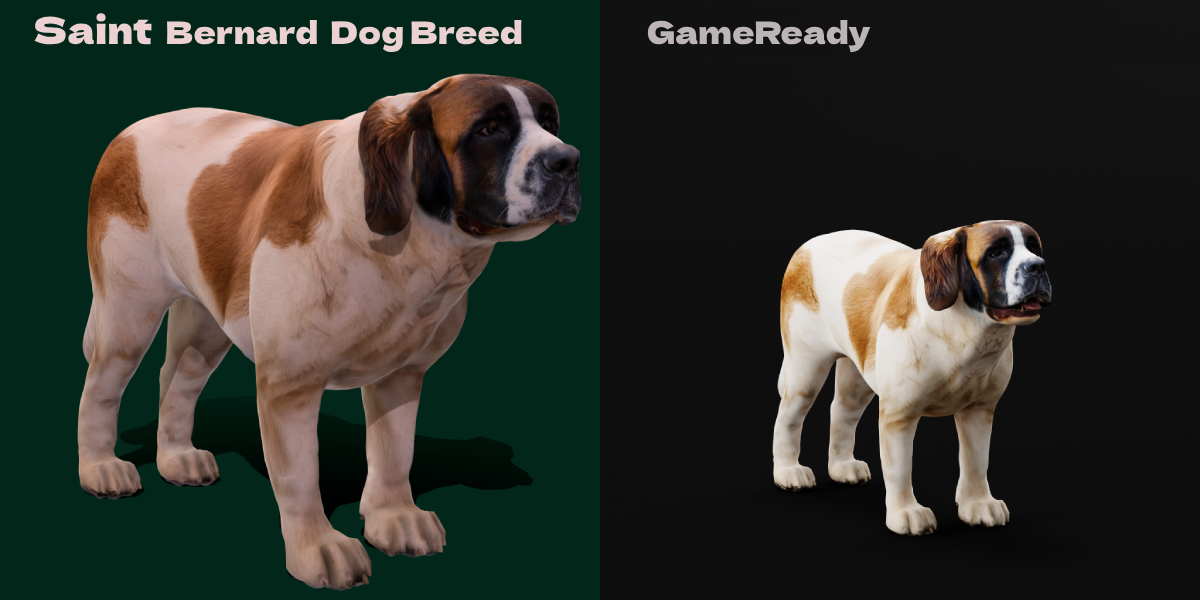
The Saint Bernard is one of the most iconic dog breeds in history, a massive, gentle giant of Swiss Alpine origin whose legend as a rescuer of avalanche victims and lost travellers in the Great St. Bernard Pass has made it one of the most universally recognized dogs in the world.
Behind the legend lies a genuinely extraordinary working animal and one of the most affectionate, patient, and family-devoted giant breeds in existence. Understanding the Saint Bernard fully, however, requires honest engagement with both its magnificent history and its significant health challenges.
Origins: The Great St. Bernard Hospice
The Saint Bernard's history begins in the Alps, at an elevation of 2,469 meters above sea level where the Great St. Bernard Pass crosses the Alps between Switzerland and Italy. This pass, one of the most important mountain crossing points in Europe, was used by pilgrims, traders, soldiers, and travelers from Roman times onward.
In the late 10th or early 11th century, the Archdeacon Bernard de Menthon established a hospice at the summit of the pass to provide shelter and assistance to travelers crossing the mountains. This institution, the Great St. Bernard Hospice, became the home of the breed that would bear its name.
Monk caretakers at the hospice are believed to have kept large dogs at the pass for several centuries before the 18th century, initially as guard dogs and companions.
By the early 18th century, the earliest well-documented period of their presence, the monks had discovered that the dogs had an extraordinary ability to detect travelers buried in snow, to find their way through blizzards to locate the lost or injured, and to dig out and warm avalanche victims. The dogs were sent out in teams to patrol the mountain paths after storms.
The most famous Saint Bernard in history was a dog named Barry, who is said to have saved more than 40 people in the mountains between 1800 and 1814. Barry's preserved body is displayed at the Natural History Museum in Bern, Switzerland. The legend that Saint Bernards carried brandy barrels around their necks to warm avalanche victims is a popular myth; there is no historical evidence this practice was ever actually used at the hospice.
The AKC recognized the Saint Bernard in 1885, placing it in the Working Group.
Physical Characteristics
The Saint Bernard is a giant breed, one of the largest dog breeds recognized by major kennel clubs. It comes in two coat varieties: rough coat (medium-length, dense, wavy or slightly undulating) and smooth coat (short, dense, close-lying). Both varieties are equally recognized and valued.
| Physical Characteristic | Measurement |
|---|---|
| Height (males) | 70-90 cm (27.5-35.5 in) |
| Height (females) | 65-80 cm (25.5-31.5 in) |
| Weight (males) | 64-82 kg (140-180 lbs) |
| Weight (females) | 50-64 kg (110-140 lbs) |
| Build | Massive, powerful, substantial |
| Head | Very large, broad; deeply furrowed brow |
| Coat types | Rough coat (medium-length) and smooth coat (short) |
| Coat colors | Red and white, mahogany-brindle and white, orange and white, with black shading |
| Tail | Long, broad at root, powerful |
| Drool | Significant, especially rough-coated and when excited |
| Lifespan | 8-10 years |
The Saint Bernard's enormous head with its deeply furrowed brow, loose skin, and heavy jowls gives it an unmistakably solemn, dignified expression that belies its gentle and affectionate nature. The loose facial skin contributes to the breed's significant drooling, which prospective owners must be prepared to manage as a daily reality.
Temperament: The Gentle Giant
The Saint Bernard has earned its reputation as a gentle giant through centuries of careful breeding for a calm, stable, patient, and affectionate character. These dogs are fundamentally good-natured, deeply loyal to their families, and remarkably patient with children, a quality that made them valued family dogs as well as working rescue dogs.
"The Saint Bernard's temperament is its greatest asset and also its most important breed characteristic. A nervous, reactive, or aggressive Saint Bernard is not merely unpleasant; it is genuinely dangerous given the breed's size. Breeders who select for stable, calm temperament alongside physical health perform the most important service to the breed." Saint Bernard Club of America, Breed Education Program (2021)
Saint Bernards are typically quiet dogs that do not bark excessively, are patient with the extended social activity of family life, and are adaptable to a range of household situations. They are not high-energy dogs despite their working heritage, adults are relatively calm indoors, though they need regular outdoor exercise for health and appropriate weight management.
Their size and gentle nature make them instinctively careful around children, though supervision is always advisable given that an accidentally enthusiastic 70 kg dog can inadvertently injure small children simply by leaning on them.
Health: Giant Breed Challenges
Giant breed dogs face a set of health challenges that are amplified by their size. Every pound of additional body weight adds to the stress on joints, organs, and the cardiovascular system. The Saint Bernard, as one of the largest breeds recognized, exemplifies these challenges.
| Health Condition | Prevalence/Notes | Screening |
|---|---|---|
| Hip dysplasia | ~20% (OFA) | OFA/BVA X-ray mandatory |
| Elbow dysplasia | ~19% (OFA) | OFA X-ray |
| Dilated cardiomyopathy | Present | Cardiac auscultation/echo |
| Bloat/GDV | Significant, deep-chested giant | Prophylactic gastropexy |
| Osteosarcoma | Elevated risk (giant breeds) | Monitoring for lameness |
| Ectropion | Common | Ophthalmological exam |
| Epilepsy | Reported | No DNA test |
| Entropion | Present | Ophthalmological exam |
Health: Hip and Elbow Dysplasia
The Saint Bernard has approximately 20% hip dysplasia and 19% elbow dysplasia prevalence in OFA data, significant figures for a very large breed where orthopedic disease severely impacts mobility and quality of life. OFA or BVA hip and elbow certification of both parents is mandatory before purchasing a Saint Bernard puppy.
In a dog weighing 70-80 kg, severe hip dysplasia means pain, severely limited mobility, and significant welfare concerns. Weight management is critically important, even a few kilograms of excess weight significantly amplifies joint stress in a dog this size.
Health: Bloat and Dilated Cardiomyopathy
Gastric dilatation-volvulus (GDV) is a significant risk in the Saint Bernard. The breed's combination of giant size, deep chest, and the tendency toward rapid food consumption creates conditions favorable for bloat. Prophylactic gastropexy, performed at the time of any planned surgical procedure, is strongly recommended.
Dilated cardiomyopathy (DCM), weakening and enlargement of the heart muscle, occurs in Saint Bernards as it does in several other large and giant breeds. Breeding stock should have regular cardiac evaluation. Signs of DCM include exercise intolerance, coughing, and difficulty breathing.
"In giant breeds like the Saint Bernard, the cumulative health burden of orthopedic disease, cardiac disease, and cancer risk creates a specific and challenging care profile. Early detection through screening and proactive preventive care, particularly gastropexy and weight management, significantly affects quality of life and longevity." Dr. Katharine Lunn, BVMS, MS, DACVIM, North Carolina State University College of Veterinary Medicine
Health: Osteosarcoma
Large and giant breed dogs carry elevated risk for osteosarcoma (bone cancer), a malignant, aggressive cancer that most commonly affects the long bones of the limbs. Saint Bernards, Great Danes, Rottweilers, and Irish Wolfhounds are among the breeds with the highest documented osteosarcoma incidence.
Osteosarcoma typically presents as progressive lameness, swelling at the affected bone site, and in many cases visible bone destruction on radiographs. It is a cancer of major welfare significance, highly painful and with a poor prognosis even with aggressive treatment. Owners of Saint Bernards and other giant breeds should be alert to unexplained lameness and seek prompt veterinary evaluation.
For health monitoring see Saint Bernard Health Problems. For related giant breed comparisons see Great Dane and Mastiff. For lifespan context see How Long Do Dogs Live.
The Giant Breed Lifespan Penalty
The Saint Bernard's lifespan of 8-10 years is among the shortest of any recognized breed, a direct consequence of the well-documented inverse relationship between body size and lifespan in dogs. While Chihuahuas and other small breeds routinely live 14-17 years, giant breeds like the Saint Bernard, Great Dane, and Irish Wolfhound typically live 8-10 years. This is simply reality of giant breed ownership and should be understood clearly before committing to the breed.
For nutrition guidance that addresses the specific needs of aging large breeds see Senior Dog Nutrition Guide.
Exercise and Physical Management
Despite their massive size, Saint Bernards have moderate exercise requirements. Daily walks of 30-45 minutes at a steady pace are appropriate for adults, combined with play in a yard. They do not need the high-intensity exercise of sporting or herding breeds.
Giant breed puppies require particular care: rapid growth in very large breeds can damage developing joints if exercise is too intense during the first 18-24 months. High-impact activities like jumping and extended jogging should be avoided until skeletal maturity (typically around 2 years for giant breeds).
Saint Bernards do not tolerate heat well. Like all large breeds with heavy coats, they are susceptible to heat stroke in warm weather. They are best suited to cooler climates.
Living with a Saint Bernard
Practical considerations for Saint Bernard ownership include:
- Space: Their size requires more living space than most breeds. A large home with a yard is preferable.
- Drool: Significant and unavoidable, particularly after drinking water or eating. Towels should always be at hand.
- Cost: Feeding a 70-80 kg dog is substantially more expensive than feeding smaller breeds. Veterinary costs, for surgery, medications, and specialist care, are proportional to body weight.
- Lifespan: The relatively short lifespan (8-10 years) means that owners who love the breed deeply will face repeated losses.
- Strength: A Saint Bernard puppy can knock over an adult; management and training from the earliest possible age are essential.
Summary
The Saint Bernard is a breed of legend, genuine working history, and profound gentleness. Barry of the Great St. Bernard Pass represents an authentic history of canine service to humans in extreme conditions. The breed's health profile, hip and elbow dysplasia, cardiac disease, osteosarcoma, and GDV, requires knowledgeable management and regular veterinary screening.
The relatively short lifespan is the unavoidable reality of giant breed ownership. For the right owner, no breed offers the combination of presence, gentleness, and history that the Saint Bernard provides.
References
Glickman, L.T., Glickman, N.W., Schellenberg, D.B., et al. (2000). Incidence of and breed-related risk factors for gastric dilatation-volvulus in dogs. Journal of the American Veterinary Medical Association, 216(1), 40-45. https://doi.org/10.2460/javma.2000.216.40
Modiano, J.F., Breen, M., Burnett, R.C., et al. (2005). Distinct B-cell and T-cell lymphoproliferative disease prevalence among dog breeds indicates heritable risk. Cancer Research, 65(13), 5654-5661. https://doi.org/10.1158/0008-5472.CAN-05-0705
Orthopedic Foundation for Animals. (2023). Saint Bernard breed statistics. https://www.ofa.org/diseases/hip-dysplasia/statistics/
Michell, A.R. (1999). Longevity of British breeds of dog and its relationships with sex, size, cardiovascular variables and disease. Veterinary Record, 145(22), 625-629. https://doi.org/10.1136/vr.145.22.625
American Kennel Club. (2023). Saint Bernard breed information. https://www.akc.org/dog-breeds/saint-bernard/
Saint Bernard Club of America. (2022). Health and breed history. https://www.saintbernardclub.org/
Frequently Asked Questions
Did Saint Bernards really carry brandy barrels to rescue people?
No. The brandy barrel is a popular myth with no historical foundation. The monks of the Great St. Bernard Hospice and their dogs did perform genuine alpine rescue work from the early 18th century, locating and assisting travelers lost or buried in snow. The barrel image appears to have been popularized by 19th-century paintings and engravings and became associated with the breed through artistic tradition rather than fact.
How long do Saint Bernards live?
Saint Bernards typically live 8-10 years, among the shortest lifespans of any recognized breed. This is a direct consequence of the inverse relationship between body size and lifespan in dogs. Giant breeds metabolize faster, age more rapidly, and face higher rates of certain serious diseases including osteosarcoma. This shortened lifespan is a critical consideration before committing to the breed.
Are Saint Bernards good with children?
Yes, Saint Bernards are typically excellent with children, patient, gentle, and tolerant. Their historical character includes a natural care for humans in distress. However, given their enormous size (up to 80+ kg), supervision is necessary because an accidentally enthusiastic Saint Bernard can inadvertently knock over or injure a small child simply with its weight and movement.
Do Saint Bernards drool a lot?
Yes. Saint Bernards are among the heaviest-drooling dog breeds, particularly after drinking, eating, or when excited. The drooling is caused by the breed’s loose, heavy jowls and lips. Prospective owners should be comfortable with frequent drool management, keeping towels available and accepting that drool on clothing and furniture is part of Saint Bernard ownership.
What is osteosarcoma and why are Saint Bernards at risk?
Osteosarcoma is a malignant bone cancer that disproportionately affects large and giant dog breeds. Saint Bernards are among the breeds with the highest incidence. It typically presents as progressive lameness and swelling at the tumor site, usually on a long limb bone. It is highly painful and carries a poor prognosis. Unexplained lameness in a Saint Bernard should be evaluated radiographically promptly.
What health tests should Saint Bernard breeders perform?
Saint Bernard breeders should perform OFA or BVA hip and elbow certification, cardiac auscultation or echocardiography, and ophthalmological examination for ectropion and entropion on all breeding stock. Prophylactic gastropexy discussion at spay/neuter time is recommended given the significant GDV risk. Given the high orthopedic disease rates, buyers should insist on certificates for both parents.