
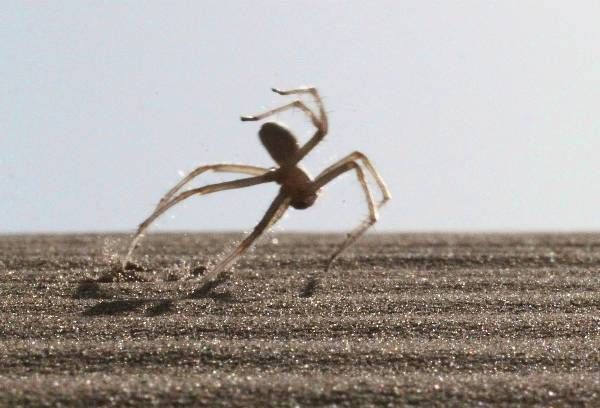
Quick Answer: The Moroccan flic-flac spider (Cebrennus rechenbergi) is a remarkable desert-dwelling arachnid known for its unique cartwheeling locomotion. Native to the sand dunes of Morocco’s Erg Chebbi, this spider escapes predators and navigates its harsh habitat by performing rapid, acrobatic flips. Its specialized movement, adaptive morphology, and nocturnal lifestyle make it a fascinating subject of biological and biomechanical study.
The Moroccan flic-flac spider, also called the cartwheeling spider, inhabits the shifting sands of the Sahara’s Erg Chebbi region. Discovered and described in the early 21st century, this species quickly captured scientific and public attention due to its unprecedented mode of locomotion. Unlike other spiders that rely on running or jumping, Cebrennus rechenbergi can launch itself into a series of controlled somersaults, propelling its body forward at impressive speeds.
The spider’s acrobatic abilities are not merely a spectacle; they are a direct adaptation to the extreme conditions of its desert environment. The Erg Chebbi sand dunes present challenges such as high temperatures, loose substrate, and numerous predators.
In response, the Moroccan flic-flac spider has evolved both behavioral and physiological traits that allow it to survive and thrive where few other arachnids can. Its nocturnal habits, burrowing behavior, and rapid escape maneuvers all contribute to its resilience.
Researchers studying this species have drawn insights not only into spider biomechanics but also into potential applications for robotics and engineering. The flic-flac spider’s unique movement has inspired designs for robots capable of traversing unstable terrain. As a result, Cebrennus rechenbergi stands as a vivid example of how evolutionary pressures can produce extraordinary solutions to environmental challenges.
Discovery and Taxonomy of Cebrennus rechenbergi
The Moroccan flic-flac spider was first described in 2014 by German bionics expert Ingo Rechenberg, who encountered the species during an expedition in the Erg Chebbi dunes. The spider’s scientific name, Cebrennus rechenbergi, honors its discoverer, reflecting the tradition of naming new species after individuals who have made significant contributions to their identification or study.
This species belongs to the family Sparassidae, commonly known as huntsman spiders, which are recognized for their speed and agility.
Cebrennus rechenbergi is distinct within its genus due to its unique mode of locomotion and morphological adaptations. While other members of the Cebrennus genus are distributed across North Africa and the Middle East, only C. rechenbergi has been observed performing the characteristic flic-flac movement.
The spider’s formal description was published in a peer-reviewed scientific journal, establishing its taxonomic status and providing detailed morphological comparisons with related species. For further reading on the genus and taxonomy, see the Wikipedia entry on Cebrennus rechenbergi.
The discovery of this species expanded the known diversity of desert-adapted arachnids and highlighted the importance of fieldwork in remote habitats. Taxonomists rely on morphological features such as leg segmentation, eye arrangement, and genital structure to differentiate closely related spider species.
In the case of C. rechenbergi, both external anatomy and behavioral observations played a crucial role in its classification. The spider’s unique locomotion was documented through video and direct observation, providing compelling evidence for its distinction.
The identification of Cebrennus rechenbergi demonstrates how new species can still be found in well-studied animal groups when researchers explore challenging environments. The combination of morphological and behavioral data strengthens the case for recognizing new taxa within established families.
Physical Characteristics and Adaptations
The Moroccan flic-flac spider exhibits several physical traits that enable survival in the harsh desert ecosystem. Adult individuals typically measure between 13 and 20 millimeters in body length, with long, slender legs adapted for rapid movement across loose sand. The spider’s coloration blends with its environment, featuring pale, sandy hues that provide camouflage against predators and aid in thermoregulation.
One of the most distinctive features of Cebrennus rechenbergi is its specialized leg musculature and joint flexibility. The spider’s legs are not only elongated but also highly articulated, allowing for the rapid extension and contraction necessary for its cartwheeling motion. Unlike many other desert spiders, C. rechenbergi does not rely solely on running or burrowing for escape.
Instead, its legs can generate enough force to launch the entire body into a series of somersaults, doubling its speed compared to conventional running.
The spider’s exoskeleton is adapted to minimize water loss, a critical factor in arid environments. Fine hairs on the legs and body help reduce contact with hot sand and may play a role in sensing vibrations or changes in the substrate. The spider’s eyes are positioned to maximize its field of vision, aiding in the detection of both prey and predators during nocturnal activity. For an overview of desert spider adaptations, see the Britannica entry on spiders.
| Feature | Description | Adaptive Value |
|---|---|---|
| Body Length | 13–20 mm | Small size aids in burrowing |
| Leg Structure | Long, flexible, highly articulated | Enables cartwheeling locomotion |
| Coloration | Pale, sandy hues | Camouflage, thermoregulation |
| Exoskeleton | Water-retentive, fine hairs | Reduces desiccation |
| Eye Arrangement | Wide field of vision | Predator and prey detection |
These physical characteristics are the product of evolutionary pressures unique to the Sahara. The spider’s ability to blend into its surroundings and move rapidly across unstable terrain exemplifies the intricate relationship between form and function in desert-adapted arthropods.
Unique Cartwheeling Locomotion
Perhaps the most extraordinary aspect of the Moroccan flic-flac spider is its cartwheeling escape behavior. When threatened, Cebrennus rechenbergi can perform a rapid series of forward or backward somersaults, a movement known as the “flic-flac.” This action is achieved through powerful, synchronized leg movements that propel the spider off the ground and into a rolling motion.
The spider can reach speeds of up to 2 meters per second during these acrobatics, far surpassing its normal running speed.
This form of locomotion is unique among spiders and rare in the animal kingdom. Most arachnids rely on running, jumping, or burrowing to evade danger. The flic-flac spider’s ability to cartwheel allows it to traverse steep dunes and escape predators that might otherwise outpace it on foot. The movement is not random; the spider can control the direction and duration of its flips, stopping abruptly or changing course as needed.
Biomechanical analysis has revealed that the spider’s somersaults involve precise coordination of all eight legs. The movement begins with a push from the rear legs, followed by a rapid extension of the front legs to initiate the roll. The spider tucks and extends its limbs in a pattern that maintains momentum while minimizing energy expenditure. This efficiency is critical in the energy-scarce desert environment.
The cartwheeling motion of Cebrennus rechenbergi has inspired roboticists to develop machines capable of similar terrain traversal. The spider’s unique locomotion provides a model for bio-inspired engineering, particularly in the field of search-and-rescue robotics.
The flic-flac movement is typically reserved for emergencies, such as predator encounters or sudden environmental threats. During routine activity, the spider moves more conservatively, conserving energy for when rapid escape is necessary. This behavioral flexibility underscores the spider’s adaptation to the unpredictable conditions of its habitat.
Habitat and Distribution in the Sahara
Cebrennus rechenbergi is endemic to the Erg Chebbi region of southeastern Morocco, a vast expanse of sand dunes at the edge of the Sahara Desert. The Erg Chebbi is characterized by extreme temperature fluctuations, with daytime highs often exceeding 45°C and nighttime lows dropping sharply. The loose, shifting sands present a dynamic and challenging environment for any terrestrial organism.
The Moroccan flic-flac spider constructs silk-lined burrows up to 40–50 centimeters deep in the sand. These burrows provide refuge from the intense daytime heat and serve as protection against predators. The spider emerges at night to hunt and patrol its territory, taking advantage of cooler temperatures and reduced predation risk. The nocturnal lifestyle is a common adaptation among desert arthropods, allowing them to avoid the most inhospitable conditions.
The species’ distribution appears to be limited to a relatively small geographic area within Morocco. Surveys of adjacent dune systems have not revealed additional populations, suggesting that C. rechenbergi may have a restricted range. This limited distribution raises questions about the species’ vulnerability to habitat disturbance and climate change. For more on the Sahara’s unique ecosystems, see the Wikipedia entry on the Sahara.
The Moroccan flic-flac spider’s reliance on specific dune habitats highlights the importance of conserving fragile desert ecosystems. Habitat loss or alteration could have significant impacts on the survival of this and other specialized species.
Nocturnal Behavior and Diet
The Moroccan flic-flac spider is primarily nocturnal, emerging from its burrow after sunset to hunt and explore. This behavioral pattern minimizes exposure to extreme temperatures and reduces the risk of predation by diurnal animals. The spider’s activity peaks during the cooler hours of the night, with individuals ranging several meters from their burrows in search of prey.
Cebrennus rechenbergi is an opportunistic predator, feeding on a variety of small arthropods that inhabit the dunes. Its diet likely includes insects such as beetles, ants, and other spiders. The spider uses stealth and speed to ambush prey, relying on its acute vision and sensitive leg hairs to detect movement in the sand. Once a target is located, the spider lunges forward, subduing its prey with a quick bite.
After capturing food, the spider typically returns to its burrow to consume the meal in safety. The burrow also serves as a site for molting and egg-laying. The construction of silk-lined tunnels is a hallmark of many desert spiders, providing stable microclimates and protection from environmental hazards. For a broader perspective on spider behavior, consult the Britannica article on spider behavior.
Reproduction and Life Cycle
Reproductive behavior in Cebrennus rechenbergi follows patterns common to many desert-dwelling spiders. Mating typically occurs during the cooler months, when conditions are less harsh and food resources are more abundant. Males locate females by following pheromone trails or vibrations transmitted through the sand. Courtship involves a series of ritualized movements and tactile signals, reducing the risk of aggression between potential mates.
Females lay eggs within their burrows, encasing them in silk sacs for protection. The eggs hatch after several weeks, and the spiderlings remain in the burrow for a brief period before dispersing. Juvenile spiders are vulnerable to predation and desiccation, so rapid growth and development are advantageous. The life span of C. rechenbergi is not precisely known but is estimated to be one to two years, depending on environmental conditions.
Parental care is minimal, as is typical for most spider species. Once the spiderlings leave the maternal burrow, they must fend for themselves. High mortality rates among juveniles are offset by the production of numerous eggs per clutch. This reproductive strategy is well-suited to the unpredictable and often harsh conditions of desert life.
Ecological Role and Interactions
The Moroccan flic-flac spider occupies a unique ecological niche within the Erg Chebbi dunes. As a mid-level predator, it helps regulate populations of smaller arthropods, contributing to the stability of the desert food web. Its presence indicates a healthy, functioning ecosystem with sufficient prey diversity and minimal disturbance.
Predators of Cebrennus rechenbergi likely include birds, reptiles, and larger arthropods. The spider’s cryptic coloration and rapid escape behavior are essential defenses against these threats. Interactions with other dune inhabitants, such as ants and beetles, can be both competitive and predatory. The spider’s burrowing activity also influences soil structure and nutrient cycling, creating microhabitats for other organisms.
The ecological impact of C. rechenbergi extends beyond its immediate prey and predators. By modifying the physical environment and participating in complex food webs, the spider plays a role in maintaining the integrity of desert ecosystems.
Conservation Status and Threats
As of now, Cebrennus rechenbergi has not been formally assessed by the International Union for Conservation of Nature (IUCN), and its conservation status remains undetermined. However, its restricted range and specialized habitat requirements make it potentially vulnerable to environmental changes. The Erg Chebbi dunes are subject to increasing human activity, including tourism, off-road vehicle use, and infrastructure development, all of which can disrupt fragile habitats.
Climate change poses additional risks, with shifts in temperature and precipitation patterns potentially altering the structure of dune ecosystems. The limited dispersal ability of the flic-flac spider further compounds its vulnerability, as populations may not be able to relocate in response to habitat loss. Conservation efforts should prioritize the protection of dune habitats and the minimization of human impact. For more on species conservation, see the IUCN Red List.
The Moroccan flic-flac spider serves as an indicator species for the health of Sahara dune ecosystems. Protecting its habitat benefits a wide array of desert-adapted flora and fauna.
Biomechanical Insights and Robotic Inspiration
The biomechanics of the Moroccan flic-flac spider’s locomotion have attracted significant interest from engineers and roboticists. The spider’s ability to transition seamlessly between walking and cartwheeling provides a model for designing robots capable of navigating unstable or unpredictable terrain. Researchers have developed prototypes that mimic the spider’s movement, demonstrating improved mobility in sand and rubble compared to traditional wheeled or legged robots.
Key aspects of the spider’s movement include energy-efficient propulsion, rapid acceleration, and adaptability to changing surface angles. These features are valuable for applications such as search-and-rescue operations, planetary exploration, and environmental monitoring. The study of C. rechenbergi exemplifies the field of biomimetics, where biological systems inspire technological innovation. For an overview of biomimetic robotics, see this academic resource.
The intersection of biology and engineering in the study of the Moroccan flic-flac spider highlights the broader value of biodiversity. Unique adaptations in nature can inform solutions to human challenges, emphasizing the importance of preserving and studying diverse species.
Myths, Misconceptions, and Cultural Impact
The dramatic appearance and unusual movement of the Moroccan flic-flac spider have led to a variety of myths and misconceptions. Some local stories exaggerate the spider’s size or danger, portraying it as a threat to humans. In reality, Cebrennus rechenbergi is not venomous to people and poses no significant risk. Its primary defense is escape, not aggression.
Popular media coverage has sometimes misrepresented the spider’s abilities, suggesting that it can “outrun” vehicles or perform endless flips. In fact, the cartwheeling behavior is reserved for short bursts and is energetically costly. The spider cannot sustain this movement for long distances and prefers to remain hidden during the day. Accurate information about the species helps dispel these misconceptions and fosters appreciation for its true ecological role.
The flic-flac spider has also become a symbol of desert resilience and ingenuity. Its discovery has inspired educational programs and public interest in the biodiversity of the Sahara. By highlighting the spider’s unique adaptations, scientists and educators promote a deeper understanding of the value of conserving even the most seemingly inhospitable environments.
The Moroccan Flic-Flac Spider in Scientific and Popular Imagination
The Moroccan flic-flac spider occupies a special place in both scientific literature and popular imagination. Its discovery has prompted renewed interest in desert biodiversity and the study of extreme animal adaptations. The spider’s acrobatic prowess has been featured in documentaries, museum exhibits, and educational materials, making it an ambassador for the unique wildlife of the Sahara.
In scientific circles, Cebrennus rechenbergi is frequently cited as an example of how behavioral innovation can arise in response to environmental pressures. Its locomotion challenges traditional assumptions about the limits of spider movement and opens new avenues for research in biomechanics and evolutionary biology. The species serves as a reminder that even well-studied animal groups can yield surprises when explored in novel contexts.
The enduring fascination with the Moroccan flic-flac spider underscores the importance of curiosity-driven research. By investigating the extraordinary, scientists uncover principles that have broad relevance across disciplines.
Looking Ahead: Conservation and Continued Study
The future of the Moroccan flic-flac spider depends on the preservation of its unique desert habitat. Ongoing research is needed to better understand its population dynamics, ecological interactions, and responses to environmental change. Collaborative efforts between local communities, scientists, and conservation organizations can help safeguard the Erg Chebbi dunes and their remarkable inhabitants.
As the study of Cebrennus rechenbergi continues, new discoveries are likely to emerge regarding its physiology, behavior, and evolutionary history. The spider’s role as a model for biomimetic design ensures its relevance beyond the boundaries of arachnology. By valuing and protecting such extraordinary species, humanity gains not only scientific knowledge but also inspiration for innovation and stewardship.
Frequently Asked Questions
How fast can the Moroccan flic-flac spider move when cartwheeling?
The Moroccan flic-flac spider can reach speeds up to 2 meters per second during its cartwheeling escape.
Is the Moroccan flic-flac spider dangerous to humans?
No, the Moroccan flic-flac spider is not venomous to humans and poses no significant risk.
Where can Cebrennus rechenbergi be found outside Morocco?
Cebrennus rechenbergi is only known from the Erg Chebbi dunes in southeastern Morocco and has not been found elsewhere.
What inspired the design of robots based on the flic-flac spider?
The spider’s unique cartwheeling locomotion inspired engineers to develop robots capable of traversing unstable terrain efficiently.
How does the Moroccan flic-flac spider avoid predators?
It escapes predators by performing rapid cartwheeling flips, moving much faster than it can run.
What is the main diet of the Moroccan flic-flac spider?
The spider primarily feeds on small arthropods such as insects and other spiders found in the desert dunes.
How does the spider survive extreme desert temperatures?
It constructs deep, silk-lined burrows to avoid daytime heat and emerges at night when temperatures are cooler.
Are there conservation concerns for the Moroccan flic-flac spider?
Yes, its limited range and habitat specialization make it potentially vulnerable to habitat disturbance and climate change.