
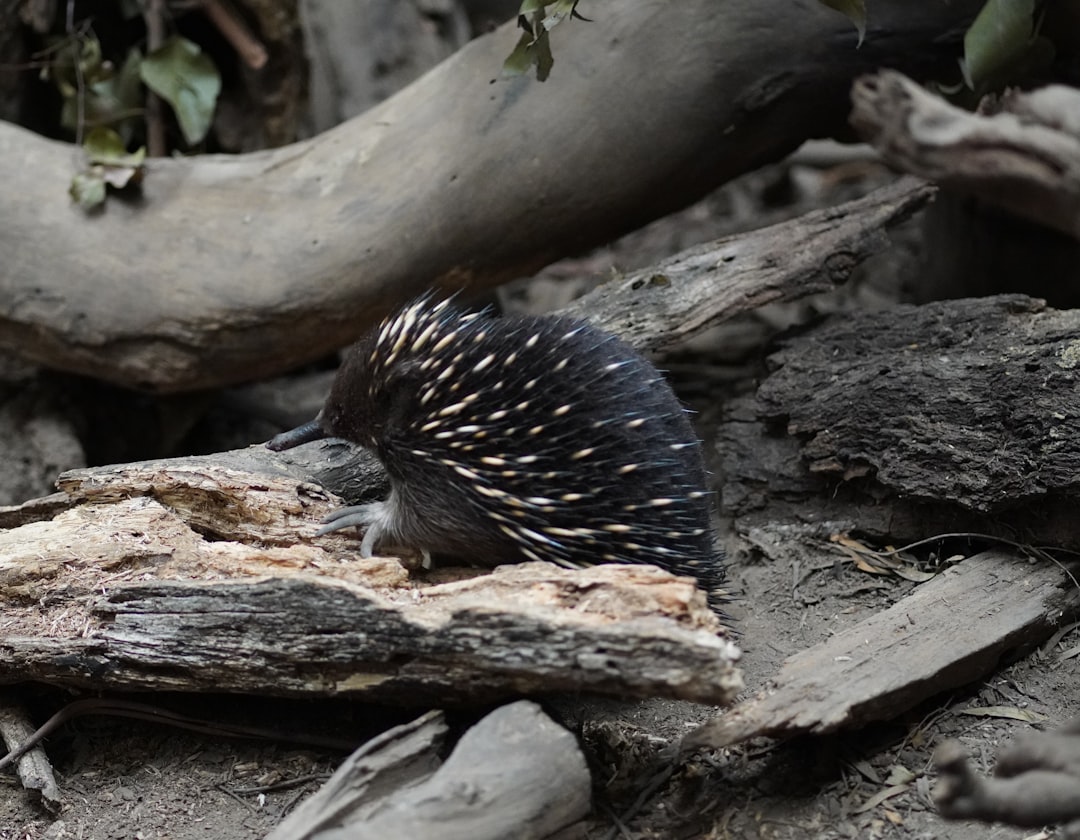
Quick Answer: The echidna, also known as the spiny anteater, is a unique egg-laying mammal classified as a monotreme. Native to Australia and New Guinea, echidnas are distinguished by their spines, elongated snouts, and specialized electroreception abilities. These solitary animals lay leathery eggs, have a low body temperature, and play a crucial ecological role as insectivores. Echidnas are one of only five extant monotreme species, making them an evolutionary rarity among mammals.
Echidnas are among the most distinctive mammals alive today, instantly recognizable by their dense covering of spines and their unusual method of reproduction. Unlike the vast majority of mammals, echidnas lay eggs, a trait they share only with the platypus. Their evolutionary lineage stretches back millions of years, offering a living glimpse into the early history of mammalian development.
The combination of their spiny armor, specialized feeding habits, and unique physiology has made them a subject of fascination for biologists and naturalists alike.
The presence of echidnas in both Australia and New Guinea highlights their adaptability to a wide range of habitats, from forests and woodlands to arid deserts. Despite their apparent vulnerability due to slow movement and solitary nature, echidnas have persisted through significant environmental changes.
Their survival is attributed to a suite of adaptations, including a low metabolic rate, effective defense mechanisms, and a diet focused on ants and termites. These characteristics allow echidnas to thrive in environments where many other mammals might struggle.
Echidnas are not only remarkable for their appearance and reproductive strategy but also for their sensory abilities. Their snouts are equipped with electroreceptors, enabling them to detect the electrical signals produced by their prey. This adaptation is rare among mammals and provides echidnas with a significant advantage when foraging underground or in leaf litter.
The study of echidnas continues to yield insights into mammalian evolution, physiology, and ecology, underscoring their importance in the natural world.
Taxonomy and Evolutionary Significance
The echidna is a member of the order Monotremata, a group of egg-laying mammals that includes only the echidnas and the platypus. Within this order, echidnas are classified under the family Tachyglossidae, which comprises four extant species: the short-beaked echidna (Tachyglossus aculeatus) and three species of long-beaked echidnas (Zaglossus genus).
The term monotreme refers to mammals that lay eggs rather than giving birth to live young, a trait that distinguishes them from placental and marsupial mammals.
The evolutionary history of monotremes is both ancient and enigmatic. Fossil evidence suggests that monotremes diverged from other mammalian lineages over 100 million years ago, retaining several primitive features while also developing unique adaptations.
The presence of both reptilian and mammalian characteristics in monotremes, such as egg-laying and milk production, has made them a focal point for evolutionary studies. According to the Encyclopedia Britannica, monotremes represent a basal branch of the mammalian family tree, providing crucial insights into the transition from reptilian ancestors to modern mammals.
Echidnas themselves are believed to have evolved from a platypus-like ancestor, with divergence likely occurring during the Paleogene period. The adaptation to a terrestrial, insectivorous lifestyle set echidnas apart from their aquatic relatives. The fossil record includes several extinct echidna species, indicating a once broader distribution and diversity. Today, the surviving species are restricted to Australia and New Guinea, each occupying distinct ecological niches.
The significance of echidnas in evolutionary biology cannot be overstated. Their combination of ancient and derived traits offers a living example of evolutionary processes at work. The retention of egg-laying, coupled with advanced mammalian features such as hair and lactation, illustrates the mosaic nature of evolution.
Echidnas are often cited in textbooks and scientific literature as key examples of evolutionary intermediates, bridging the gap between reptiles and mammals. For more on monotreme evolution, see the Wikipedia article on monotremes.
Key Insight: Echidnas, as monotremes, are one of only two living mammalian lineages that lay eggs, highlighting their evolutionary importance and rarity among mammals.
Physical Characteristics and Adaptations
Echidnas possess a unique suite of physical adaptations that enable them to survive in a variety of environments. Their most striking feature is the dense layer of spines covering their back and sides, which are modified hairs made of keratin. These spines provide effective protection against predators, allowing echidnas to curl into a tight ball when threatened. Beneath the spines, echidnas have coarse fur that offers insulation and further defense.
The spiny anteater, as the echidna is sometimes called, has a distinctive elongated snout that functions as both nose and mouth. This snout is highly sensitive and plays a crucial role in foraging. Echidnas lack teeth; instead, they use a long, sticky tongue to capture ants, termites, and other invertebrates. The tongue can extend up to 18 centimeters, enabling the animal to probe deep into narrow crevices and tunnels.
Echidnas have powerful limbs equipped with strong claws, adapted for digging. The forelimbs are particularly robust, allowing echidnas to excavate soil rapidly when searching for food or creating burrows. The hind limbs point backward, an unusual trait among mammals, which aids in efficient digging and helps the animal anchor itself while burrowing. The body is compact and muscular, contributing to the echidna’s ability to navigate challenging terrain.
Another notable adaptation is the echidna’s low body temperature, which averages around 32°C (89.6°F), significantly lower than that of most mammals. This reduced temperature is linked to a low metabolic rate, an energy-saving strategy suited to environments where food may be scarce or unpredictable. Echidnas are also capable of entering torpor, a state of reduced physiological activity, during periods of extreme cold or food shortage.
| Feature | Adaptation | Benefit |
|---|---|---|
| Spines | Modified hairs (keratin) | Predator defense |
| Elongated snout | Sensory and feeding tool | Foraging efficiency |
| Long sticky tongue | Up to 18 cm | Capturing ants and termites |
| Powerful limbs/claws | Digging | Burrow construction, foraging |
| Low body temperature | ~32°C | Energy conservation |
Echidnas’ combination of spines, digging adaptations, and low metabolic rate enables survival in diverse and sometimes harsh environments.
Reproduction and Life Cycle
Reproduction in echidnas is highly unusual among mammals, reflecting their monotreme heritage. Female echidnas lay a single leathery egg, which is incubated in a temporary pouch formed by the mother’s abdominal muscles. The egg hatches after about ten days, releasing a tiny, underdeveloped young called a puggle.
Egg-laying mammals like echidnas exhibit a reproductive strategy that is more commonly associated with reptiles and birds. The egg is soft-shelled and contains a large yolk, providing nourishment for the developing embryo. After hatching, the puggle remains in the pouch for up to two months, feeding on milk secreted from specialized mammary glands. Echidnas lack nipples; instead, milk is secreted onto patches of skin, from which the young lap it up.
Once the puggle develops spines, the mother deposits it in a burrow, returning periodically to nurse it. Weaning occurs at around six months, after which the young echidna becomes independent. Sexual maturity is typically reached at three to five years of age. Echidnas are known for their longevity, with individuals in the wild living up to 16 years and some captive specimens exceeding 50 years.
The reproductive cycle of echidnas is synchronized with environmental conditions, often coinciding with periods of increased food availability. Males compete for access to females during the breeding season, sometimes forming “trains” where several males follow a single female. Fertilization is internal, and the gestation period before egg-laying is relatively short compared to placental mammals.
The reproductive process of echidnas, involving egg-laying, pouch incubation, and extended maternal care, demonstrates a blend of reptilian and mammalian traits unique among living mammals.
Feeding Ecology and Diet
Echidnas are specialized insectivores, with a diet dominated by ants, termites, and other soil-dwelling invertebrates. Their foraging behavior is facilitated by a combination of anatomical and sensory adaptations. The elongated snout, equipped with electroreceptors, enables echidnas to detect prey hidden beneath the surface. The sticky tongue is used to rapidly collect insects from tunnels and crevices.
The process of locating and consuming prey involves several steps. Echidnas use their keen sense of smell and electroreception to identify areas with high insect activity. Once a food source is located, the animal uses its powerful forelimbs to break open logs, anthills, or termite mounds. The tongue is then inserted into the exposed cavity, capturing prey with remarkable speed and efficiency.
Echidnas play an important ecological role as ecosystem engineers. By disturbing soil and breaking apart decaying wood, they facilitate nutrient cycling and create microhabitats for other organisms. The impact of echidna foraging extends beyond direct predation, influencing the structure and function of the ecosystems they inhabit. According to Britannica’s entry on echidnas, these mammals can consume thousands of insects in a single day, helping regulate pest populations.
Echidnas’ feeding strategies, which combine advanced sensory detection with physical excavation, position them as key insectivores and contributors to ecosystem health.
Electroreception: A Rare Mammalian Sense
One of the most remarkable features of echidnas is their ability to detect electrical signals produced by the muscle activity of their prey. This ability, known as electroreception, is rare among mammals and is more commonly found in aquatic species such as the platypus and certain fish. In echidnas, electroreceptors are concentrated in the skin of the snout, allowing them to sense the faint electrical fields generated by insects and other invertebrates.
The mechanism of electroreception involves specialized cells called push rods, which are embedded in the skin and connected to sensory nerves. When an electrical signal is detected, these cells transmit information to the brain, enabling the echidna to pinpoint the location of hidden prey. This adaptation is especially useful when foraging in environments where visual or olfactory cues are limited, such as underground or in dense leaf litter.
Comparative studies have shown that the number and distribution of electroreceptors vary among echidna species. The short-beaked echidna possesses fewer electroreceptors than the platypus, reflecting differences in habitat and foraging behavior. Despite this, electroreception remains a critical tool for food acquisition, particularly in challenging conditions. For more on electroreception in mammals, see the Wikipedia article on electroreception.
| Species | Electroreceptors | Primary Habitat |
|---|---|---|
| Short-beaked echidna | ~400 | Terrestrial (Australia) |
| Long-beaked echidna | 2,000–4,000 | Forests (New Guinea) |
| Platypus | 40,000+ | Aquatic (Australia) |
Electroreception in echidnas provides a significant foraging advantage and underscores their evolutionary connection to other monotremes.
Distribution, Habitat, and Conservation
Echidnas are distributed across a wide range of habitats in Australia, Tasmania, and New Guinea. The short-beaked echidna is the most widespread, occupying environments from coastal forests to arid deserts. Long-beaked echidnas are found exclusively in New Guinea, where they inhabit montane forests and alpine grasslands. Habitat selection is influenced by factors such as food availability, soil type, and climate.
Despite their adaptability, echidnas face several conservation challenges. Habitat loss due to agriculture, urbanization, and deforestation poses a significant threat, particularly for the long-beaked species. Predation by introduced species, such as foxes and feral cats, also impacts echidna populations.
The IUCN Red List classifies the short-beaked echidna as Least Concern, while long-beaked echidnas are listed as Critically Endangered due to their restricted range and declining numbers. For detailed conservation status, refer to the IUCN Red List entry on Tachyglossus aculeatus.
Conservation efforts focus on habitat protection, research, and public education. In some regions, echidnas are protected by law, and their habitats are included in conservation reserves. Captive breeding programs have been established for long-beaked echidnas, though success has been limited. The resilience of the short-beaked echidna is attributed to its broad ecological tolerance and flexible diet, but continued monitoring is essential to ensure long-term survival.
The conservation status of echidnas varies by species, with habitat loss and introduced predators posing the greatest risks to their continued existence.
Behavioral Ecology and Social Structure
Echidnas are predominantly solitary animals, with individuals occupying overlapping home ranges but rarely interacting outside the breeding season. Activity patterns are influenced by environmental conditions, with echidnas being primarily nocturnal in hot climates and diurnal in cooler regions. Movement is generally slow and deliberate, reflecting their low metabolic rate and cautious nature.
Territorial behavior is minimal, with little evidence of aggressive encounters between individuals. Communication is limited, relying mainly on scent marking and occasional vocalizations during courtship or distress. During the breeding season, males may form temporary groups or “trains” as they follow a receptive female, but these associations are short-lived.
Echidnas exhibit a range of defensive behaviors in response to threats. Curling into a ball and exposing only their spines is the most common tactic, effectively deterring many predators. In addition, echidnas can rapidly dig into the ground, anchoring themselves with their powerful claws and making extraction difficult. These strategies, combined with cryptic coloration and a reclusive lifestyle, contribute to their survival in predator-rich environments.
Echidnas’ solitary habits and defensive behaviors reflect adaptations to a life of low social interaction and high predation risk.
Physiology and Unique Biological Traits
The physiology of echidnas is marked by several unusual features that distinguish them from other mammals. Their low body temperature and metabolic rate are among the lowest recorded for any mammal, a trait associated with their energy-efficient lifestyle. Echidnas also possess a cloaca, a single opening for excretion and reproduction, a characteristic shared with reptiles and birds but rare among mammals.
Thermoregulation in echidnas is achieved through behavioral and physiological means. During periods of extreme heat or cold, echidnas seek shelter in burrows, logs, or dense vegetation. They are capable of entering torpor, reducing metabolic activity to conserve energy and water. This ability allows echidnas to survive in environments with fluctuating temperatures and limited resources.
Another distinctive trait is the absence of nipples, with milk being secreted onto specialized patches of skin. The composition of echidna milk is rich in nutrients and antimicrobial compounds, supporting the growth and health of the developing puggle. The skeletal structure of echidnas also exhibits primitive features, such as sprawling limbs and a flexible spine, reminiscent of early mammalian ancestors.
| Trait | Description | Significance |
|---|---|---|
| Cloaca | Single opening for excretion/reproduction | Evolutionary link to reptiles |
| Torpor | Periodic metabolic slowdown | Energy conservation |
| No nipples | Milk secreted onto skin | Unique among mammals |
| Sprawling limbs | Primitive skeletal structure | Ancestral mammalian feature |
The combination of primitive and derived physiological traits in echidnas provides valuable insight into mammalian evolution and adaptation.
Echidnas in Culture, Myth, and Science
Echidnas have occupied a prominent place in the mythology and folklore of Indigenous Australian and New Guinean cultures. Stories often depict echidnas as clever, resourceful animals, sometimes associated with creation myths or as symbols of resilience. In modern times, echidnas have become cultural icons, featured on Australian currency and emblems, and celebrated for their uniqueness.
Scientific interest in echidnas has grown steadily, with research spanning fields such as evolutionary biology, physiology, and ecology. The study of echidnas has contributed to our understanding of mammalian origins, reproductive strategies, and sensory adaptations. Their unusual characteristics have made them popular subjects in natural history museums and educational programs worldwide.
Echidnas are also the focus of ongoing conservation and research initiatives, aimed at preserving their habitats and unraveling the mysteries of their biology. Public engagement through citizen science projects and wildlife observation has increased awareness of echidnas’ ecological importance and conservation needs. For more on echidnas in culture and science, see Britannica’s overview of echidnas.
The Enduring Importance of Echidnas
Echidnas represent a living link to the distant past, embodying a combination of ancient and modern traits that illuminate the evolutionary history of mammals. Their persistence in diverse and often challenging environments is a testament to the effectiveness of their adaptations. From their spiny armor and specialized feeding strategies to their unique reproductive biology, echidnas continue to captivate scientists and the public alike.
The conservation of echidnas is not only vital for preserving biodiversity but also for maintaining the ecological functions they perform. As insectivores and ecosystem engineers, echidnas contribute to soil health, pest control, and habitat complexity. Protecting these remarkable mammals ensures the continued functioning of the ecosystems they inhabit.
Echidnas, with their distinctive biology and evolutionary significance, serve as a reminder of the complexity and resilience of life on Earth. Ongoing research and conservation efforts will be essential to safeguard their future and deepen our understanding of the natural world.
Frequently Asked Questions
How do echidnas differ from hedgehogs and porcupines?
Echidnas are monotremes that lay eggs, while hedgehogs and porcupines are placental mammals and give birth to live young. Their spines evolved independently.
Can echidnas be kept as pets?
Echidnas are protected wildlife and cannot be kept as pets. They have specialized diets and care needs unsuitable for captivity.
What predators threaten echidnas in the wild?
Echidnas face predation from foxes, feral cats, dingoes, and large birds of prey, especially when young or exposed.
How do echidnas find food underground?
Echidnas use electroreceptors in their snouts to detect electrical signals from insect prey hidden beneath soil or leaf litter.
Are echidnas endangered?
Short-beaked echidnas are not endangered, but long-beaked echidnas are critically endangered due to habitat loss and hunting.
How long do echidnas live?
Wild echidnas typically live up to 16 years, while some individuals in captivity have reached over 50 years of age.