
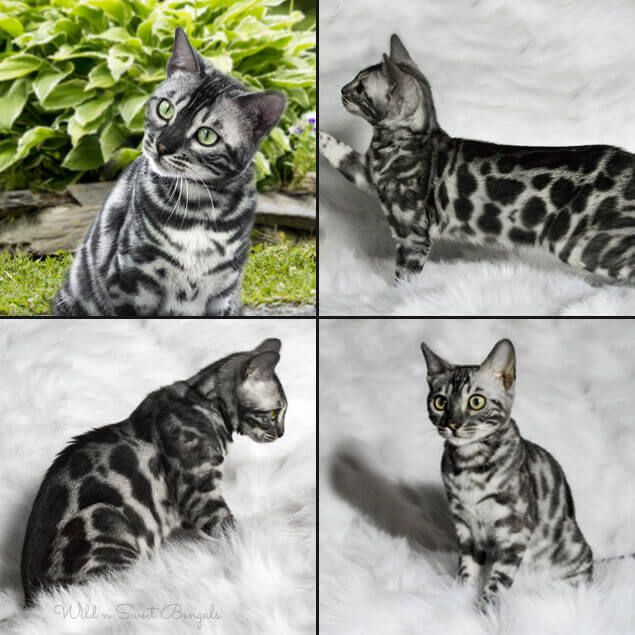
The Bengal is one of the most visually dramatic domestic cat breeds in the world, carrying a coat that closely mimics the spotted and marbled patterns of wild jungle cats.
It is also one of the most misunderstood, widely believed to be a wild or semi-wild animal when, in reality, a modern Bengal several generations removed from its hybrid origins is a fully domestic cat with the temperament demands, legal obligations, and health considerations that distinction entails.
The Bengal's appearance is the product of careful crossing with the Asian Leopard Cat, but its behaviour and husbandry requirements are those of a highly active, highly intelligent domestic cat.
This guide covers the Bengal's origin through the work of Jean Mill and the biology of the Asian Leopard Cat cross, the generational classifications (F1 through F4+) and their legal implications, the unique features of the Bengal coat including rosettes and the glitter gene, the breed's characteristic temperament and its demands on owners, the legal status that restricts Bengal ownership in parts of the United States and internationally, and the health conditions specific to the breed.
Origins: Jean Mill and the Asian Leopard Cat Cross
The Bengal breed was developed through deliberate crossing of domestic cats with the Asian Leopard Cat (Prionailurus bengalensis), a small wild felid native to a wide range across South, Southeast, and East Asia. The Asian Leopard Cat is roughly the size of a domestic cat, typically 3 to 8 kg depending on sex and subspecies, with a distinctive spotted coat, large eyes, and a temperament fundamentally different from any domestic cat.
The foundational work of the Bengal breed is attributed to Jean Mill (born Jean Sugden), an American breeder who began experimental crossings between domestic cats and Asian Leopard Cats in the 1970s and resumed serious breeding work in the early 1980s.
Mill's original motivation was partly conservationist: she hoped that producing beautiful domestic cats with leopard-like coats would reduce the appeal of purchasing wild felid pelts. Her early work with hybrids attracted the attention of Dr.
Willard Centerwall, a geneticist at Loma Linda University who was studying Asian Leopard Cats as potential models for feline leukaemia research (Asian Leopard Cats show natural resistance to feline leukaemia virus in some studies).
Mill took several of Centerwall's hybrid females, the offspring of Asian Leopard Cat mothers and domestic cat fathers, and crossed them back to domestic cats, working to produce cats that retained the wild coat while developing a temperament suitable for domestic life. The breed name "Bengal" derives from the scientific name of the Asian Leopard Cat: Prionailurus bengalensis.
The first generation offspring of an Asian Leopard Cat (ALC) crossed with a domestic cat are called F1 hybrids. F1 males are typically sterile; F1 females are fertile. Breeding an F1 female back to a domestic cat produces F2 kittens; F2 females bred to domestic males produce F3; and so on.
By F4 and beyond, the cats are considered "stud book tradition" or "SBT" Bengals, fully domestic cats in the eyes of major registries. TICA granted the Bengal championship status in 1991, restricted to F4 and later generation cats.
Generational Classifications and Legal Status
The generational structure of Bengal breeding carries significant practical implications for prospective owners, both in terms of temperament and legal ownership.
F1 and F2 Bengals are 50% and 25% Asian Leopard Cat by ancestry respectively. F1 cats in particular retain substantial wild behavioural characteristics: they are frequently not comfortable with handling, may be aggressive toward people they do not trust, have strong prey drives, are rarely lap cats, and require substantial specialist knowledge to manage appropriately. F1 females used in breeding programs require experienced breeders with appropriate facilities.
F3 Bengals are more domesticated but still show greater variability in temperament than later generations. Many F3 Bengals can be excellent pets in the right hands, but they are not appropriate for first-time cat owners.
F4 and later (SBT) Bengals are the cats sold in the general pet market and the ones discussed in breed profiles. These cats have domesticated temperament profiles, though they retain the characteristic high energy, athleticism, and vocal nature associated with the Bengal.
Legal status varies substantially by jurisdiction. In the United States, ownership of F1 through F3 Bengals is restricted or prohibited in many states because of regulations governing possession of exotic or hybrid animals. Hawaii prohibits all Bengals regardless of generation due to concern about impact on native bird populations if cats were to escape.
New York City bans Bengals under its wild animal ordinance. Owners in any jurisdiction should verify local regulations before acquiring a Bengal.
In the United Kingdom, F1 and F2 Bengals require a Dangerous Wild Animals licence. F4 and later generation Bengals are freely owned without special licensing.
CITES (Convention on International Trade in Endangered Species) documentation may be required for international movement of early-generation Bengals, as they contain significant proportions of Asian Leopard Cat genetics.
| Generation | ALC Ancestry | Typical Temperament | Legal Status (USA) |
|---|---|---|---|
| F1 | 50% | Semi-wild; not suitable as pets for most owners | Restricted/banned in most states |
| F2 | 25% | Variable; requires experienced owner | Restricted in many states |
| F3 | 12.5% | More domestic; variable | Some state restrictions |
| F4+ (SBT) | 6.25% or less | Domestic cat temperament | Generally unrestricted (except HI, NYC) |
Coat: Rosettes, Glitter, and the Wild Inheritance
The Bengal's coat is what sets the breed immediately apart from any other domestic cat, and it involves several features not found together in any other domestic breed.
Spotted and marbled patterns are the two recognised coat patterns in Bengals. The spotted pattern produces discrete spots distributed across the coat in a manner similar to the Asian Leopard Cat. The marbled pattern produces swirling, horizontal flow lines that create a marble-like appearance, distinct from the classic tabby bullseye.
Rosettes are the feature that most closely links the Bengal coat to those of wild felids. A rosette is a two-toned spot: rather than a simple, uniform dark spot on a lighter background, a rosette has a dark outline surrounding a slightly lighter centre, creating a donut or paw-print shape.
Rosettes of this type are otherwise found in wild felids including leopards, jaguars, and ocelots, and are virtually absent in other domestic cat breeds. Their presence in Bengals is a direct inheritance from the Asian Leopard Cat ancestry.
The development of clear, well-defined rosettes is a primary focus of selective breeding in the Bengal, and the most highly regarded Bengals in show competition carry large, horizontal rosetted spots.
The glitter gene is a coat feature unique to Bengals (and to a lesser extent one or two other rare breeds). Many Bengals carry a genetic variant that gives each individual hair shaft a structure that refracts light, producing an iridescent, sparkling effect that makes the coat appear to glitter in natural light. The effect is most visible in sunlight, where a Bengal's coat can appear metallic or frosted.
The genetics of the glitter trait are not yet fully characterised, but it is clearly inherited and has become a valued feature in breeding programs.
The background coat colour ranges from pale golden to orange-brown to cool grey, providing contrast for the spots or marbling. The belly is typically paler than the back. The contrast between background and pattern is a primary show evaluation criterion.
Temperament: Athletic, Vocal, and Demanding
The Bengal is among the most physically active domestic cat breeds. Standard cat furniture, a modest cat tree, a scratching post, a few toys on the floor, is insufficient for a Bengal. The breed climbs everything available, will reach the highest point in any room, and has the physical ability to jump significantly higher than most domestic cats. A Bengal owner who provides inadequate vertical space will find the cat on top of refrigerators, kitchen cabinets, and door frames by default.
Bengals require tall, robust cat trees; ideally, wall-mounted cat walkways that allow traversal of room perimeters at height; and large play areas. Puzzle feeders, interactive electronic toys, and regular play sessions with their owners are necessities for mental stimulation. A Bengal that is understimulated will redirect energy into destructive behaviour, opening cabinet doors, knocking items off surfaces, and persistent vocalisation.
The breed is vocal in a manner different from the Siamese. Bengal vocalisations include a range of unusual calls, chirps, and chattering sounds that many owners describe as distinctly non-standard. They are less repetitively demanding than the Siamese but more physically energetic in how they express attention-seeking.
Water is frequently fascinating to Bengals. Many individuals will play in water bowls, join owners near running taps, and show interest in showers or bathtubs. This trait is variable but common enough to be considered a breed characteristic rather than an individual quirk.
The Bengal's relationship with dogs depends heavily on individual temperament and introduction management. Many Bengals tolerate dogs well; some develop genuinely cooperative relationships with energetic dogs whose activity level matches their own. The breed's confidence, rooted in its wild ancestry, means it typically does not respond to new situations with fear.
For guidance on meeting the enrichment needs of a high-energy indoor cat, see Enrichment Activities for Indoor Cats. For the debate about whether a Bengal's energy level makes indoor-only life appropriate, see Indoor vs Outdoor Cats Which Is Better.
Health Conditions
The Bengal has several documented health concerns, one of which, a specific form of progressive retinal atrophy, is unique to the breed.
Progressive Retinal Atrophy (PRA-b) is a hereditary form of retinal degeneration specific to Bengals, caused by a mutation distinct from the PRA mutations found in other breeds or in Siamese cats. The Bengal PRA-b mutation produces progressive degeneration of the rod photoreceptors, leading initially to night blindness and progressing to more extensive vision loss.
An affected cat shows symptoms beginning between one and five years of age. The condition is autosomal recessive, two copies of the mutation are required for a cat to be affected, but a single copy (carrier) produces no clinical symptoms. A DNA test for the Bengal-specific PRA-b mutation is commercially available, and responsible breeders test all breeding animals. Affected cats (two copies) should not be bred; carrier-to-carrier pairings should be avoided.
"The Bengal PRA mutation (PRA-b) was identified as distinct from previously characterised feline PRA mutations, confirming that the progressive retinal atrophy affecting Bengals has an independent genetic basis that requires breed-specific DNA testing for accurate detection. Standard PRA tests designed for other breeds will not identify the Bengal variant." Ofri, R., et al. (2015), Investigative Ophthalmology and Visual Science, on PRA mutation characterisation in Bengals
Hypertrophic Cardiomyopathy (HCM) affects Bengals as it does many other breeds. The same MYBPC3 gene mutations implicated in Maine Coon and Ragdoll HCM have been studied in Bengals, though the primary mutations identified in those breeds are not the dominant cause of HCM in Bengals. Annual cardiac echocardiography is recommended for all breeding Bengals, and cats diagnosed with HCM should not be used in breeding programs.
Tritrichomonas foetus is an intestinal protozoan parasite that causes chronic, intermittent diarrhoea in affected cats. It has been documented at elevated frequency in Bengals compared with many other breeds, possibly related to the breed's history of living in breeding colony environments where parasite transmission occurs more readily.
Diagnosis requires specific PCR testing of faecal samples (standard faecal floatation will miss it), and treatment with ronidazole has shown efficacy, though careful veterinary management is required as the drug has a narrow therapeutic margin.
| Health Condition | Type | Test Available | Recommendation |
|---|---|---|---|
| Progressive Retinal Atrophy (PRA-b) | Autosomal recessive | DNA swab (Bengal-specific) | Test all breeding animals; do not breed carrier x carrier |
| Hypertrophic Cardiomyopathy | Cardiac | Echocardiogram | Annual echo for all breeding cats |
| Tritrichomoniasis | Parasitic | Faecal PCR | Test any cat with chronic soft/liquid stools |
For a full review of Bengal-specific health conditions and their management, see Bengal Cat Health Problems.
Lifespan
Bengals have an average lifespan of 12 to 16 years under good conditions. This range is consistent with most medium to large domestic cat breeds and is not significantly shortened or extended by the breed's hybrid origins at the F4+ generational level. Cats from responsibly bred lines with documented health screening tend toward the upper end of this range. HCM, if present, is the primary factor that can shorten the Bengal's lifespan, particularly if it goes undetected.
Comparing the Bengal to Similar Breeds
The breed most commonly compared to the Bengal is the Savannah Cat, another hybrid breed developed from a cross with a wild felid, in the Savannah's case, the Serval (Leptailurus serval). The Savannah shares the Bengal's legal complications in early generations, its high-energy temperament, and its wild-appearing coat. Savannahs tend to be even larger in the early generations and often even more demanding in activity requirements.
The Siamese Cat shares the Bengal's vocal expressiveness and high social intelligence but differs completely in physical requirements, the Siamese is satisfied with a much less physically stimulating environment and its energy is channelled through vocalisation and social interaction rather than climbing and athletics.
Living with a Bengal
The Bengal is not the right cat for every household, and the gap between the breed's appearance-driven popularity and the reality of its care requirements has led to significant rehoming rates among Bengal owners who were unprepared. The breed appears frequently in rescue and rehoming situations for precisely this reason.
Owners who are well-matched to the Bengal, those who find high feline activity enriching, who can provide substantial vertical space and interactive stimulation, and who appreciate an intensely engaged animal, typically describe Bengal ownership as one of the most rewarding feline experiences available. The breed's athleticism, visual beauty, and genuine intelligence create an animal whose company is consistently interesting.
For day-to-day care guidance including enrichment planning and appropriate housing setup, see Bengal Cat Care Guide.
References
Ofri, R., Reilly, C.M., Suber, M.L., et al. (2015). "Characterisation of an early-onset, autosomal recessive, progressive retinal degeneration in Bengal cats." Investigative Ophthalmology and Visual Science, 56(9), 5299-5309. https://doi.org/10.1167/iovs.15-17189
Mundell, A.C. (2000). "The Bengal cat: breed history and profile." Veterinary Medicine, 95(1), 24-30.
Hartmann, K. (2011). "Clinical aspects of feline retroviruses: a review." Viruses, 4(11), 2684-2710. https://doi.org/10.3390/v4112684
Gunn-Moore, D.A., & Moffat, C. (2002). "Feline tritrichomonosis, a review and the potential role for breed predisposition." Journal of Feline Medicine and Surgery, 4(1), 53-62. https://doi.org/10.1053/jfms.2001.0163
The International Cat Association (TICA). (2023). Bengal Breed Standard. Retrieved from https://tica.org/breeds/browse-all-breeds
Meurs, K.M., et al. (2010). "Cardiac myosin binding protein C mutations in cats with hypertrophic cardiomyopathy." Journal of Veterinary Internal Medicine, 24(6), 1342-1347. https://doi.org/10.1111/j.1939-1676.2010.0594.x
Looney, A. (2001). "Legal considerations for Bengal cat breeders and owners." Journal of the American Veterinary Medical Association, 218(7), 1067-1069.
Frequently Asked Questions
Are Bengal cats dangerous?
F4 and later generation Bengals (the type sold as pets) are fully domestic cats and are not dangerous in any meaningful sense. They are high-energy and may scratch or bite during overstimulated play, as many domestic cats do, but they do not pose unusual safety risks. Early-generation Bengals (F1-F3) retain significant wild behavioural characteristics and are not suitable as pets for most people.
The legal restrictions on early-generation Bengals in many US states reflect this distinction, the regulations target the wild ancestry, not later-generation domestic Bengals.
What is the difference between a rosetted and spotted Bengal?
A spotted Bengal has simple, single-colour spots distributed on a lighter background, each spot is one solid colour. A rosetted Bengal has two-toned spots: a darker outer ring or arrowhead outline surrounding a slightly lighter interior, creating a doughnut or pawprint shape similar to the spots of wild leopards and jaguars. Rosettes are considered a premium feature in Bengal breeding and show competition.
The glitter gene, present in many Bengals, adds an iridescent sheen to both spotted and rosetted coats.
Can I own a Bengal cat in my state?
F4 and later generation Bengals are unrestricted in most US states. Exceptions include Hawaii (all Bengals banned) and New York City (banned under the wild animal ordinance). F1 through F3 Bengals face restrictions ranging from permit requirements to outright bans in most US states because of laws governing exotic or hybrid animals.
Always verify your local and state regulations before acquiring a Bengal, and ask the breeder to document the generation of any cat they are selling.
Do Bengal cats need a lot of space?
Bengals need adequate vertical space more than floor space. The breed is an intense climber and requires tall, sturdy cat trees, ideally multiple units or wall-mounted walkways. They are unsuitable for households that cannot provide substantial environmental enrichment. Floor area alone is less critical than the ability to provide climbing structures, interactive playtime, and mental stimulation through puzzle feeders and play sessions.
A Bengal in a small apartment with appropriate vertical structures and daily interaction will be more content than one in a large house with nothing to climb.
What is the Bengal cat's PRA-b condition?
PRA-b is a progressive retinal atrophy specific to the Bengal breed, caused by a mutation distinct from PRA variants found in other cat breeds. It is autosomal recessive, a cat must inherit two copies of the mutation to be affected. Affected cats experience progressive vision loss beginning with night blindness and potentially advancing to more extensive impairment. A breed-specific DNA test is available.
Responsible breeders screen all breeding animals and do not pair two carriers.