
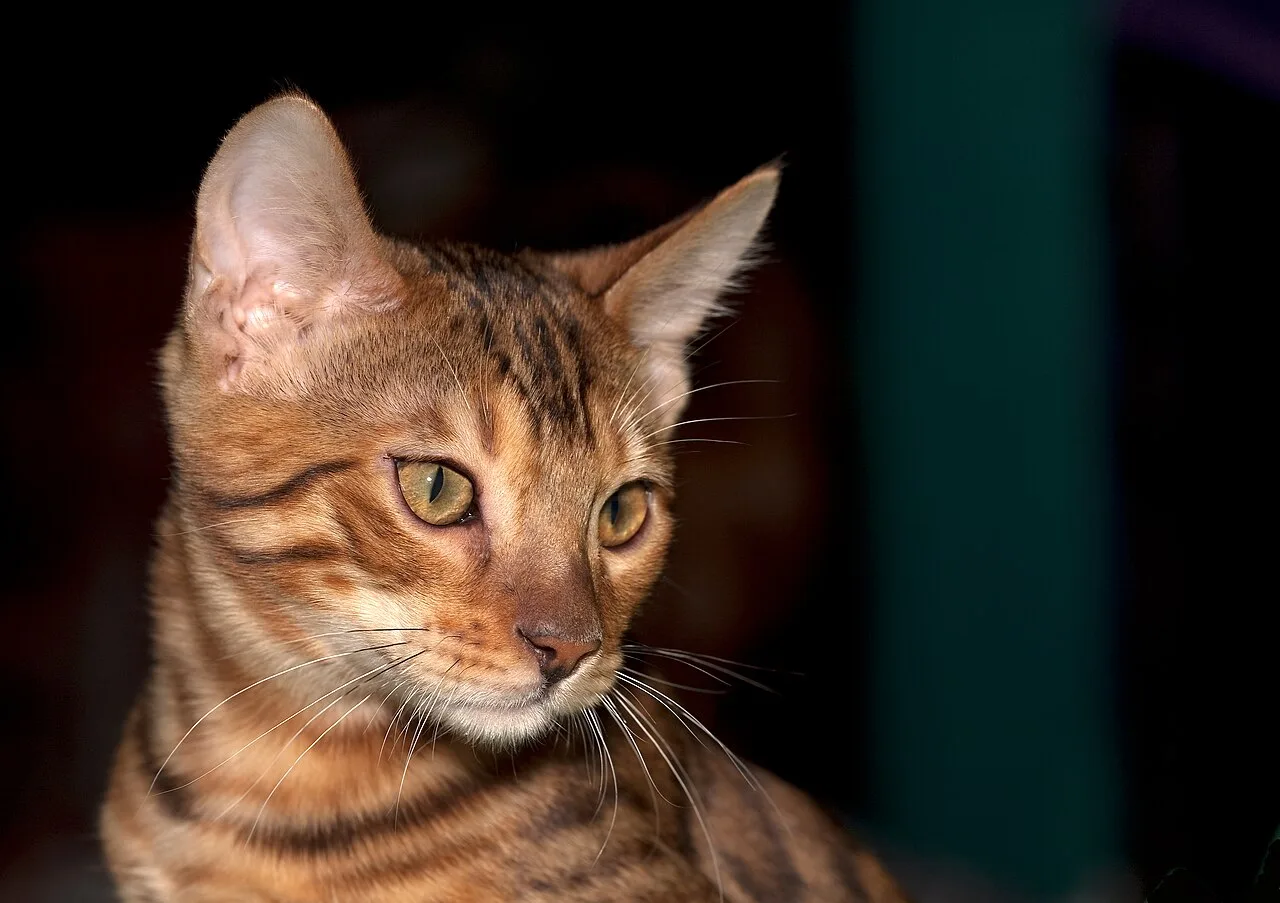
Bengal cat care starts with understanding the breed: a hybrid created from crosses between the Asian leopard cat (Prionailurus bengalensis) and domestic cats. The result is a muscular, athletic, highly intelligent animal with a striking spotted or marbled coat that resembles that of a wild leopard. Bengals are among the most energetic and demanding of all domestic cat breeds.
Their care requirements reflect their wild ancestry: they need significantly more exercise, mental stimulation, and environmental enrichment than typical domestic cats.
For a detailed overview of the Bengal's origins, coat patterns, and temperament characteristics, see the Bengal cat breed profile.
Daily and Weekly Care Requirements
Bengals are not suited to owners seeking a calm, low-maintenance cat. They are active, curious, and capable of considerable destructive behaviour if bored. A structured daily routine reduces problem behaviours.
Daily Care Tasks
- Extended play sessions: A minimum of two structured play sessions per day, each 20 to 30 minutes. Many Bengal owners report that their cats need 60 to 90 minutes of total active engagement daily.
- Fresh water: Bengals often enjoy playing with water. A running fountain is strongly recommended; many Bengals will paw at still water bowls or attempt to drink from dripping taps.
- Feeding: Two structured meals. Bengals are muscular and energetic; free-feeding leads to significant weight gain in less active individuals.
- Environmental check: Bengals are capable climbers and explorers. Check that high shelves, countertops, and enclosed spaces are safe. They will access areas that other cats cannot reach.
- Litter box: Scoop at least once daily. Bengals are fastidious and may refuse to use a dirty box, leading to elimination outside the box.
Weekly Care Tasks
- Brushing: Once or twice per week with a rubber grooming mitt or fine-tooth comb.
- Ear inspection: Check for wax or debris. Bengals with active outdoor or catio access may accumulate more debris.
- Nail trimming: Every two weeks. Bengals are vigorous scratchers; provide multiple high-quality scratching posts to protect furniture.
- Dental care: Brush two to three times per week. See cat dental care guide for guidance.
Grooming Specifics for the Bengal Cat
The Bengal's coat is short to medium, dense, and has an unusually soft, pelt-like texture that distinguishes it from other shorthaired breeds. The coat lies flat and close to the body. One of the Bengal's most valued traits is that its coat feels more like animal pelt than typical domestic cat fur, a result of its hybrid origins.
"The Bengal's pelt-like coat is a direct genetic contribution from its Asian leopard cat ancestry. The guard hairs are finer and the undercoat is minimal, which contributes to the characteristic glitter effect seen in many high-quality Bengals when light reflects off the coat." The International Cat Association, Bengal Breed Standard, 2023
Coat Care Routine
The Bengal's short pelt requires minimal maintenance:
- A rubber grooming mitt used once or twice per week removes dead hair and stimulates circulation.
- A fine-tooth metal comb can be used to check for any flea dirt or skin irregularities.
- Seasonal shedding is mild.
The "Glitter" Coat
Many Bengals possess a genetic trait called coat glitter, where each hair tip catches light and produces a shimmering effect. This is a purely aesthetic trait that requires no special care. However, maintaining coat health through nutrition (adequate omega-3 fatty acids) enhances the glitter effect.
Bathing
Bengals typically accept and sometimes enjoy water. Bathing is needed only when the cat is visibly dirty. Their short coat dries quickly with a warm towel. See how to groom your cat at home for bathing technique details.
Paw and Nail Care
Bengals scratch frequently and vigorously. Provide at least two or three substantial scratching posts (rope or cardboard). Trim nails every two weeks to reduce damage to household surfaces and to the cat's own skin when scratching.
Feeding Recommendations
Bengals are muscular, athletic cats. Adult males typically weigh between 4.5 and 7 kilograms; females between 3.5 and 5 kilograms. Their caloric needs are higher than sedentary breeds of comparable size because of their activity level.
Nutritional Requirements
A high-protein, moderate-fat diet is appropriate. The Bengal's wild heritage means some individuals do well on raw or partially raw diets, though raw feeding requires careful nutritional balancing to avoid deficiencies. Commercial raw, high-quality wet, or premium dry foods all work, provided the primary ingredient is a named protein.
Some Bengal owners and breeders advocate for raw diets, citing improvements in coat quality and energy levels. If considering raw feeding, see raw diet for cats: pros and cons before making any dietary change.
Portion Guidance
| Life Stage | Daily Caloric Intake (Approximate) | Feeding Schedule |
|---|---|---|
| Kitten (under 12 months) | 220-300 kcal | 3-4 times per day |
| Adult active (1-7 years) | 250-360 kcal | 2-3 times per day |
| Adult less active (1-7 years) | 200-280 kcal | 2 times per day |
| Senior (7+ years) | 200-260 kcal | 2 times per day |
Bengals can become overweight if activity decreases, such as after injury or in older age. Adjust portions to maintain a lean, muscular body condition. Ribs should be easily palpable but not visible. See how much to feed a cat by weight for precise guidance.
Hydration
Bengals benefit from high moisture intake to support kidney health. Wet food as a significant portion of the diet is recommended. If feeding primarily dry food, ensure a quality running water fountain is always accessible.
Digestive Sensitivity
Some Bengals, particularly those descended from earlier hybrid generations, have sensitive digestive systems. A higher proportion of Bengals than typical domestic cats have chronic loose stools or irritable bowel symptoms. Feed consistent, high-quality food and transition slowly between brands. Grain-free options may benefit individuals with grain sensitivities, though this should be discussed with a veterinarian.
Exercise and Enrichment Needs
The Bengal's exercise and enrichment needs are in a different category from typical domestic cats. This is not a breed that can be satisfied with a toy on the floor and occasional play. Bengals that do not receive sufficient stimulation are a significant source of owner frustration and veterinary referrals for behavioural issues.
Physical Activity Requirements
Plan for a minimum of 60 minutes of active play and engagement per day, divided across multiple sessions. Bengals do not slow down meaningfully until evening.
Effective physical activities include:
- Wand toys with rapid, unpredictable movement
- Fetch (many Bengals retrieve toys reliably)
- Running through obstacle courses
- Leash walking outdoors (Bengals are among the most reliable harness-walking cats)
- Access to a large catio with climbing structures
Enrichment Schedule
| Enrichment Type | Recommended Daily Time | Notes |
|---|---|---|
| Wand toy play | 30-40 minutes | Split across 2-3 sessions |
| Puzzle feeders | Ongoing (replace meals) | Use all meals in feeders where possible |
| Climbing structures | All day access | Tall cat trees, wall shelves at ceiling height |
| Water play | As desired | Many Bengals enjoy paddling pools or running water |
| Leash walks | 20-30 minutes | High value; begin harness training at kittenhood |
| Training sessions | Daily 10-15 minutes | Bengals learn quickly; excellent at target training |
Vertical Territory
Bengals instinctively seek height. Cat trees alone are insufficient; wall-mounted shelving that allows the cat to traverse the room at ceiling level is ideal. Bengals that cannot access height become frustrated and may climb bookshelves, refrigerators, or cabinets.
For comprehensive indoor enrichment strategies applicable to high-energy breeds, see pet exercise and enrichment guide and how to keep your cat indoors safely.
Health Monitoring
Bengals are generally a robust breed, but certain conditions warrant specific monitoring.
Weekly Home Health Checks
- Weight and body condition: Weigh monthly. A sudden weight loss in an adult Bengal warrants veterinary evaluation.
- Stool quality: Bengal digestive sensitivity means stool quality is an important daily observation. Persistent loose stools lasting more than 48 hours need veterinary assessment.
- Eyes: Should be clear. Progressive retinal atrophy occurs in some Bengals; note any changes in night behaviour or eye cloudiness.
- Gum colour: Pink and moist is healthy. Any deviation is an emergency.
- Heart rate at rest: Bengals, like many active breeds, have a lower resting heart rate than sedentary cats. Establish your cat's baseline and note changes.
Common Breed-Specific Health Concerns
"Progressive retinal atrophy in Bengal cats is associated with an autosomal recessive mutation. Affected cats progress from night blindness to complete blindness over a period of years. A DNA test identifies carriers and affected cats; responsible breeding programmes screen for this mutation." Menotti-Raymond, M., et al., Molecular Vision, 2010
Progressive Retinal Atrophy (PRA)
PRA is the most significant genetic condition in Bengals. The specific mutation (PRA-b) causes rod photoreceptors to degenerate, beginning with night blindness in young adulthood and progressing to complete blindness by approximately five years of age. Genetic testing is available and should be performed on all breeding Bengals. Ask your breeder for PRA-b negative certification.
Hypertrophic Cardiomyopathy (HCM)
HCM is seen in Bengals, though prevalence data specific to the breed are less established than for Maine Coons or Ragdolls. Routine cardiac screening by echocardiography from age two is advisable.
Flat-Chested Kitten Syndrome (FCKS)
FCKS is a condition affecting some Bengal kittens in which the ribcage is compressed, restricting lung development. Mild cases often resolve as the kitten grows; severe cases can be fatal. This is relevant when selecting a kitten, inspect the chest conformation of kittens before purchase.
Tritrichomonas Foetus Infection
Bengals, particularly those from multi-cat breeding environments, are at elevated risk of intestinal infection with Tritrichomonas foetus, a protozoan parasite that causes persistent diarrhoea. Standard deworming does not treat this organism; specific diagnosis (via PCR testing of fresh faeces) and treatment with ronidazole is required.
Kidney Disease
Bengal cats have an elevated prevalence of chronic kidney disease compared to the overall cat population. Regular kidney function monitoring (blood creatinine, BUN, and urine specific gravity) from age five is recommended.
Environmental Needs
Space
Bengals need more living space than most domestic cats. A small apartment without significant vertical territory and dedicated play space will result in a stressed, destructive cat. The minimum recommended space is a two-room home with floor-to-ceiling cat trees and wall-mounted shelving.
Outdoor Access
A large, securely constructed catio (minimum 4-6 square metres) provides Bengals with safe outdoor stimulation. Many Bengal owners build custom catio systems attached to windows or back doors. Bengals are strong enough to damage poorly constructed catios; use sturdy materials. Unsupervised outdoor access is not recommended due to the Bengal's hunting drive and the risk to local wildlife.
Water Features
A high-quality cat fountain is not optional for Bengals; it is a necessity. Many Bengals will also interact positively with a shallow tray of water containing floating toys. Some owners report that their Bengals enjoy supervised access to a sink or bathtub with a small amount of running water.
Security
Bengals are intelligent escape artists. Ensure windows have secure screens, internal doors cannot be opened easily (Bengals can learn to operate lever-style handles), and any catio enclosure is escape-proof. Microchipping is strongly recommended.
Vet Visit Schedule
"For breeds with known genetic conditions such as progressive retinal atrophy, genetic testing should be conducted prior to or at the first veterinary visit, as early identification allows owners to adapt the environment proactively before vision loss occurs." Ofri, R., Veterinary Ophthalmology, 2014
| Age | Visit Frequency | Key Focus Areas |
|---|---|---|
| 0-6 months | Every 3-4 weeks | Vaccinations, genetic testing (PRA-b), faecal parasite screen including Tritrichomonas PCR |
| 6-12 months | Once | Spay/neuter, booster vaccines, cardiac baseline |
| 1-7 years | Annually | Full exam, cardiac auscultation, kidney function, stool quality review |
| 7+ years | Every 6 months | Full bloodwork, urinalysis, kidney and thyroid function, cardiac echo |
Request PRA-b genetic testing at the first kitten visit if the breeder has not already provided a DNA certificate. Establish a cardiac echocardiogram baseline at age two.
Summary
Bengal cats are extraordinary companions for owners who can meet their exceptional physical and mental demands. Their short pelt-like coat is among the easiest to care for of any pedigree breed, but their activity and enrichment needs are among the highest. The most significant genetic health concern is progressive retinal atrophy, which is fully detectable through DNA testing.
With appropriate care, high engagement, quality nutrition, and proactive health screening, Bengals typically live 12 to 16 years.
References
- Menotti-Raymond, M., et al. (2010). Widespread retinal degenerative disease mutation (rdAc) discovered among a large number of popular cat breeds. Veterinary Journal, 186(1), 32-38. https://doi.org/10.1016/j.tvjl.2009.07.019
- The International Cat Association. (2023). Bengal breed standard. https://tica.org/bengal
- Ofri, R. (2014). Feline retinal degeneration. Veterinary Ophthalmology, 17(S1), 2-11. https://doi.org/10.1111/vop.12157
- Gookin, J.L., et al. (2004). Prevalence of and risk factors for feline Tritrichomonas foetus and Giardia infection. Journal of Clinical Microbiology, 42(6), 2707-2710. https://doi.org/10.1128/JCM.42.6.2707-2710.2004
- Baty, C.J., et al. (2001). Natural history of hypertrophic cardiomyopathy and aortic obstruction in a family of Maine Coon cats. Journal of Veterinary Internal Medicine, 15(5), 519-527. https://doi.org/10.1111/j.1939-1676.2001.tb01582.x
- Silveira, M.P., et al. (2015). Chronic kidney disease in cats: A review of risk factors, staging, and management. Brazilian Journal of Veterinary Research and Animal Science, 52(4), 297-311. https://doi.org/10.11606/issn.1678-4456.v52i4p297-311
Frequently Asked Questions
Are Bengal cats hard to care for?
Bengal cats have low grooming demands but very high activity, enrichment, and social needs. They are challenging for first-time cat owners or those with limited time. Bored Bengals can become destructive, vocal, and difficult to manage. They thrive in homes where owners can provide substantial daily engagement and a richly enriched environment.
What is progressive retinal atrophy (PRA) in Bengals?
PRA-b is an autosomal recessive genetic mutation that causes the rod photoreceptors in the retina to degenerate progressively. Affected cats develop night blindness in young adulthood, progressing to complete blindness by around five years. A DNA test identifies carriers and affected individuals. Responsible breeders test all breeding cats and provide certificates.
Should I feed my Bengal a raw diet?
Some Bengal owners and breeders report benefits from raw feeding, including improved coat quality and reduced digestive issues. Raw feeding requires careful nutritional balancing and safe food handling to avoid deficiencies and bacterial contamination. Discuss the option with your veterinarian and consult the raw diet guide for cats before making changes.
Why does my Bengal cat play with water?
Water play is a strong breed tendency in Bengals, believed to trace to the Asian leopard cat’s habitat near streams and rivers. This is normal behaviour. Provide a cat fountain to satisfy the preference and consider a shallow water play tray as additional enrichment.
Can Bengals be kept in apartments?
Bengals can live in apartments but require substantial investment in vertical territory (floor-to-ceiling cat trees, wall shelves), multiple daily play sessions, and ideally a catio or supervised outdoor access. A small apartment without these provisions will result in a stressed, destructive animal.
How do I stop my Bengal from escaping?
Bengals are strong, athletic, and intelligent escape artists. Use window screens rated for impact, replace lever door handles with round knobs or add childproof covers, and build any catio from sturdy materials. Microchipping is essential. Ensure all household members understand and observe containment protocols.