
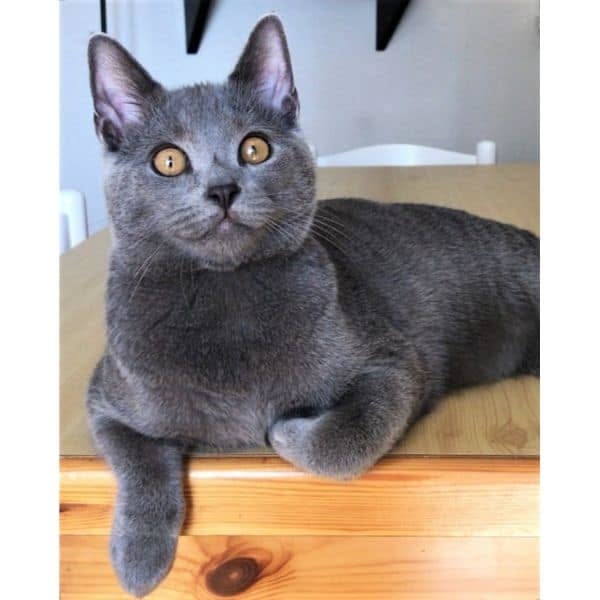
The Korat is one of the oldest and most genetically pure cat breeds on earth. It originates from the Korat province of northeastern Thailand, where it has lived alongside local people for centuries. Unlike almost every other pedigree breed, the Korat has never been intentionally crossed with another breed; it is a natural breed, shaped entirely by geography and culture rather than deliberate selection. This genetic purity is one of its most valued characteristics.
The Korat is also inseparable from Thai cultural traditions of luck and prosperity. In Thailand, Korat cats are considered powerful symbols of good fortune, given as gifts for important occasions, and kept in pairs to multiply their lucky properties.
History: Thailand's Lucky Cat
The Korat's documented history in Thailand is extraordinary in its length and specificity. The breed is described in the Tamra Maew (Treatise on Cats), a Thai manuscript written during the Ayutthaya Kingdom (1350-1767 CE), one of the oldest written references to a specific cat type in human history. The Tamra Maew describes seventeen cat types considered auspicious, and the Korat (then called Si-Sawat, meaning "colour of the sawat seed") is among the most prized.
Korat cats have been given as gifts to honoured guests, newlyweds, and high officials in Thailand for at least several centuries. A pair of Korats presented to a home was believed to ensure prosperity, fertility, and protection from harm. Farmers presented Korats to government officials as expressions of respect and reverence.
The breed was introduced to the West in 1959, when Jean Johnson of the United States imported Korats from Thailand and began breeding them in America. The Cat Fanciers' Association accepted the Korat for championship competition in 1967.
Appearance: The Blue-Silver Cat
The Korat's appearance is unlike any other cat breed. Three features define it: the coat, the eyes, and the body shape.
The coat is short, fine, and single-layered; there is no significant undercoat. The colour is blue throughout, but this blue is unusual: each hair is blue at the base, lightening to a silver tip. This silver tipping creates an overall shimmering, silver-blue effect when the coat moves, what Thai tradition describes as "cloud-like" and Western breeders call "silver-tipped blue."
The eyes begin as deep blue in kittens, shift to amber during adolescence, and complete their development as brilliant, luminous green in adulthood. Green Korat eyes are highly valued and take approximately 2-4 years to reach their full adult colour. The eyes are large, round, and prominent, disproportionately large for the head size, creating a luminous, intent expression.
The body is semi-cobby, neither as compact as a Persian nor as elongated as a Siamese. The back is curved in a distinctive arc when the cat is relaxed, creating a characteristic silhouette. The head is heart-shaped when viewed from the front, a feature specifically mentioned in the CFA standard.
Physical Characteristics at a Glance
| Feature | Detail |
|---|---|
| Body type | Semi-cobby, muscular, arched back |
| Male weight | 3.5-5 kg |
| Female weight | 2.5-3.5 kg |
| Coat | Short, fine, single layer; silver-tipped blue only |
| Eye colour | Luminous green (adults); amber-transitional in young cats |
| Head shape | Heart-shaped (distinctive breed feature) |
| Lifespan | 10-15 years |
Colour: One Colour Only, No Outcrossing
Like the Singapura, the Korat comes in one colour only: silver-tipped blue. No other colour is accepted, and no deviation from this standard is permitted.
Unlike most pedigree breeds, the Korat also allows no outcrossing, no other breeds may be introduced. The breed's gene pool is maintained entirely within the Korat population. This is a deliberate preservation of genetic integrity and corresponds to the Thai tradition of treating the Korat as a sacred natural type.
This policy means the Korat gene pool is relatively small and closely monitored. Genetic diversity is maintained through registration of Thai-origin cats (imported directly from Thailand) and careful genetic record-keeping.
Gangliosidosis: The Hereditary Neurological Disease
The Korat's most significant health concern is GM1 and GM2 gangliosidosis, lysosomal storage diseases caused by recessive gene mutations. These are severe, progressive neurological diseases for which there is no treatment. Affected kittens appear normal at birth but begin showing neurological signs, incoordination, tremors, difficulty walking, within the first months of life. The conditions are invariably fatal in early life.
Both GM1 and GM2 gangliosidosis in Korats are caused by single-gene recessive mutations. This means carrier cats (one normal and one defective gene) are clinically normal but can produce affected offspring when bred with another carrier.
DNA tests are available for both conditions. Responsible Korat breeders test all breeding animals and do not breed carriers together. Prospective buyers should verify that both parents of any kitten have been tested and are clear of both mutations.
This is a serious consideration when choosing a Korat kitten. A reputable breeder will provide test documentation without being asked.
Temperament
The Korat is an intensely loyal, quiet, and observant cat. Its temperament reflects its long history as a close companion of humans rather than a working or hunting cat.
The breed tends to bond deeply with one primary person or family and is often cautious or reserved with strangers, becoming more relaxed with familiarity. This is not unfriendliness; it is selectiveness. A Korat that has given its trust is an exceptionally devoted companion.
Korats are sensitive to noise and sudden change. They do better in calm households than in noisy or chaotic environments. They are gentle with children who handle them with respect but can become anxious with very young or unpredictable children.
The breed is intelligent and observant, learning household routines and reacting to subtle changes in owner behaviour and mood. Many Korat owners describe their cats as perceptive in ways that go beyond what they expected from a cat.
Cross-Links and Related Articles
- Siamese Cat
- Russian Blue
- Burmese Cat
- Senior Cat Nutrition Guide
- How Long Do Cats Live
References
Muldoon LL, et al. "Characterisation of the molecular defect in a feline model for type II GM2 gangliosidosis (Sandhoff disease)." American Journal of Pathology. 1994;144(5):1109-1118. PMID:8178949
Lyons LA, et al. "Feline genetics: clinical applications and genetic diversity of cats." Veterinary Clinics of North America: Small Animal Practice. 2012;42(5):1111-1127. doi:10.1016/j.cvsm.2012.08.001
Cat Fanciers' Association. "Korat Breed Profile." CFA Official Publication, 2023. cfainc.org
Martin DR, et al. "Molecular characterisation of a GM2 gangliosidosis occurring in domestic cats in the United Kingdom." Journal of Inherited Metabolic Disease. 2005;28:1046. doi:10.1007/s10545-005-0161-5
Fogle B. The Encyclopedia of the Cat. New York: DK Publishing; 1997.
International Cat Association (TICA). "Korat Breed Standard." TICA Official Publication, 2023. tica.org
Frequently Asked Questions
What colour is a Korat?
All Korats are silver-tipped blue, the only accepted colour. The coat is blue from the base of each hair, lightening to a silver tip that gives the coat a distinctive shimmering, silver-blue effect in motion. No other colour is accepted, and no outcrossing with other breeds is permitted. This is one of the most genetically pure pedigree breeds.
What is the Korat's historical significance in Thailand?
The Korat (called Si-Sawat in Thai) is described in the Tamra Maew, a manuscript from the Ayutthaya Kingdom (1350-1767 CE), as one of seventeen auspicious cat types. In Thai tradition, Korat cats bring good luck, fertility, and prosperity. Pairs of Korats are given as wedding gifts or presented to officials as tokens of respect. The breed has been a valued Thai cultural symbol for many centuries.
What is gangliosidosis in Korats?
GM1 and GM2 gangliosidosis are lysosomal storage diseases caused by recessive gene mutations that cause progressive neurological deterioration in affected kittens. Kittens appear normal at birth but develop incoordination, tremors, and neurological decline within months. Both conditions are fatal in early life and have no treatment. DNA tests are available for both. Reputable breeders test all breeding cats and should provide documentation.
What is the Korat's eye colour?
Korat kittens are born with blue eyes, which shift to amber during adolescence, and then complete their development as luminous, brilliant green in adulthood. The full adult eye colour typically develops between ages 2 and 4. The large, prominent green eyes are one of the breed’s most distinctive features and are highly valued in the breed standard.
Can you breed a Korat with other breeds?
No. The Korat breed standard prohibits outcrossing, no other breeds may be introduced. The gene pool is maintained entirely within the Korat population, including registered imports from Thailand. This policy preserves genetic integrity and maintains the breed’s characteristics as a natural type. The Korat gene pool is relatively small and carefully monitored by breed clubs.
What is the Korat's personality?
The Korat is quietly loyal, observant, and selective in its affections. The breed bonds deeply with its primary family but is reserved with strangers. It is intelligent and perceptive, attuned to its owner’s moods. Korats prefer calm environments and are sensitive to noise and change. They are gentle with respectful children but can be anxious with unpredictable behaviour. A Korat that has given its trust is an exceptionally devoted companion.