
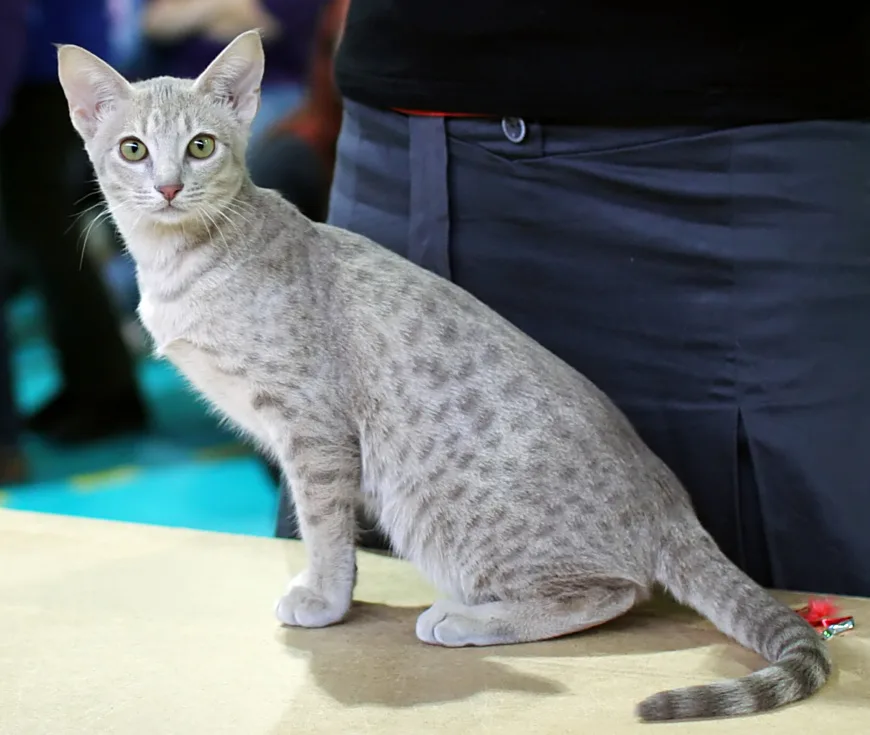
The Ocicat looks wild. Its spotted coat, athletic frame, and large, alert eyes give it the appearance of a small, domesticated ocelot, which is precisely the aesthetic its name references. But the Ocicat is entirely domestic. Not one wild gene has been intentionally introduced to create this breed.
It is a product of selective breeding among three domestic cat breeds, the Abyssinian, the Siamese, and the American Shorthair, and its wild appearance is entirely the result of interactions between ordinary domestic cat genes.
The breed's origin is one of the most serendipitous in cat fancy history: it was created by accident, discovered by chance, and developed from a single unexpected spotted kitten into a recognised championship breed.
History: An Accidental Discovery
The Ocicat was created accidentally in 1964 by Virginia Daly, a cat breeder from Berkley, Michigan. Daly was attempting to create an Abyssinian-pointed Siamese, a cat with an Abyssinian-patterned coat carried in a Siamese colour-point pattern. To achieve this, she crossed an Abyssinian with a Siamese, then bred one of the resulting females back to a Siamese male.
In one of the resulting litters appeared a striking ivory kitten covered in golden spots, a pattern that no one had intended to produce. Daly's daughter looked at the kitten and said it looked like it belonged to an ocelot, and the name "Ocicat" was coined on the spot.
The kitten, named Tonga, was neutered and sold as a pet before anyone recognised the significance of what had been produced. Fortunately, Daly was able to replicate the breeding, producing more spotted kittens. When the geneticist Clyde Keeler saw Daly's description of Tonga in a cat magazine, he wrote to her to express his interest, Keeler had been attempting to replicate the appearance of the extinct Egyptian cat through selective breeding.
The American Shorthair was later introduced into the programme to increase body size and add the silver colour variants. This introduction explains why "American Shorthair" appears in the Ocicat's genetic background alongside Abyssinian and Siamese.
The Cat Fanciers' Association granted the Ocicat provisional status in 1986 and full championship status in 1987. TICA recognises the breed as well.
Genetics: Three Breeds, Zero Wild Blood
The Ocicat's spotted pattern results from an interaction between the tabby patterning genes present in its domestic cat ancestors. All domestic cats carry genes that can produce spotted, mackerel, or classic tabby patterns. The Abyssinian contribution introduces the ticked tabby gene (agouti); the Siamese contributes colour-pointing and high contrast; the combination produces the distinctive large, dark spots against a lighter agouti background.
This is not artificial or unusual genetics. The same genetic mechanisms that produce spotted wild cats (ocelots, cheetahs, leopards) operate through different alleles of the same gene families. Natural selection in wild cats and selective breeding in the Ocicat have both manipulated agouti signalling and tabby patterning genes to produce spotted coats.
There is no wild cat DNA in the Ocicat. This distinguishes it from the Bengal (which does carry Asian Leopard Cat genetics) and the Cheetoh (discussed elsewhere in this series).
Physical Characteristics
The Ocicat is a large, athletic, well-muscled cat with a semi-foreign body type, longer and more athletic than cobby breeds but not as elongated as the extreme Oriental type.
Adult males are large, typically weighing 4-6 kg or more. Females are smaller, typically 2.7-4.5 kg. The breed matures relatively slowly, reaching full development at approximately 18-24 months.
The head is a modified wedge, wider and less angular than the Siamese, with a strong jaw and prominent whisker pads. The eyes are large, almond-shaped, and angled; all colours except blue are accepted by most registries.
The coat is short, tight, and finely textured, lying close to the body. Each hair is banded with colour (agouti), and the overall effect gives the coat a gleaming, satiny appearance.
Coat Colours and Pattern
The Ocicat's defining characteristic is its spotted tabby pattern, large, clearly defined spots arranged in a scattered pattern across the body, with smaller spots on the legs and tail rings.
| Colour Class | Accepted Colours |
|---|---|
| Tawny | Brown/black spotted tabby |
| Cinnamon | Warm brown spots on ivory background |
| Chocolate | Dark brown spots |
| Blue | Blue spots on pale blue background |
| Lavender | Pinkish-grey spots |
| Fawn | Pale cinnamon on cream background |
| Silver variants | Ebony silver, cinnamon silver, chocolate silver, blue silver, lavender silver, fawn silver |
Twelve colours are recognised by the CFA, with all twelve available in both standard and silver versions. The silver variants are particularly striking, with high contrast between spot and background colour.
Physical Characteristics at a Glance
| Feature | Detail |
|---|---|
| Body type | Athletic, semi-foreign, muscular |
| Male weight | 4-6+ kg |
| Female weight | 2.7-4.5 kg |
| Coat | Short, tight, satiny |
| Pattern | Spotted tabby, no other pattern |
| Eye colour | All except blue (eyes are not blue in adults) |
| Lifespan | 10-15 years |
Temperament
The Ocicat has a personality that surprises many people who expect a wild-looking cat to behave aloof or unpredictably. The opposite is typically true. The breed is highly social, affectionate, and outgoing, reflecting the friendly temperament of all three contributing breeds, particularly the Siamese.
Ocicats tend to be:
Highly trainable. The Ocicat is one of the most trainable of all cat breeds. Many individuals learn to walk on a leash, respond to name calls, perform trick sequences, and engage with agility equipment. This trainability makes the breed well-suited to owners who want an interactive relationship with their cat.
Devoted to their people. Ocicats form strong attachments to their human family and do not do well with prolonged isolation. They want to be wherever the people are.
Sociable with visitors. Unlike many cats that hide from strangers, Ocicats typically greet newcomers with curiosity and confidence.
Vocal but not demanding. The Siamese ancestry contributes vocal ability, but the Ocicat's voice is typically less persistent and demanding than a purebred Siamese.
Active and playful throughout life. The breed retains kitten-like energy well into adulthood and needs substantial daily interactive play.
Health
The Ocicat is generally a healthy breed. No serious breed-specific genetic conditions are documented at high frequency.
The primary health concerns relevant to the breed are those inherited from its parent breeds:
- Periodontal disease: A concern across all cat breeds; the Siamese ancestry adds some predisposition. Regular dental care is important.
- Amyloidosis: A condition in which abnormal protein deposits accumulate in organs; this has been documented in Abyssinian and related breeds and warrants awareness in the Ocicat, though it is not frequently reported.
Life expectancy is typically 10-15 years, with many well-cared-for Ocicats reaching 15 years or beyond.
Cross-Links and Related Articles
- Abyssinian
- Siamese Cat
- Cheetoh Cat
- Bengal Cat
- Kitten Feeding Schedule by Age
References
Lyons LA, et al. "Feline genetics: clinical applications and genetic diversity of cats." Veterinary Clinics of North America: Small Animal Practice. 2012;42(5):1111-1127. doi:10.1016/j.cvsm.2012.08.001
Kaelin CB, Barsh GS. "Genetics of pigmentation in dogs and cats." Annual Review of Animal Biosciences. 2013;1:125-156. doi:10.1146/annurev-animal-031412-103659
Cat Fanciers' Association. "Ocicat Breed Profile." CFA Breed Standard, 2023. cfainc.org
Fogle B. The Encyclopedia of the Cat. New York: DK Publishing; 1997.
International Cat Association (TICA). "Ocicat Breed Standard." TICA Official Publication, 2023. tica.org
Lorimer HE. The Complete Illustrated Encyclopedia of Cat Breeds. New York: Lorenz Books; 2004.
Frequently Asked Questions
Does the Ocicat have wild cat blood?
No. Despite its wild appearance, the Ocicat has no wild cat genetics. It was created entirely from domestic breeds, Abyssinian, Siamese, and American Shorthair. Its ocelot-like spots result from the interaction of domestic cat tabby patterning genes. This distinguishes the Ocicat from the Bengal, which does contain Asian Leopard Cat genetics.
How was the Ocicat created?
The Ocicat was created by accident in 1964 when breeder Virginia Daly of Michigan was attempting to produce an Abyssinian-pointed Siamese. In an unexpected litter appeared a golden-spotted ivory kitten that no one had anticipated. Daly’s daughter named it ‘Ocicat’ for its resemblance to an ocelot. Daly then replicated the breeding deliberately and developed the breed, later adding American Shorthair for body size and silver colour variants.
Is the Ocicat good with children?
Yes. The Ocicat is one of the more family-friendly cat breeds. It is social, confident, and does not tend to hide from children or strangers. Its high trainability and playful nature make it a good companion for active households. It does require adequate daily interactive play and does not do well with prolonged solitude.
What colours does the Ocicat come in?
The CFA recognises 12 Ocicat colours: tawny, cinnamon, chocolate, blue, lavender, fawn, and all six of those in silver variants (ebony silver, cinnamon silver, chocolate silver, blue silver, lavender silver, fawn silver). All are spotted tabby, no other coat pattern is accepted in the breed standard.
Can Ocicats be trained?
Yes, the Ocicat is one of the most trainable cat breeds. Many individuals learn to walk on a leash, come when called, fetch toys, perform simple trick sequences, and navigate agility courses. The breed’s Siamese intelligence and high social motivation make it exceptionally responsive to training. Clicker training works well with this breed.
How big do Ocicats get?
The Ocicat is a large-to-medium cat breed. Adult males typically weigh 4-6 kg or more; females 2.7-4.5 kg. The breed matures slowly, reaching full size at approximately 18-24 months. The muscular, athletic build contributes to the impression of size even in cats of moderate weight.