
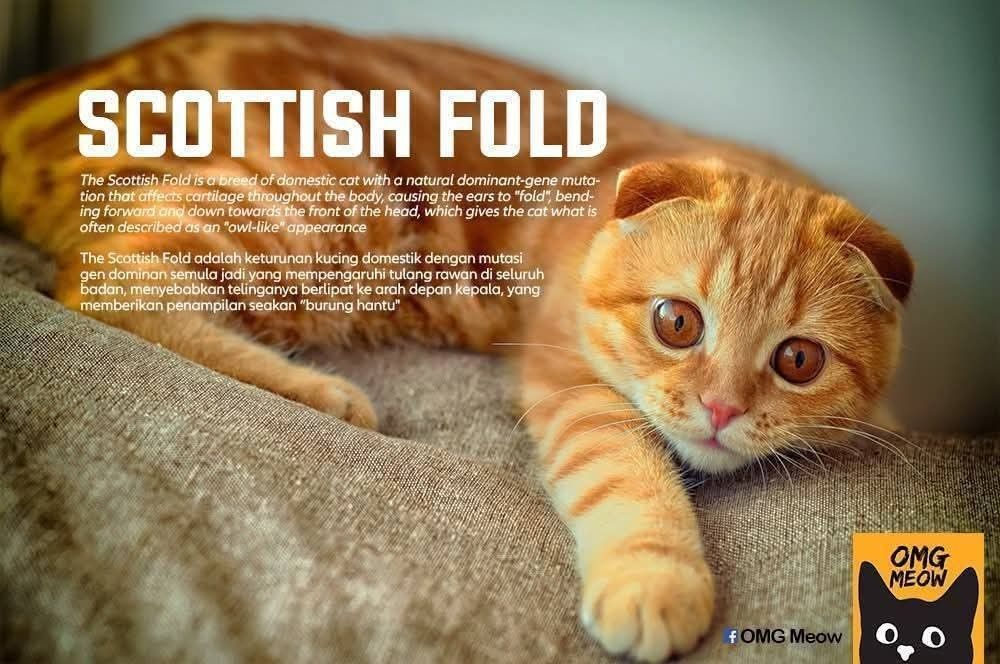
The Scottish Fold is one of the most recognisable cat breeds in the world, identifiable instantly by the forward-folded ears that give its face an almost owl-like appearance.
The breed's rise from a single barn cat in rural Scotland to a global phenomenon has been accompanied by a deepening welfare controversy that has placed Scottish Folds at the centre of one of the most significant ethical debates in pedigree cat breeding. Understanding the Scottish Fold fully means understanding both its genuine appeal and the biological consequences of the mutation that defines it.
This guide covers the breed's origin and genetics, the mechanism and welfare implications of the fold mutation, physical characteristics, temperament, known health conditions including osteochondrodysplasia, lifespan and care, and the positions of major cat registries on whether the breed should continue to be bred at all.
Origins: One Barn Cat in Perthshire
The entire Scottish Fold breed traces to a single cat. In 1961, a shepherd named William Ross noticed an unusual white barn cat on a farm near Coupar Angus in Perthshire, Scotland. The cat, named Susie, had ears that folded forward and downward in a way that was entirely unlike any domestic cat Ross had seen. When Susie produced kittens, some of them shared the same ear shape.
Ross acquired one of those kittens and, working with geneticist Pat Turner, began developing the folded-ear trait into a consistent breed.
The fold was quickly recognised as the result of a spontaneous dominant mutation. Because only one copy of the mutant allele is required to produce folded ears, every Scottish Fold alive today is a descendant of Susie carrying at least one copy of the Fd (folded) gene. There is no other origin story. The geographical isolation of a single farm and the observation of a single unusual cat account for the entirety of a breed that now numbers in the hundreds of thousands worldwide.
Early development of the breed involved crosses with British Shorthairs and American Shorthairs to establish the body type and to maintain genetic diversity. These outcrosses remain part of modern breeding programs. Cats resulting from these pairings that inherit the fold mutation become Scottish Folds; those with straight ears are called Scottish Straights and play an important role in maintaining breed health.
The Scottish Fold was exported to the United States in 1971, where it gained quick popularity. The Cat Fanciers' Association granted championship status in 1978. In the United Kingdom, however, the breed's story took a different turn. The Governing Council of the Cat Fancy (GCCF) refused to register Scottish Folds in the 1970s due to concerns about ear-related health problems. Those concerns deepened considerably as the underlying genetics became better understood.
The Fold Gene: Genetics and the OCD Problem
The mutation responsible for folded ears in Scottish Folds is a single dominant allele designated Fd. A cat inheriting one copy of Fd from one parent (heterozygous, Fd/fd) will typically have folded ears and is the standard show and pet Scottish Fold.
A cat inheriting two copies (homozygous, Fd/Fd) will also have folded ears, often more tightly folded, but will develop severe osteochondrodysplasia (OCD), a systemic disorder of abnormal bone and cartilage development that affects the entire skeleton, not only the ears.
The critical fact, frequently misunderstood by prospective owners, is that OCD is not limited to homozygous cats. Even heterozygous Fd/fd Scottish Folds, which carry only a single copy of the fold mutation and represent the standard pet and show animal, can develop clinically significant OCD with age. The Fd gene affects cartilage throughout the skeleton, not only in the ear flap. Heterozygous cats show this effect at reduced severity, but the severity is still real and can be disabling.
OCD in Scottish Folds manifests as abnormal development of the bones and cartilage in the distal limbs (particularly the tail and feet), the wrists, and the ankles. Affected cats develop bony fusion and thickening that causes stiffness, reduced range of motion, and pain. The tail becomes thick and inflexible.
Affected cats may adopt abnormal postures, refuse to jump, develop a stilted gait, or show reluctance to be touched. Radiographic changes appear before clinical signs, meaning a cat that appears normal may already have significant skeletal changes detectable by X-ray.
"The welfare implications of the Fd mutation are not restricted to homozygous cats. Heterozygous Scottish Folds carry an elevated lifetime risk of developing osteochondrodysplasia with associated pain and reduced quality of life. Breeders and purchasers should be informed of this risk." Royal College of Veterinary Surgeons (RCVS) position statement on brachycephalic and other conformation-related disorders in cats, 2021
The British Genetics Society, the RCVS, and the British Small Animal Veterinary Association (BSAVA) have all issued statements identifying Scottish Fold breeding as ethically problematic. Germany, Austria, the Netherlands, Belgium, and several other European countries have introduced restrictions on the breeding or sale of Scottish Folds. In Scotland, the breed's country of origin, the breed cannot be registered with the GCCF.
| Genotype | Ear Appearance | OCD Risk | Notes |
|---|---|---|---|
| fd/fd (no Fd allele) | Straight ears (Scottish Straight) | None | Healthy; used in breeding programs to avoid Fd/Fd offspring |
| Fd/fd (one Fd allele) | Folded ears | Moderate to significant with age | Standard Scottish Fold; all Fd/fd cats carry some OCD risk |
| Fd/Fd (two Fd alleles) | Tightly folded / very flat ears | Severe; systemic OCD certain | Ethically prohibited by responsible breeders; severe suffering inevitable |
Responsible breeding practice in countries where Scottish Folds remain legal requires pairing a Fold (Fd/fd) only with a Straight (fd/fd). This eliminates the production of Fd/Fd kittens. However, it does not eliminate the OCD risk in the Fd/fd offspring; it only prevents the most severe expression of the disease.
Physical Characteristics
The defining feature is the ear. Scottish Fold kittens are born with straight ears; the fold, when it occurs, develops gradually from around three weeks of age as the cartilage in the ear flap softens. Not all kittens from Fold parents will develop folded ears, those that inherit only fd/fd from a Fold-to-Straight pairing will have straight ears and become Scottish Straights.
The degree of folding varies. A single fold produces a slight forward tip; a double fold is tighter; a triple fold presses the ear flat against the skull, producing the tight round-headed appearance most associated with the breed in popular media. Triple-folded cats are at higher risk for OCD complications because tighter ear folding correlates with more severe systemic cartilage abnormality.
Beyond the ears, the Scottish Fold has a medium-sized, rounded body with a short neck and rounded head. The face is wide with large, round, forward-facing eyes. The nose is short and the cheeks are full, giving the breed an expression that many describe as permanently surprised or quizzical. The overall impression is of exceptional roundness, round eyes, round head, round body, rounded paws.
The coat exists in both shorthaired and longhaired varieties. The longhaired variant is sometimes called the Highland Fold (or Scottish Fold Longhair). Coat colours and patterns recognised by registries are extensive, covering solid, tabby, tortoiseshell, bicolour, and pointed patterns.
| Characteristic | Scottish Fold |
|---|---|
| Weight (adult male) | 4-6 kg |
| Weight (adult female) | 2.7-4 kg |
| Lifespan | 11-15 years (if OCD is managed) |
| Coat length | Shorthair or longhair |
| Eye colour | Wide range; should be vivid and round |
| Ears | Folded forward and downward from approx. 3 weeks of age |
| Body type | Medium, rounded, cobby |
| Activity level | Moderate |
Temperament and Behaviour
The Scottish Fold's temperament is consistently described as calm, sweet-natured, and adaptable. Unlike some breeds that are highly vocal and demanding of constant attention, the Scottish Fold tends toward gentle persistence; it will position itself near its owner, follow household activity, and participate quietly in family life without the intensity of more extroverted breeds such as Siamese or Abyssinians.
The breed is affectionate but not clingy. Scottish Folds form close bonds with their people and generally prefer company to solitude, but they do not typically develop the separation anxiety seen in more sensitive breeds. They adapt well to households with other cats and dogs when introductions are managed carefully.
A characteristic posture associated with the breed is the so-called "Buddha sit" sitting fully upright on the haunches with the hind legs extended forward and the belly exposed. This posture looks relaxed and endearing to human observers but can also indicate that the cat is trying to reduce pressure on the lower spine or tail joints. Owners should be attentive to the context in which this posture appears.
Scottish Folds are not particularly high-energy cats. They enjoy play and will engage with interactive toys, but they are not the relentless climbers and runners of breeds like the Abyssinian or Bengal. Their exercise needs are moderate, and they are well-suited to indoor living. For comparison, Bengal Cat and Abyssinian represent the high-activity end of the domestic cat temperament spectrum.
Noise levels are low. The Scottish Fold has a small, soft voice and uses it infrequently. The breed's primary communication is through posture and physical proximity. For households seeking a quiet, undemanding companion, the Scottish Fold temperament is appealing, though it is essential that this appeal is weighed against the health context described throughout this article.
Health Conditions and Welfare Concerns
The primary health concern for all Scottish Folds is osteochondrodysplasia (OCD), described in detail in the genetics section above. OCD is not a risk that can be eliminated by purchasing from a responsible breeder; it is inherent to the presence of the Fd allele. A cat with folded ears will always carry Fd and will always carry the associated elevated risk of skeletal disease. The question is not whether a Scottish Fold will develop OCD but how severely and how soon.
Veterinary assessment of Scottish Folds should include periodic radiographic evaluation of the tail, feet, and hind limbs from early adulthood. Stiffness, reluctance to jump or climb, resistance to tail handling, and an unusually wide or stilted gait are warning signs warranting immediate evaluation. Pain management in affected cats typically involves anti-inflammatory medication (NSAIDs); severe cases may benefit from additional analgesics. There is no surgical cure for OCD.
Beyond OCD, Scottish Folds share the health risks common to most pedigree cats. Hypertrophic cardiomyopathy (HCM) occurs in the breed and periodic cardiac screening is recommended, though the genetic basis specific to Scottish Folds is less well-characterised than in Maine Coons. Polycystic kidney disease (PKD) can occur when British Shorthair crosses carry the PKD1 mutation, and testing of breeding animals is advisable.
Ear problems caused directly by the folded ear anatomy itself are less common than the welfare discourse might suggest. The folded position does not inherently increase infection rates compared with upright-eared cats, provided the ears are routinely inspected and cleaned. Hearing is not affected by the fold. However, any cat showing chronic head-shaking, malodorous ears, or head tilt warrants otoscopic examination.
"Pain assessment in cats is particularly challenging because cats evolved as both predator and prey and suppress behavioural signs of pain as a survival strategy. Owners of Scottish Folds should not interpret the absence of overt pain behaviour as evidence that the cat is pain-free." International Society of Feline Medicine (ISFM), Feline Pain Recognition guidelines, 2022
For comprehensive coverage of all Scottish Fold health conditions, see Scottish Fold Health Problems. For guidance on adapting care to a Scottish Fold with OCD, see Scottish Fold Care Guide.
Registry Positions and the Ethical Debate
The Scottish Fold breed is at the centre of an ongoing debate about the ethics of selecting for conformational traits that cause suffering. The positions of major registries reflect this division.
The GCCF (UK) does not register Scottish Folds and has not done so since the 1970s, citing the welfare harms caused by the Fd mutation. The RCVS and BSAVA actively advocate against the breeding of Scottish Folds. A 2019 BSAVA position statement called for "an end to the breeding of Scottish Fold cats" until the OCD problem can be resolved, which current genetics indicate is impossible while retaining the fold phenotype.
The CFA (US) registers and shows Scottish Folds. TICA registers and shows Scottish Folds. The FIFe (European umbrella body) does not register Scottish Folds as of 2021, joining the GCCF in declining recognition. Several national FIFe member organisations have independently banned the breed.
Proponents of continued breeding argue that heterozygous cats with mild OCD can still live comfortable lives with proper care and that the breed's widespread popularity demonstrates demand that will be supplied legally or illegally regardless of registry positions. Critics argue that breeding an animal known to carry elevated risk of a painful skeletal condition is ethically indefensible when the trait conferring that risk serves no function beyond human aesthetic preference.
The debate is not settled, and prospective owners should engage with it honestly. An informed decision to own a Scottish Fold requires acknowledging that even a carefully purchased, well-cared-for Scottish Fold carries inherent health risk that a British Shorthair or Maine Coon does not.
Living with a Scottish Fold
For owners who proceed with full awareness of the health context, living with a Scottish Fold is a rewarding experience. The breed's calm temperament, tolerant disposition, and strong attachment to household life make it an unusually pleasant companion. It is well-suited to quieter households, to single-person homes where it will be the primary focus of interaction, and to families with older children.
The practical requirements include regular veterinary monitoring for OCD signs beginning in early adulthood (from around age two, or sooner if signs appear), a diet that maintains healthy body weight (excess weight accelerates joint deterioration), and attention to the cat's mobility as it ages. Ramps or steps to furniture are useful if the cat shows any reluctance to jump. Soft bedding over hard floors reduces joint stress.
Grooming requirements depend on coat length. Shorthaired Scottish Folds require minimal brushing, weekly combing is sufficient for most. Longhaired varieties (Highland Folds) require more regular grooming to prevent matting behind the ears and on the belly.
Interactive enrichment is beneficial but should be calibrated to the individual cat's comfort level. A Scottish Fold showing OCD signs should not be expected to perform the athletic leaping of a healthy cat. Low-level play with wand toys, puzzle feeders, and calm interactive sessions suit the breed's moderate energy profile.
Owners should establish an ongoing relationship with a veterinarian familiar with Scottish Fold-specific health concerns. Radiographic evaluation at two to three year intervals, combined with a physical examination sensitive to OCD signs, provides the best baseline for long-term management. For guidance on when clinical signs warrant urgent attention, see When to See a Vet for Your Cat. For an overview of conditions affecting the breed, Common Cat Illnesses Explained provides broader context.
Comparing Scottish Folds to Similar Breeds
The British Shorthair is the closest comparable breed to the Scottish Fold in terms of temperament and physical type, and it is the primary outcross used in Scottish Fold breeding programs. The British Shorthair shares the Scottish Fold's calm, adaptable disposition, rounded appearance, and moderate activity level without carrying the Fd mutation or its associated health consequences.
For households drawn to the Scottish Fold's look and temperament who are unwilling to accept the OCD risk, the British Shorthair is the logical alternative.
The Maine Coon shares some temperamental traits, sociability, adaptability, enjoyment of household life, but differs dramatically in size, coat, vocalisation, and activity level. It does not share the Scottish Fold's health controversy.
Prospective owners comparing multiple breeds are encouraged to read comprehensive guides for each. The health and ethical context of Scottish Fold ownership is unique and warrants more deliberate evaluation than most breed choices.
References
Malik, R., et al. (2015). "Osteochondrodysplasia in Scottish Fold cats." Journal of Feline Medicine and Surgery, 17(11), 961-968. https://doi.org/10.1177/1098612X15595017
Takanosu, M., et al. (2008). "Incomplete dominant osteochondrodysplasia in heterozygous Scottish Fold cats." Journal of Small Animal Practice, 49(4), 197-199. https://doi.org/10.1111/j.1748-5827.2007.00416.x
Lyons, L.A. (2012). "Genetic testing in domestic cats." Molecular and Cellular Probes, 26(6), 224-230. https://doi.org/10.1016/j.mcp.2012.04.004
Royal College of Veterinary Surgeons (RCVS). (2021). RCVS Position Statement on Breeding and Welfare: Conformation-Related Disorders. Retrieved from https://www.rcvs.org.uk
Governing Council of the Cat Fancy (GCCF). (2023). Policy on Scottish Fold Registration. Retrieved from https://www.gccfcats.org
Gandolfi, B., & Alhaddad, H. (2015). "Investigation of inherited disease in domestic cats: challenges and solutions." Journal of Feline Medicine and Surgery, 17(7), 629-641. https://doi.org/10.1177/1098612X15590455
Frequently Asked Questions
Why are Scottish Fold cats controversial?
Scottish Folds carry a dominant mutation (Fd) that causes the characteristic ear fold. This same mutation affects cartilage throughout the entire skeleton, not only the ears, and causes a condition called osteochondrodysplasia (OCD) in which bones and cartilage develop abnormally. Even heterozygous cats, the standard pet Scottish Fold with one copy of the mutation, carry a clinically significant risk of developing OCD with age.
The condition causes pain, stiffness, and reduced mobility. Because the welfare problem cannot be separated from the defining trait, organisations including the RCVS, BSAVA, and GCCF consider the breed ethically problematic and oppose its continued production.
Do all Scottish Folds develop health problems?
All Scottish Folds carry at least one copy of the Fd mutation, and this mutation is associated with elevated risk of osteochondrodysplasia affecting the tail, feet, and hind limb joints. Not all cats will develop clinically obvious disease, but radiographic (X-ray) abnormalities are present in a high proportion of heterozygous Scottish Folds even before symptoms appear.
Cats with two copies of the mutation (Fd/Fd) develop severe, systemic OCD with certainty. Responsible breeders avoid producing Fd/Fd kittens by pairing Folds only with Straight-eared cats, but this does not eliminate OCD risk entirely.
Are Scottish Folds good with other pets?
Scottish Folds generally coexist well with other cats and with calm dogs, particularly when introductions are managed gradually and carefully. The breed’s calm, non-aggressive temperament means it typically de-escalates conflict by withdrawal rather than confrontation. They are not territorial in an intense way and usually adjust to new animals with patience.
The main concern in multi-pet households is ensuring that a Scottish Fold with OCD signs is not put under physical stress by boisterous companions.
Can Scottish Folds live indoors only?
Yes, Scottish Folds are well-suited to full indoor living. Their moderate activity level, calm temperament, and strong attachment to household life make them comfortable apartment cats.
Indoor living is also strongly recommended for the breed because it reduces physical stress on potentially compromised joints, eliminates hazards that would be more dangerous to a cat with restricted mobility, and allows owners to observe subtle signs of OCD progression that might go unnoticed outdoors.
What is the difference between a Scottish Fold and a Scottish Straight?
Both names describe cats bred from Scottish Fold lines, but Scottish Straights carry two copies of the normal (non-folded) ear allele (fd/fd) and have upright ears. They do not carry the Fd mutation and do not have elevated OCD risk. Scottish Straights are used in breeding programs precisely because pairing a Fold (Fd/fd) with a Straight (fd/fd) produces a litter in which no kittens are Fd/Fd, eliminating the most severe form of OCD.
Scottish Straights can be registered and shown by several major registries.
How long do Scottish Fold cats live?
Scottish Folds typically live 11-15 years when OCD is monitored and managed with appropriate veterinary care. Cats with severe OCD that goes unmanaged may have significantly shorter or lower-quality lives due to chronic pain. Cats with mild OCD managed with anti-inflammatory medication and appropriate environmental modifications can live full lifespans.
Regular veterinary check-ups, including radiographic monitoring from early adulthood, are the most important factor in supporting a long and comfortable life.