
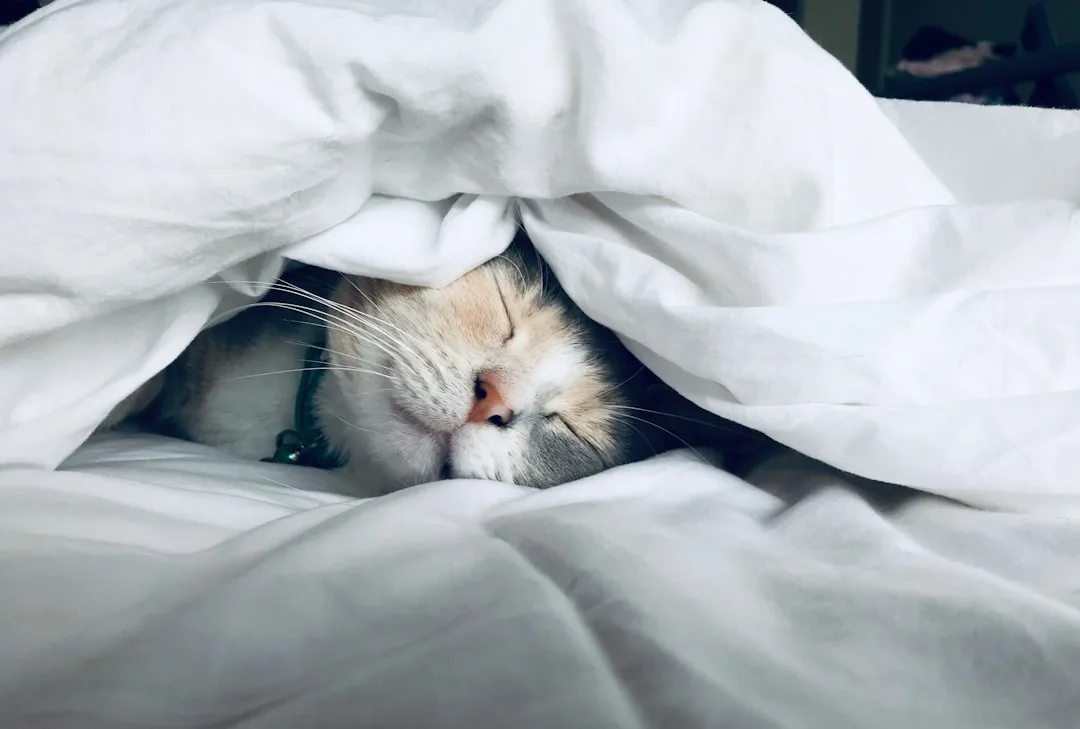
Cats spend between 12 and 16 hours asleep each day, and research into feline sleep architecture confirms that they pass through the same two major sleep stages as humans: slow-wave sleep and rapid eye movement (REM) sleep.
Because dreaming in humans is most strongly associated with REM sleep, and because cats demonstrably enter REM sleep with the same neurological signatures, the scientific consensus is that cats almost certainly dream. The content and character of those dreams remains a subject of active research and reasonable inference.
How Do Scientists Know Cats Dream?
The foundational evidence for feline dreaming comes from neurological research comparing brain activity during sleep across mammalian species. In humans, the REM stage of sleep is characterized by high-frequency, low-amplitude electrical activity in the cerebral cortex that closely resembles the pattern seen during waking, a state sometimes called "paradoxical sleep" because the brain is neurologically active while the body is paralyzed.
Studies recording electroencephalographic (EEG) activity in sleeping cats documented the same paradoxical sleep pattern decades before the connection between REM and dreaming was well understood in humans. A landmark series of experiments by Michel Jouvet at the University of Lyon in the 1960s and 1970s established the neurological profile of feline REM sleep and is still cited in sleep research literature.
"The cat has served as the principal model for understanding the neural substrates of REM sleep. The pontine brainstem mechanisms that generate REM sleep were first characterized in feline preparations, and the homology with human REM sleep is well established." Hobson, J.A., Science, 1989
Jouvet went further. In a now-famous series of experiments, he lesioned the brainstem region responsible for the muscle paralysis (atonia) that normally accompanies REM sleep.
Cats with this lesion would rise during sleep episodes and perform coordinated behaviors, stalking, pouncing, batting at invisible objects, and arching their backs as if confronting a threat, while remaining physiologically asleep with closed eyes and unresponsive to external stimuli.
The behaviors corresponded precisely to activities the cats performed while awake, which was interpreted as the cats acting out the content of their dreams.
This experiment has been replicated across mammalian species, and similar lesion effects have been documented in dogs, rats, and primates. It remains the most direct evidence that sleeping mammals experience internally generated, behaviorally coherent mental states, what we call dreams.
The Architecture of Cat Sleep
Understanding when and how cats dream requires understanding the structure of feline sleep, which differs from human sleep in ways that reflect the cat's evolutionary heritage as both predator and prey animal.
Slow-Wave Sleep
Slow-wave sleep (SWS), also called non-REM sleep, is characterized by high-amplitude, low-frequency brainwave activity. During this phase, muscle tone is reduced but not absent, body temperature falls slightly, heart rate slows, and growth hormone is released. Memory consolidation of factual and procedural information occurs primarily during SWS. Cats enter SWS quickly from a light dozing state and cycle in and out of it frequently throughout the day.
Most of what cats do when they appear to be "napping" is light slow-wave sleep or even a semi-alert resting state. Research by Siegel and colleagues has suggested that cats spend a relatively small proportion of their total sleep time in deep slow-wave sleep compared with humans.
REM Sleep
Rapid eye movement sleep follows slow-wave sleep in a cycle. The cycle duration in cats is approximately 30 minutes, compared to approximately 90 minutes in adult humans. This means cats enter and exit REM sleep far more frequently over the course of a day's sleeping, and each REM episode is shorter.
During REM sleep, cats show the characteristic rapid eye movements for which the stage is named, brief muscle twitches in the limbs and face, whisker movement, and vocalizations including soft mews, chirps, and chattering sounds. Respiration and heart rate become irregular. The brain's limbic system, associated with memory and emotion, is highly active during REM sleep in both cats and humans.
| Sleep Stage | Brainwave Activity | Muscle Tone | Duration Per Cycle | Associated Function |
|---|---|---|---|---|
| Drowsing / light rest | Mixed alpha/theta | Normal | Variable | Sensory monitoring |
| Slow-wave sleep (SWS) | High-amplitude delta | Reduced | ~20 minutes | Memory consolidation, tissue repair |
| REM sleep | Low-amplitude mixed | Near-absent (atonia) | ~5-10 minutes | Dreaming, emotional memory processing |
What Do Cats Likely Dream About?
Direct evidence for dream content in non-verbal animals is necessarily indirect. The lesion experiments described above strongly suggest that cats dream about activities they perform while awake, because the behaviors acted out during REM-atonia deficit sleep matched waking behavioral repertoires precisely.
The hippocampus, the brain structure primarily responsible for episodic memory (memory of specific events and experiences), replays patterns of activity during sleep that correspond to patterns recorded during recent waking experience. This hippocampal replay has been documented in rodents and is inferred to occur in cats based on the homologous brain structures involved.
Rats placed in a novel maze show specific sequences of hippocampal place-cell activation while running; during subsequent sleep, those same sequences replay in compressed form. The implication is that the animal is replaying and consolidating memories of the experience.
By inference, a cat that spent the afternoon stalking a bird at the window, playing with a toy, or chasing a sibling would likely show hippocampal replay of those events during REM sleep. The twitching paws, flattened ears, and chattering sounds sometimes observed in sleeping cats are consistent with this interpretation.
"Hippocampal replay during sleep encodes recent experience and is thought to be the neural substrate of episodic memory consolidation. The patterns observed in rodent models have high homology with the structures mediating sleep in domestic felids." Wilson, M.A. and McNaughton, B.L., Science, 1994
How to Recognize When a Cat Is Dreaming
Several observable signs indicate that a cat has transitioned from slow-wave sleep into REM sleep and may be experiencing a dream state:
Muscle twitching. Brief, involuntary twitches in the paws, legs, and tail, sometimes dramatic enough to appear like running or kicking, are among the most reliable signs. These result from incomplete muscle atonia allowing motor command signals from the dreaming brain to reach the musculature.
Whisker movement. Whiskers twitch and sweep forward or backward independently of the environment, consistent with the brain generating sensory scenarios.
Vocalizations. Quiet chirps, mews, chattering (the sound cats make when watching birds), and soft growls occur during REM sleep, suggesting the cat is processing scenarios that would normally prompt those sounds.
Eye movement under closed lids. Rapid back-and-forth eye movements can be observed beneath the eyelids in cats in deep REM sleep, analogous to the movement seen in human REM sleep.
Irregular breathing. Respiration patterns during REM are less regular than during slow-wave sleep, often with brief pauses and accelerations.
Incomplete eyelid closure. Some cats sleep with their eyes slightly open, and the movement of the eyes during REM can be directly observed.
| Behavioral Sign | Probable Interpretation | Associated Sleep Stage |
|---|---|---|
| Paw twitching | Motor command leakage during dreaming | REM |
| Whisker movement | Sensory processing in dream state | REM |
| Soft vocalizations | Emotionally or contextually loaded dream content | REM |
| Rapid eye movement under lids | Active visual processing | REM |
| Irregular breathing | Autonomic variation during REM | REM |
| Slow, deep rhythmic breathing | Deep restorative sleep | SWS |
Do Kittens Dream More Than Adult Cats?
Yes, almost certainly. Kittens spend a greater proportion of their sleep time in REM sleep than adult cats, which parallels the pattern seen in human infants, who have substantially higher REM proportions than adults. The leading hypothesis is that elevated REM time in young animals reflects intense neural development, the brain uses REM sleep to process, consolidate, and integrate the enormous volume of new sensory, social, and motor learning that occurs in early life.
A kitten learning to coordinate its limbs, navigate its environment, interpret social signals from its mother and siblings, and process the novelty of a human household is acquiring a vast amount of new information daily. The brain consolidates this information during sleep, and REM sleep appears to be particularly important for the kind of procedural and emotional learning that characterizes early development.
Adult cats, whose neural frameworks are established and whose daily learning is incremental rather than foundational, show lower proportions of REM sleep, though they still enter it regularly and consistently.
"The percentage of REM sleep decreases with age in mammals, from very high proportions in neonates to lower but consistent proportions in adults. This trajectory is consistent with the role of REM in neural circuit development and synaptic consolidation." Roffwarg, H.P., Muzio, J.N., and Dement, W.C., Science, 1966
Do Nightmares Occur in Cats?
This question is genuinely difficult to answer because it requires attributing not just a mental state but a negatively valenced mental state to an animal that cannot report its experience. What can be said is that the behaviors observed during REM sleep in cats include responses that, in waking life, would be associated with threat, alarm, or distress, flattened ears, defensive postures, hissing or growling sounds, and sudden waking with apparent agitation.
Cats that have experienced trauma, abuse, or significant stressful events may show more frequent and more intense movement and vocalization during REM sleep. Veterinary behaviorists have noted that cats rescued from situations of chronic stress or physical injury often display disturbed sleep behavior during recovery, with more frequent REM interruptions and more intense physical activity during REM episodes.
Whether these represent the subjective experience of a nightmare, a dream with frightening content that causes distress, cannot be determined from current evidence. But the neurological and behavioral evidence is consistent with the possibility. The limbic system activity that characterizes REM sleep is associated with emotional memory processing in both directions: consolidating positive and rewarding experiences, and also processing fearful or aversive ones.
Sleep Requirements Across the Cat's Life
Daily sleep duration and sleep quality needs vary substantially across a cat's life, and understanding these variations helps owners provide environments that support healthy sleep.
Kittens (under 6 months) sleep 16 to 20 hours per day, with high REM proportions. Sleep is essential for neural and physical development at this stage and should not be interrupted more than necessary.
Adult cats (1 to 7 years) typically sleep 12 to 16 hours, with more regular cycles. Indoor cats may sleep slightly more than outdoor cats, as the stimulation and variable schedule of an outdoor life disrupts sleep and encourages wakefulness during favorable hunting conditions.
Senior cats (over 10 years) often sleep 16 to 20 hours again, partly because metabolic efficiency and physical activity decline. Disrupted sleep patterns, difficulty settling, or extreme vocalization during sleep in senior cats may indicate pain, cognitive decline, or hyperthyroidism and should be evaluated by a veterinarian.
For more on the daily habits of healthy cats, see signs of a healthy cat and how long do cats live. For information on the intelligence that cats are processing during all this sleep, see how smart are cats.
Breeds and Sleep Variability
Some cat breeds are notably more active and require more environmental stimulation to sleep well, while others are inclined toward long, deep rest. Ragdoll cats are famously relaxed and heavy sleepers. Bengal cats and Abyssinians are highly active and may cycle through sleep more restlessly, requiring environmental enrichment to ensure they sleep soundly rather than restlessly.
Persian cats and British Shorthairs tend toward calmer temperaments and often demonstrate the deeply relaxed, frequent-napping pattern associated with healthy feline sleep. Owners of high-energy breeds sometimes note more observable REM behaviors, twitching, vocalizing, and paw paddling, which may simply reflect more intense daily activity creating more material for hippocampal replay during sleep.
Should You Wake a Dreaming Cat?
Veterinarians and behaviorists generally advise against waking a cat that is in active REM sleep unless the behavior is extreme, sustained, or potentially injurious. Sudden waking from REM sleep can cause a brief period of disorientation and may provoke a startled defensive response, biting or scratching, not from aggression but from an incomplete transition out of a sleep state.
If a cat's REM behavior is violent, sustained for more than a few minutes, or accompanied by waking confusion, these may be signs of a neurological condition such as REM sleep behavior disorder (RBD), which has been described in cats as well as in dogs and humans. In RBD, the muscle atonia that should accompany REM sleep is disrupted, allowing full-scale enactment of dream content. This condition warrants veterinary assessment.
For ordinary twitching, whisker-flickering, and quiet vocalizations, the kindest response is simply to observe and let the cat sleep. The processing occurring during that REM episode likely contributes to the cat's cognitive and emotional well-being in the same way that undisturbed sleep contributes to human mental health.
The Connection Between Dreaming and Learning
One of the most practically important aspects of sleep and dreaming research is what it suggests about how cats consolidate learning. If hippocampal replay during sleep is indeed the mechanism by which experience is consolidated into long-term memory, as current evidence strongly indicates, then the quality and uninterrupted nature of a cat's sleep directly affects how effectively it retains the things it has learned.
This has implications for kitten training and socialization. Kittens that experience new handling, new environments, and new social encounters during the day and then sleep deeply and without disruption are more likely to integrate those positive experiences into their behavioral repertoire than kittens whose sleep is frequently broken.
Allowing a newly adopted kitten sufficient undisturbed sleep time, rather than pursuing it for interaction and play around the clock, supports better behavioral outcomes over time.
For adult cats, the same principle applies to habituation and behavior modification programs. A cat being helped to overcome fear of handling or a new household member benefits from adequate sleep because the neural work of re-evaluating those experiences and updating threat assessments is substantially done during sleep, particularly during REM.
Understanding this connection between sleep, dreaming, and cognitive function places cat dreams in a broader context: they are not incidental byproducts of sleep but central mechanisms by which cats process their experience, consolidate skills, and maintain emotional equilibrium. The twitching, vocalizing, paw-paddling cat on your sofa is doing important neurological work.
References
- Hobson, J.A. (1989). Sleep and dreaming. Science, 242(4873), 1–8.
- Jouvet, M. (1979). What does a cat dream about? Trends in Neurosciences, 2, 280–282.
- Wilson, M.A., and McNaughton, B.L. (1994). Reactivation of hippocampal ensemble memories during sleep. Science, 265(5172), 676–679. DOI: 10.1126/science.8036517
- Roffwarg, H.P., Muzio, J.N., and Dement, W.C. (1966). Ontogenetic development of the human sleep-dream cycle. Science, 152(3722), 604–619. DOI: 10.1126/science.152.3722.604
- Siegel, J.M. (2005). Clues to the functions of mammalian sleep. Nature, 437(7063), 1264–1271. DOI: 10.1038/nature04285
- Morrison, A.R. (1983). A window on the sleeping brain. Scientific American, 248(4), 94–102.
- Reinoso-Suarez, F., de Andrés, I., and Garzon, M. (2011). Functional anatomy of the sleep-wakefulness cycle. Advances in Anatomy, Embryology and Cell Biology, 208, 1–128.
Frequently Asked Questions
Do cats actually dream?
Yes, almost certainly. Cats enter REM sleep with the same neurological signatures as dreaming humans, and lesion experiments have shown cats physically act out waking behaviors during REM sleep, consistent with dreaming.
What do cats dream about?
Research on hippocampal replay in sleeping mammals strongly suggests cats dream about activities from their recent waking experience, hunting, playing, social interactions, and exploring their environment.
How can I tell if my cat is dreaming?
Signs of REM sleep in cats include twitching paws and whiskers, soft vocalizations like mews or chirps, rapid eye movements under the eyelids, and irregular breathing patterns.
Do cats have nightmares?
Cats show sleep behaviors consistent with processing stressful scenarios, growling, flattened ears, and sudden waking with agitation. Whether this constitutes a subjective nightmare experience cannot be confirmed, but the neurological framework for it exists.
Should I wake my cat if it looks distressed while sleeping?
Generally no. Most REM behavior is normal. Waking a cat abruptly from REM sleep can cause disorientation and a startled defensive response. Only intervene if the behavior is violent, sustained, or accompanied by waking confusion.
Do kittens dream more than adult cats?
Yes. Kittens spend a higher proportion of sleep time in REM, paralleling the pattern in human infants. This elevated REM is linked to intense neural development and the consolidation of large amounts of new learning.