
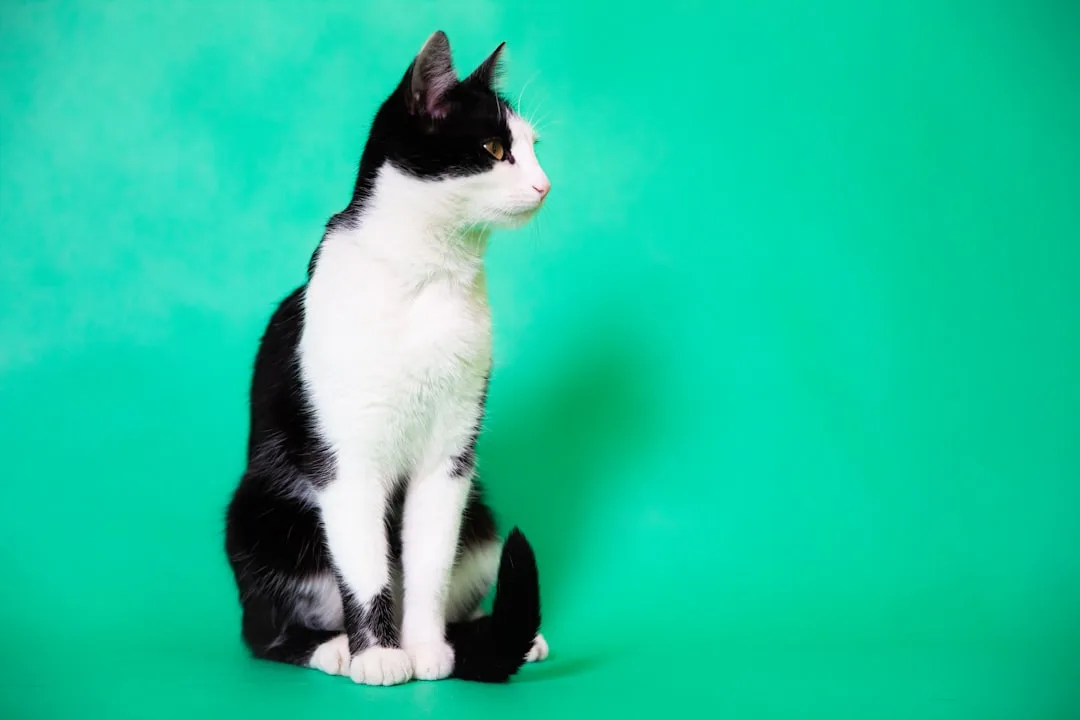
Cats have a reputation for aloofness that their behavior does not entirely support. Decades of research into cat-human relationships and feline social behavior have documented a rich repertoire of affiliative signals, behaviors cats use to express trust, attachment, and positive regard toward specific individuals.
These signals differ substantially from the ways dogs and humans express affection, which is why they are so often misread. Understanding how cats communicate that they care is one of the most practical things a cat owner can learn.
Why Cat Affection Looks Different
The domestic cat occupies an unusual evolutionary position. Unlike dogs, which were selected over thousands of years specifically for social bonding with humans and whose communication systems were shaped by that selection, cats were domesticated primarily for pest control.
The social bond between cats and humans is relatively recent, ecologically speaking, and the affiliative communication cats use with people closely parallels what they use with other cats, rather than having developed a parallel set of human-specific signals.
This means that to understand how a cat shows affection, you need to understand how cats show affection to each other. The behaviors are largely the same: head-bumping, mutual grooming (allogrooming), slow blinking, resting in contact, tail-up greetings, and vocal communication. Cats that trust and like humans apply these cat-to-cat affiliation behaviors to the human relationship.
John Bradshaw at the University of Bristol, one of the leading researchers in human-cat relationships, has argued that cats treat familiar, trusted humans as "social companions" in a way that mirrors their treatment of accepted cat companions, rather than treating humans as a separate category of being requiring different behavioral rules.
"The affiliative behaviors domestic cats direct toward humans overlap substantially with those used in cat-cat social bonding: head-bunting, allogrooming, proximity maintenance, and tail-up greeting. Cats appear to categorize familiar humans within their social group rather than as a separate entity." Bradshaw, J.W.S., Journal of Veterinary Behavior, 2016. DOI: 10.1016/j.jveb.2015.10.002
The Tail-Up Greeting
The tail held vertically upright as a cat approaches is one of the most clearly documented affiliative signals in the feline behavioral repertoire. Research by Cameron-Beaumont (1997) established that the tail-up posture during approach functioned as an invitation to social interaction between cats, and Bradshaw and Cameron-Beaumont (2000) confirmed that domestic cats use the same signal toward familiar humans.
When a cat walks toward you with its tail up, particularly if the tip curves slightly at the top like a question mark, it is greeting you as a valued social companion. Feral and semi-feral cats use this signal exclusively with individuals they are bonded to; they do not tail-up approach strangers or cats outside their social group.
The tail-up greeting is often the opening of a more extended affiliative sequence. After the initial approach, the cat may rub against you (see below), vocalize, slow blink, or settle near you. Returning the greeting by reaching down for the cat to sniff or rub against your hand acknowledges the interaction and reinforces the bond.
Head Bunting and Scent Marking
Head bunting, pressing the forehead, cheek, or chin against a person or object, is simultaneously an affection display and a form of scent communication. Cats have scent glands on the cheeks, forehead, chin, and at the base of the tail. These glands produce pheromones that cats deposit on individuals and objects they are comfortable with and wish to claim as part of their familiar social environment.
When a cat rubs its face on yours, headbutts your chin, or pushes its forehead against your hand, it is depositing its pheromone signature on you. This is a mark of ownership in the most affectionate sense; you are being identified as part of the cat's social world. Cats in multi-cat households perform mutual facial rubbing (allorubbing) with their companions regularly, and the behavior serves to establish a shared group scent that makes the social environment feel cohesive and secure.
Research by Mertens and Turner (1988) found that cats initiated physical contact with familiar humans most frequently through facial and head contact rather than flank or tail contact, consistent with the interpretation that head-region contact carries special social significance.
The "slow-blink" described in why do cats stare often accompanies or follows head bunting, creating a multi-modal affiliation display.
Kneading
Kneading, rhythmic pushing of the front paws, alternating left and right, against a soft surface, is a behavior that originates in kittenhood. Kittens knead their mother's mammary area to stimulate milk letdown during nursing. The behavior persists in many adult cats and is reliably produced in contexts of contentment, relaxation, and closeness with a trusted individual.
When a cat kneads on your lap, a blanket while sitting near you, or on a piece of your clothing, it is in a neurological state associated with comfort and security. The behavior activates neural pathways established during the mother-kitten bond and, in adult cats, is strongly associated with feeling safe with a person or in an environment. For a detailed exploration of this behavior, see why do cats knead.
Allogrooming: Licking as Love
Mutual grooming, allogrooming, is a primary bonding mechanism in social cats. Cats that are bonded to each other spend significant time licking each other's heads, ears, and necks, areas that are difficult for a cat to groom itself. This behavior maintains hygiene and serves as a direct physical expression of affiliation.
When a cat licks your hand, arm, or hair, it is applying the same behavior to you. The areas cats tend to lick on humans, scalp, hair, hands, correspond to the areas they groom on each other. A cat that licks you is treating you as a bonded companion.
The behavior is particularly meaningful because it involves physical vulnerability, a cat that is licking you is not monitoring for threats and has committed its sensory attention to a positive social act. This level of relaxation indicates a high degree of trust.
Allogrooming between cats and humans tends to develop over time in established relationships rather than appearing immediately with a new cat. Its presence indicates that the bond has reached a depth the cat considers equivalent to a bonded cat companion.
Slow Blinking and Sustained Gentle Gaze
As detailed in the research by Humphrey and colleagues (2020) in Scientific Reports, the slow blink, gradual, deliberate closing and opening of the eyes, is a positive affiliative signal cats use toward both people and other cats they feel comfortable with. It is distinct from the unblinking threat stare in every respect: the body is relaxed, the eyelids move slowly, and the expression is soft rather than rigid.
Cats that are deeply comfortable with a person will often hold a gentle, soft-eyed gaze from across the room, watching their human with an expression that lacks the alertness of predatory attention and the tension of dominance posturing. This is a form of affectionate surveillance, the cat monitoring its preferred companion with no agenda beyond proximity and awareness.
"Eye narrowing in cats, which forms part of the slow blink, appears to serve an appeasement and affiliative function. Our experimental data show that this behavior is communicatively significant and produces measurable effects on recipient behavior in both cat-cat and cat-human interactions." Humphrey, T. et al., Scientific Reports, 2020. DOI: 10.1038/s41598-020-73426-0
Sitting In or Near Contact: Proximity as Preference
Cats choose where to rest based on their assessment of safety, thermal comfort, and social preference. A cat that consistently chooses to rest on your lap, sleep pressed against your legs, sit next to you on the sofa while leaving other seats empty, or position itself at your feet is expressing a social preference. It is choosing your company.
This is not trivial behavior. Cats in stressful environments or with unfamiliar people retreat to high, hidden, or enclosed spaces. A cat that rests in the open, in physical contact or near contact with you, has made a positive assessment of you as a safe, preferred social partner.
Research by Turner and Meister (1988) found that cat-human relationship quality was strongly associated with the frequency of cat-initiated proximity and physical contact. Cats in relationships rated as high-quality (by both cats, as assessed by behavioral measures, and by owners) showed significantly more spontaneous approach, contact-seeking, and resting-near behavior than cats in lower-quality relationships.
| Affection Behavior | What It Communicates | Derived From |
|---|---|---|
| Tail-up approach | Friendly greeting; you are a valued companion | Cat-to-cat greeting signal |
| Head bunting and cheek rubbing | Trust and social bonding; scent deposit | Allorubbing in bonded cat groups |
| Kneading on or near you | Deep comfort and security | Neonatal nursing behavior |
| Licking (allogrooming) | Active grooming bond; high trust | Mutual grooming in bonded cats |
| Slow blink | Relaxed positive regard; non-threatening affiliation | Cat-to-cat affiliative eye signal |
| Resting in contact | Social preference; you are a chosen companion | Social proximity in bonded groups |
| Trilling and chirping | Friendly vocal greeting; pleasure at your presence | Social vocalizations toward companions |
| Presenting the belly | Extreme trust; invitation to interact (not always to touch) | Vulnerability display in secure contexts |
Vocalizations Directed at Trusted Humans
Cats produce several vocal signals that function specifically as affiliation markers toward trusted individuals. Trilling, a short, rising, rolled vocalization, is typically produced during greeting approaches and at moments of positive anticipation (such as when you prepare food or pick up a toy). Research by Nicholas Nicastro at Cornell University identified trilling as one of the vocalizations cats produce most selectively toward humans they are bonded to.
The meow itself, while present in kittens communicating with their mothers, is largely absent between adult cats in natural settings. Most adult meowing in domestic cats is directed specifically at humans; it is a learned, human-targeted vocalization that cats develop in relationships where vocalizing toward humans produces reliable responses.
A cat that meows at you is communicating something specifically to you, which is itself a form of social targeting that implies a recognized, specific relationship. For more on feline vocalizations, see why do cats meow.
The Belly Display
A cat that rolls over and exposes its belly is displaying extreme trust. The abdomen is the most vulnerable part of a cat's body, exposing it voluntarily signals that the cat feels entirely safe in the current context and with the current companion. However, this is frequently misread by humans as an invitation to touch the belly, which may not be the cat's intention.
Many cats that display their belly are offering a trust signal without inviting the specific stimulus of belly-touching, which can quickly shift from pleasurable to over-stimulating. The appropriate response to a belly display is usually to acknowledge it gently, perhaps a slow blink, a soft word, or a stroke on the head or shoulders, rather than immediately reaching for the exposed abdomen.
Cats that actually enjoy belly-touching will make this clear by remaining relaxed or reaching toward the hand; cats that object will signal this through tail lashing, skin twitching, or a quick retraction.
Breed-Specific Expression of Affection
Different breeds express affection with different intensities and through different primary channels. Ragdoll cats are notably tolerant of physical contact and go limp when held, earning their name through behavior that is itself an extreme expression of relaxed trust. Siamese cats are highly vocal and express affection through persistent vocalizing and following behavior.
Maine Coon cats are often described as dog-like in their following and engagement, using proximity as their primary affection language.
Russian Blues and British Shorthairs, while genuinely affectionate with their families, tend toward quieter expressions, sitting near rather than on, observing rather than soliciting. Sphynx cats are among the most contact-seeking breeds, and their hairlessness may amplify their drive for physical warmth from human companions.
Recognizing that a reserved cat's version of affection, choosing to sit in the same room, making brief eye contact, staying close without touching, is as genuine as a clingy cat's constant lap-sitting is important for appreciating the relationship on the cat's terms.
Building and Maintaining the Affection Bond
Research consistently finds that the quality of the cat-human affection bond is strongly influenced by early socialization (particularly exposure to gentle human handling before 7 weeks of age), the responsiveness of the human to cat-initiated interactions, and the absence of aversive experiences in the relationship.
Cats that are responded to when they initiate contact, that are given choice about when and how contact occurs, and that are not forced into interactions they signal discomfort with develop stronger affiliation bonds than those subjected to frequent unwanted handling.
The work of Vitale Shreve and Udell (2017) at Oregon State University found that most cats prefer social interaction with humans over food when given a choice, a finding that contradicts the persistent stereotype of cats as purely self-interested animals.
"When given the opportunity to choose between social interaction with humans, food, toys, and scent, the majority of domestic cats preferred human social interaction. These results challenge the assumption that cats are asocial or primarily motivated by resource acquisition." Vitale Shreve, K.R. and Udell, M.A.R., Behavioural Processes, 2017. DOI: 10.1016/j.beproc.2016.11.007
For context on what a physically well-cared-for and emotionally fulfilled cat looks like, see signs of a healthy cat.
When a Cat Does Not Show Obvious Affection
Some cats, particularly those with limited socialization before the age of 7 weeks, those rescued from neglect or feral environments, or those with naturally more independent temperaments, do not display many of the overt affection behaviors described above. This does not mean the cat is unhappy or that the bond is not there. It means the cat's behavioral repertoire for expressing positive regard is narrower, often as a result of developmental history rather than current emotional state.
Recognizing subtler indicators in these cats is important: a cat that previously hid and now sits in the same room; a cat that previously flinched at approach and now remains still; a cat that makes brief eye contact before looking away; these are real expressions of trust and developing affection in a cat for whom more demonstrative behavior is not accessible.
Demanding more overt affection from such a cat, or interpreting its reserve as indifference, misreads the situation and may actually impede the bond's development.
Patience, consistency, and responding to whatever level of overture the cat can manage are the reliable paths to deepening affection with reserved cats. Many owners of initially withdrawn cats report, over time, being sought out for proximity, then brief contact, then longer sessions, a gradual arc that reflects genuine emotional development rather than training.
References
- Bradshaw, J.W.S. (2016). Sociality in cats: A comparative review. Journal of Veterinary Behavior, 11, 113–124. DOI: 10.1016/j.jveb.2015.10.002
- Cameron-Beaumont, C. (1997). Visual and Tactile Communication in the Domestic Cat (Felis silvestris catus) and Undomesticated Small Felids. University of Southampton.
- Humphrey, T., Proops, L., Forman, J., Spooner, R., and McComb, K. (2020). The role of cat eye narrowing movements in cat-human communication. Scientific Reports, 10, 16503. DOI: 10.1038/s41598-020-73426-0
- Mertens, C. and Turner, D.C. (1988). Experimental analysis of human-cat interactions during first encounters. Anthrozoos, 2(2), 83–97. DOI: 10.2752/089279389787058309
- Turner, D.C. and Meister, O. (1988). Hunting behaviour of the domestic cat. In D.C. Turner and P. Bateson (Eds.), The Domestic Cat: The Biology of Its Behaviour. Cambridge University Press.
- Vitale Shreve, K.R. and Udell, M.A.R. (2017). Stress, security, and scent: The influence of chemical signals on the social lives of domestic cats and implications for applied settings. Applied Animal Behaviour Science, 187, 69–76. DOI: 10.1016/j.applanim.2016.11.011
- Vitale Shreve, K.R., Mehrkam, L.R., and Udell, M.A.R. (2017). Social interaction, food, scent or toys? A formal assessment of domestic pet and shelter cat preferences. Behavioural Processes, 141, 322–328. DOI: 10.1016/j.beproc.2016.11.007
- Nicastro, N. and Owren, M.J. (2003). Classification of domestic cat (Felis catus) vocalizations by naive and experienced human listeners. Journal of Comparative Psychology, 117(1), 44–52. DOI: 10.1037/0735-7036.117.1.44
Frequently Asked Questions
How do cats show affection to humans?
Cats show affection through tail-up greetings, head bunting and cheek rubbing, kneading, licking (allogrooming), slow blinking, resting in or near contact, trilling vocalizations, and belly displays. These mirror the signals cats use toward bonded cat companions.
Why does my cat headbutt me?
Head bunting is a bonding and scent-marking behavior. Cats have scent glands on their forehead, cheeks, and chin. Rubbing these areas against you deposits their pheromone signature, identifying you as part of their accepted social world.
Does kneading mean my cat loves me?
Yes. Kneading in adult cats is associated with contentment and security, rooted in the comfort of nursing as a kitten. When a cat kneads on your lap or near you, it is in a state of deep relaxation and positive association with you.
Is my cat showing love if it just sits near me?
Yes. Cats choose resting spots based on safety and social preference. A cat that consistently sits near you, even without physical contact, is choosing your company. For reserved breeds and personalities, proximity is their primary affection language.
What does it mean when a cat licks you?
Licking is allogrooming, mutual grooming that cats perform with bonded companions. When a cat licks your hand or hair, it is treating you as a trusted social companion worthy of the same care it would give a bonded cat friend.
Why does my cat show me its belly but then scratch me when I touch it?
The belly display is a trust signal, not always an invitation to touch. Many cats show their bellies to signal they feel safe, but the belly is a sensitive area that can become overstimulating quickly. Acknowledge the trust signal with a slow blink or head scratch rather than immediately touching the abdomen.